
Why does my heart pound when I lie down to sleep?
Anxious about a racing heart at night? Learn what a high resting heart rate means and how to use your phone to check and track it from bed.
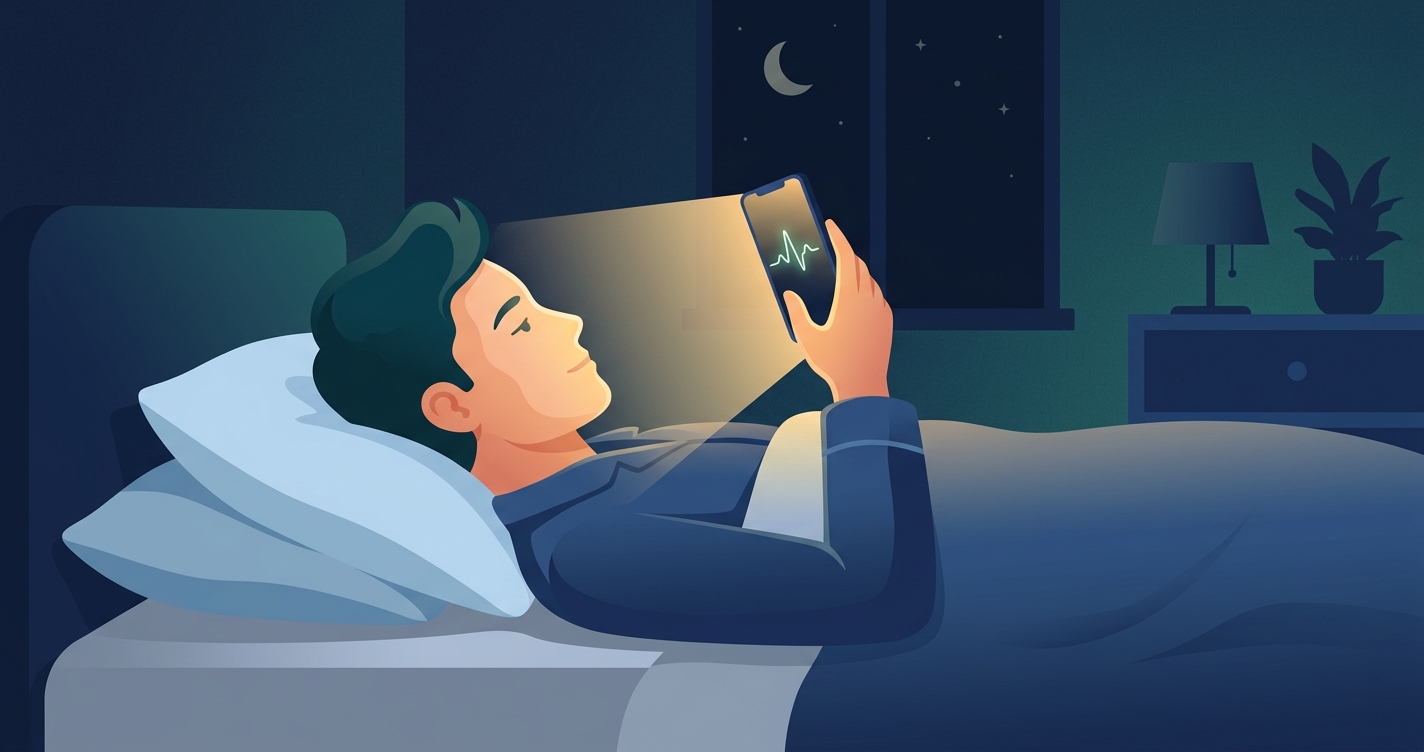
Lying down to sleep is supposed to be a relaxing experience, but for many, it's the time they become acutely aware of their own heartbeat. The quiet of the room and the stillness of the body can amplify the sensation of a heart that seems to be pounding or racing. This perception, often described as palpitations, can be unsettling and lead to anxiety about what's happening. While often benign, an elevated heart rate at rest, known as tachycardia, is a metric worth understanding. The increasing accessibility of technology now allows individuals to perform a high resting heart rate phone check, providing a way to gather data and gain insights into these nocturnal experiences without specialized equipment.
"A resting heart rate consistently above 100 beats per minute (tachycardia) is associated with a 78% increased risk of developing cardiovascular disease. However, the definition of a 'normal' resting heart rate is a subject of ongoing debate among researchers, with some arguing the upper limit of normal should be lowered from 100 to 90 bpm." - Jaspers, L. et al., (2016), Netherlands.
Understanding nocturnal heart rate and its significance
A high resting heart rate at night can feel alarming, but it isn't always a cause for panic. When you lie down, your body goes through several physiological adjustments. The autonomic nervous system, which controls involuntary functions like heart rate, begins to shift its balance. Typically, the parasympathetic nervous system (the "rest and digest" system) should become more dominant, lowering your heart rate for sleep. However, for some individuals, the sympathetic nervous system (the "fight or flight" system) remains active, keeping the heart rate elevated.
This phenomenon can be influenced by a variety of factors, from the day's activities to underlying health conditions. Understanding what your heart rate is doing at night is the first step, and this is where a high resting heart rate phone check becomes a valuable tool. By using a smartphone camera to measure your pulse, you can gather objective data. This process, known as remote photoplethysmography (rPPG), analyzes minute changes in the color of your skin, which correspond to the blood pulsing through your capillaries. A single measurement is a snapshot, but tracking it over time provides a trend, and trends are what offer real insight into your personal health patterns.
| Measurement Method | Description | Pros | Cons |
|---|---|---|---|
| Manual Pulse Check | Using two fingers (not the thumb) to feel the pulse at the wrist or neck and counting the beats for 60 seconds. | Free, requires no equipment. | Can be inaccurate if not timed correctly, subject to human error, difficult to do while trying to relax. |
| High Resting Heart Rate Phone Check (rPPG) | Using a smartphone's camera and an app to measure heart rate by detecting subtle color changes in the user's face. | Contactless, easy to perform in bed, allows for digital logging and trend analysis. | Requires a compatible smartphone and app, accuracy can be affected by poor lighting or movement. |
| Wearable Device (e.g., Smartwatch) | A wrist-worn device with an optical sensor that continuously or periodically measures heart rate. | Continuous data, tracks sleep stages, often integrated with other health metrics. | Requires purchasing a device, must be worn consistently, can be uncomfortable for some to sleep with. |
Factors influencing nighttime heart rate
Several factors can contribute to an elevated heart rate when you lie down. Being aware of these can help you correlate your phone scan data with your daily habits.
- Dehydration: Even mild dehydration can cause the blood to thicken, making the heart work harder to circulate it.
- Stress and Anxiety: A mind that won't quiet down keeps the sympathetic nervous system engaged, leading to a higher heart rate.
- Late Meals or Alcohol: Digesting a large meal or processing alcohol can both elevate your resting heart rate as your body works to metabolize them.
- Physical Exertion: A late-evening workout without a proper cool-down period can leave your heart rate elevated for hours.
- Caffeine and Nicotine: These stimulants have well-documented effects on heart rate and can take many hours to clear from your system.
- Underlying Conditions: In some cases, a persistently high resting heart rate could be a sign of conditions like anemia, hyperthyroidism, or certain heart conditions.
Industry applications: the rise of the high resting heart rate phone check
The ability to easily check heart rate at night is not just for individual peace of mind; it has broader applications across health and wellness industries.
Remote patient monitoring
For clinicians managing patients with cardiovascular or chronic conditions, longitudinal data on nocturnal resting heart rate can be invaluable. A high resting heart rate phone check provides a simple, low-friction way for patients to gather this data from home. This can help doctors identify concerning trends between appointments, adjust medications, and provide more personalized care without requiring the patient to wear a device 24/7.
Wellness and fitness tracking
In the athletic and wellness communities, resting heart rate is a key indicator of recovery. A lower resting heart rate generally signals good cardiovascular fitness and adequate recovery from training. An unusually high nighttime reading, captured via a phone check, can be the first sign of overtraining, illness, or high life stress, prompting an athlete to prioritize rest.
Corporate wellness programs
Progressive companies are incorporating wellness solutions that are accessible and easy for employees to use. Offering a tool for a high resting heart rate phone check can empower employees to monitor their stress and recovery, leading to better overall health, reduced burnout, and a more resilient workforce.
Current research and evidence
The technology enabling phone-based heart rate checks, rPPG, has been the subject of extensive academic research. Studies have focused on validating its accuracy against clinical-grade equipment. Research published by teams from institutions like Oxford University has shown that under the right conditions, rPPG can be highly accurate. For instance, a 2021 study published in EP Europace explored the use of smartphone photoplethysmography for monitoring heart rate and rhythm in real-world settings.
The key finding across much of the research is that accuracy is highest during periods of rest, making a nighttime check ideal. One study on continuous PPG monitoring found that accuracy in estimating the 1-minute mean heart rate was significantly higher at night (97%) compared to daytime (91%) due to reduced motion artifacts. While not a diagnostic tool, the ability to perform a high resting heart rate phone check provides a reliable way to screen for and track this important vital sign. Validation studies have reported mean absolute errors against ECGs as low as 0.85 to 2.5 beats per minute in resting individuals.
The future of nighttime heart rate monitoring
The technology for contactless monitoring is evolving rapidly. The future will likely see the integration of rPPG into smart home environments, where your bedroom lighting could automatically adjust to create optimal conditions for a scan. We can also anticipate more sophisticated software that Tracks trends. Begins to offer predictive insights, correlating your nocturnal heart rate with data from your calendar, environment, and other health inputs to provide actionable advice for improving sleep and cardiovascular health. The simple high resting heart rate phone check of today is laying the groundwork for a more integrated and proactive approach to personal health management.
Frequently asked questions
Q: Is it normal for my heart rate to be higher when I first lie down?
A: A temporary, slight increase in heart rate can occur for some people as their body adjusts to a change in posture (from standing to lying down). This is related to how the autonomic nervous system manages blood pressure and is usually brief. However, a sustained high rate throughout the night is a different matter.
Q: Can anxiety about my heart rate make it go up?
A: Absolutely. This is a common feedback loop. Worrying about your heart rate can activate your sympathetic nervous system, which in turn increases your heart rate, leading to more worry. Performing a quick high resting heart rate phone check can provide objective data that may help break this cycle.
Q: How many nights should I track my heart rate to get a useful trend?
A: While you can see variations day-to-day, tracking for at least one to two weeks is recommended to establish a baseline. This allows you to identify what your personal "normal" range is and makes it easier to spot significant deviations that might be worth investigating.
Q: When should I talk to a doctor about my high resting heart rate?
A: If your resting heart rate is consistently over 100 beats per minute, or if it's accompanied by other symptoms like dizziness, shortness of breath, or chest pain, you should consult a healthcare professional. Bring your tracked data with you, as it can be a valuable starting point for the conversation.
The experience of a pounding heart at night can be unsettling, but it also presents an opportunity to engage more deeply with your health. Tools that allow for a quick and non-invasive high resting heart rate phone check are empowering individuals to move from anxiety to action. By tracking trends and understanding the lifestyle factors that influence this key vital sign, you can gain valuable insights into your body's signals. For those interested in exploring this technology firsthand, you can get started by downloading our free app.