
What Is a Good Heart Rate While Sleeping? Age Guide
Discover what constitutes a normal sleeping heart rate by age. Learn how your nighttime pulse fluctuates and what a low heart rate at night means.
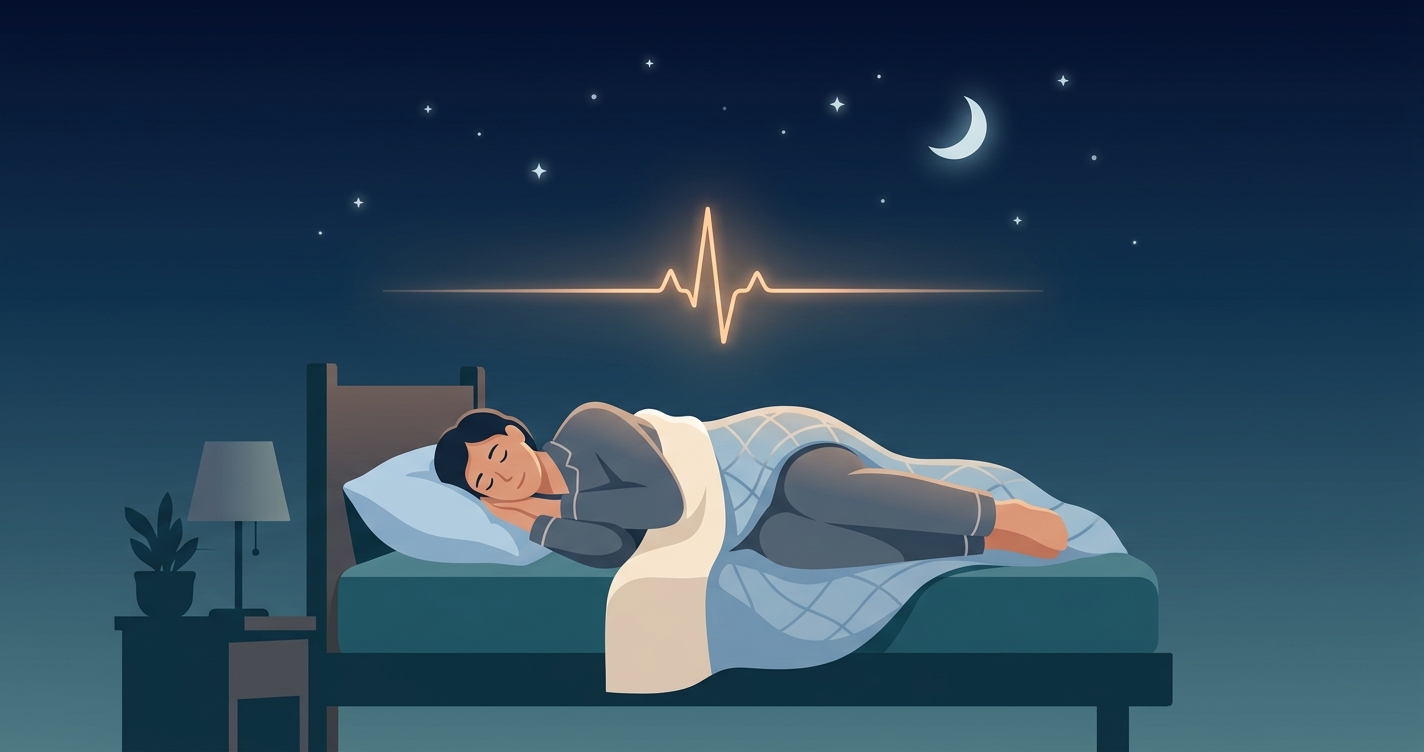
Most people spend a third of their lives asleep, yet until the widespread adoption of personal health sensors, what happened to the cardiovascular system overnight remained a mystery to the average person. Today, anyone can wake up, check their smartphone, and view a detailed graph of their nocturnal pulse. But data without context often creates unnecessary worry. If you recently checked a health app first thing in the morning and noticed your overnight metrics, you likely asked yourself one immediate question: what is a good heart rate while sleeping? The answer depends heavily on your age, your baseline fitness level, and the specific stage of sleep you are in at any given moment. For decades, clinical guidelines focused almost exclusively on daytime resting heart rate. Now, as consumers gain access to continuous tracking, understanding the nuances of nocturnal cardiovascular behavior has become essential for anyone interested in personal wellness.
"For most healthy adults, a normal sleeping heart rate typically ranges from 40 to 60 beats per minute, representing a 20 to 30 percent reduction from daytime resting averages as the body enters deep relaxation." - The Sleep Foundation, 2023
Defining a good heart rate while sleeping
To understand what constitutes a good heart rate while sleeping, it helps to first understand the mechanics of the autonomic nervous system during rest. When you close your eyes and drift into non-rapid eye movement (NREM) sleep, your body shifts control to the parasympathetic nervous system. This state is frequently referred to as the rest and digest mode. As you progress into the deeper stages of NREM sleep, your blood pressure naturally drops, your breathing slows significantly, and your heart rate reaches its absolute lowest point of the night. The metabolic demand on your body decreases, requiring less oxygen and less effort from your cardiovascular system.
The cardiovascular system relies on this nocturnal downtime to repair blood vessels, balance hormone levels, and reduce the overall workload on the heart muscle. Without this nightly dip in beats per minute, the heart remains in a state of low-level stress. This is why cardiologists pay close attention to individuals whose heart rates do not drop during sleep, a condition clinically referred to as non-dipping. A healthy, dipping nighttime pulse normal range is a fundamental pillar of long-term cardiovascular health.
During rapid eye movement (REM) sleep, the internal physiological environment changes completely. The sympathetic nervous system becomes more active. Your brain is highly engaged, often processing memories and dreaming, and your heart rate can fluctuate wildly. In many cases, it rises to levels similar to when you are fully awake.
Because of this natural, cyclical fluctuation, a normal overnight pulse is not a single static number that remains flat throughout the night. It is a dynamic range that dips and rises in accordance with your sleep architecture. If your daytime resting heart rate is around 70 beats per minute, seeing your nighttime baseline drop into the low 50s is a strong sign of healthy autonomic function and efficient cardiovascular recovery.
Tracking sleeping heart rate by age provides the most accurate baseline for what is considered normal. As the human body develops, the heart grows stronger and more efficient, meaning it requires fewer beats to circulate the same volume of blood.
| Age Group | Typical Sleeping Heart Rate (bpm) | Key Physiological Characteristics |
|---|---|---|
| Infants (0-1 year) | 70 - 190 | High metabolic demand for rapid physical development and growth. |
| Toddlers (1-4 years) | 75 - 120 | Still elevated, gradual slowing as the heart muscle strengthens. |
| Children (5-12 years) | 70 - 110 | Nearing pre-teen baselines, heavily influenced by daytime activity. |
| Adolescents (13-17) | 60 - 100 | Hormonal changes and growth spurts cause mild nocturnal fluctuations. |
| Adults (18-64) | 40 - 60 | Deep sleep induces a 20 to 30 percent drop from daytime resting rates. |
| Seniors (65+ years) | 50 - 85 | Slight natural elevation compared to younger adults due to vascular aging. |
Several variables influence where you fall on this age chart. A low heart rate at night is generally common, but extreme deviations or unusual spikes can be triggered by external and internal factors:
- Physical fitness: Endurance athletes often see sleeping heart rates in the 30s because a stronger, conditioned heart pumps more blood per beat, requiring less effort at rest.
- Alcohol consumption: Processing alcohol requires metabolic effort, which typically elevates the sleeping pulse for several hours and delays the onset of deep REM sleep.
- Room temperature: A hot sleeping environment forces the body to pump more blood to the skin to dissipate heat, raising the baseline pulse.
- Illness and fever: The immune response naturally increases the heart rate to fight off infection, circulating white blood cells more rapidly.
- Stress and anxiety: High levels of cortisol and adrenaline from daytime stress can carry over into the night, preventing the nervous system from fully transitioning into a parasympathetic state.
- Hydration levels: Dehydration forces the heart to pump harder to circulate blood, which can raise the resting pulse both during the day and while you sleep.
- Sleep apnea: Breathing interruptions cause oxygen levels in the blood to drop, triggering a sudden spike in heart rate as the central nervous system gasps for air.
Industry applications for nighttime pulse tracking
The rise of the phone health scanner
Not long ago, tracking overnight vitals required sleeping in a clinical laboratory hooked up to a polysomnography machine or wearing a cumbersome chest strap that disrupted the very sleep it was trying to measure. The market for consumer health tracking has shifted dramatically over the past five years. Today, optical sensors on smartwatches and smart rings are standard, but the software ecosystem is expanding even further. A phone health scanner can now read the subtle micro-color changes in a person's face to estimate heart rate and respiratory rate just by analyzing a video feed. While these optical tools are most commonly used for quick morning spot checks to gauge recovery, the underlying technology of remote photoplethysmography is changing how the general public engages with their cardiovascular data. It removes the friction of needing to purchase and charge a dedicated wearable device.
Pediatric and elder care monitoring
Understanding the normal ranges for various demographics is particularly critical for home caregivers. For parents of infants, knowing that a sleeping pulse of 130 beats per minute is perfectly normal prevents unnecessary panic and late-night calls to the pediatrician. Conversely, adult children monitoring aging parents need to know that a normal nighttime pulse for someone over 65 might hover slightly higher than a younger adult, typically around 60 to 85 beats per minute. Contactless technologies are becoming highly relevant in these caregiving scenarios, allowing family members to take a reading or establish a trend without waking a sleeping baby or disturbing a resting senior.
Current research and evidence
Clinical research provides a highly detailed map of how the heart behaves when the conscious mind shuts down. A 2013 study published by researcher Boudreau and colleagues at the University of Montreal observed that maximal parasympathetic modulation occurs precisely during slow-wave sleep. In their controlled laboratory observations, this parasympathetic dominance peaked around 02:00 for most individuals adhering to a standard circadian schedule. This specific nocturnal window is when the heart rate drops to its lowest baseline, creating a physiological environment optimized for cardiovascular repair. The researchers noted that any disruption to this deep sleep phase directly impairs the heart's ability to recover from the previous day's stress.
More recent investigations have focused heavily on how heart rate variability interacts with these specific sleep stages. A 2024 peer-reviewed paper by researchers Jaworski and Park analyzed nonlinear heart rate variability to accurately classify sleep stages. Their findings reinforced that an increase in high-frequency heart rate variability, coupled with a decrease in total heart rate, serves as a highly reliable physiological indicator that the body has successfully transitioned into non-REM deep sleep. When the individual eventually transitions into REM sleep, the heart rate increases and heart rate variability temporarily decreases. This research confirms that variations in overnight heart rate are not just normal; they are necessary mechanical markers of a healthy and restorative sleep cycle.
The future of nocturnal vitals tracking
The technology used to measure heart rate during sleep is rapidly evolving beyond wrist-worn hardware. Wearables currently dominate the consumer market, but the future points toward entirely contactless and ambient solutions. Radar sensors built into bedside tables, smart mattresses with embedded ballistocardiography sensors, and remote optical scanning via smartphone cameras are moving from the laboratory into consumer bedrooms.
Currently, users must remember to charge their devices, put them on before bed, and ensure they fit snugly enough to get a proper reading. The shift toward contactless monitoring eliminates these barriers. When health measurement becomes ambient, user compliance reaches one hundred percent. The data collected becomes more reliable simply because it is uninterrupted by human error or discomfort. We are rapidly approaching an era where checking your health metrics requires no more effort than looking in a mirror.
As machine learning algorithms improve, these ambient systems will Report raw numbers. Provide contextual analysis. They will be able to automatically compare an individual's data against clinical age guides, filtering out normal REM-cycle fluctuations and flagging genuine physiological anomalies. This transition from active tracking to passive, invisible monitoring represents the next major leap in consumer health technology.
Frequently asked questions
Q: Is a low heart rate at night dangerous? A: For most healthy adults, a low heart rate at night, often dipping into the 40s or low 50s, is a sign of deep relaxation and good cardiovascular fitness. However, if the low heart rate is accompanied by chest pain, dizziness upon waking, or chronic shortness of breath, it warrants a prompt consultation with a medical professional.
Q: How much should my heart rate drop while sleeping? A: A healthy individual will typically see their heart rate drop by 20 to 30 percent compared to their daytime resting heart rate. If your standard resting heart rate is 70 beats per minute, a natural drop to around 50 beats per minute during deep sleep is entirely standard.
Q: Can a phone health scanner measure my pulse accurately? A: Yes, modern phone health scanners utilize remote photoplethysmography to detect subtle variations in light absorbed by blood vessels beneath the skin. While they are not replacements for medical diagnostic equipment, they are highly effective for tracking baseline trends and conducting daily wellness checks upon waking.
For health-curious individuals looking for an accessible way to monitor their baseline metrics without purchasing expensive wearables, TryCircadify is actively addressing this space with innovative optical technology. You can try their contactless vitals app directly from your smartphone to perform a daily morning scan and start understanding your body's cardiovascular trends. Download the app today at circadify.com/download?utm_source=trycircadify to experience the next generation of health tracking.