What happens to my vitals after a terrible night's sleep?
A single night of bad sleep can significantly alter your morning heart rate and HRV. Discover what happens to your body and how you can track the changes.
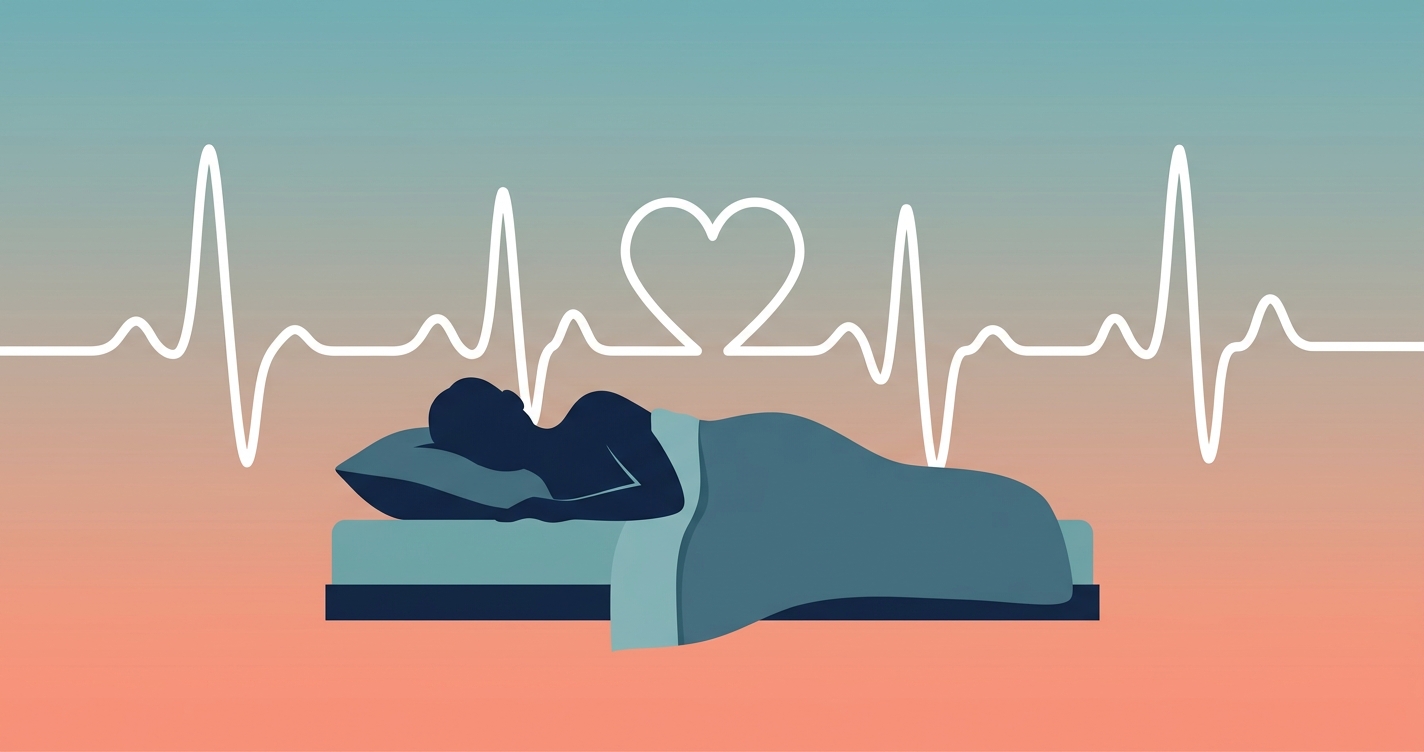
Everyone knows the feeling of waking up after a terrible night's sleep. The grogginess, irritability, and lack of focus are hard to miss. But beneath these subjective feelings, a fascinating and measurable story is unfolding within your body. A single night of insufficient or fragmented sleep triggers a cascade of physiological responses, shifting your body into a state of high alert. Your vital signs, particularly your heart rate and heart rate variability (HRV), are the primary storytellers, and new technologies are making it possible to read their report right from your phone.
"Even a single night of acute sleep deprivation can cause a significant shift in cardiac autonomic modulation towards sympathetic predominance." - Dr. C.M. Cagtas, Koc University, 2023.
The morning-after vitals report
That tired, "on-edge" feeling you have after a night of tossing and turning is a direct reflection of your autonomic nervous system (ANS) being thrown out of balance. The ANS has two main branches: the parasympathetic ("rest-and-digest") system, which promotes recovery and calm, and the sympathetic ("fight-or-flight") system, which prepares the body for stress and action. Good sleep strengthens the parasympathetic system. Poor sleep does the opposite, activating the sympathetic system as if you were facing a threat.
This imbalance shows up immediately in your morning vital signs. One of the most sensitive indicators is Heart Rate Variability (HRV), which is the measure of the variation in time between each heartbeat. A high HRV is a sign of a healthy, adaptable nervous system dominated by parasympathetic input. After a bad night, HRV typically drops, indicating a shift toward sympathetic dominance. Your resting heart rate may also be slightly elevated as your body operates in this higher gear. The idea of getting a read on your vitals after poor sleep phone scan technology is now making it possible to capture these changes without specialized medical equipment or wearables.
| State | Autonomic Nervous System | Dominant Branch | Key Characteristics |
|---|---|---|---|
| Well-Rested | Balanced | Parasympathetic ("Rest-and-Digest") | Lower resting heart rate, high HRV, efficient recovery, calm state. |
| Sleep-Deprived | Imbalanced | Sympathetic ("Fight-or-Flight") | Higher resting heart rate, low HRV, increased stress hormones, state of alert. |
Key vitals affected by one night of poor sleep
- Heart Rate Variability (HRV): This is the most significant change. Key HRV markers like RMSSD (the root mean square of successive differences between normal heartbeats) decrease, indicating reduced parasympathetic activity.
- Resting Heart Rate (RHR): Your RHR may be higher than usual. With the "fight-or-flight" system engaged, your heart is primed for action and beats faster, even at rest.
- Respiratory Rate: Sleep deprivation can lead to subtle increases in breathing rate, another sign of an activated sympathetic nervous system.
- Blood Pressure: While more pronounced with chronic sleep loss, even one night can contribute to temporary increases in blood pressure due to elevated stress hormones like cortisol.
Industry applications and accessibility
For years, tracking these recovery metrics was the domain of elite athletes and medical clinics using ECG monitors and expensive wearables. The data was valuable but inaccessible to most people. The key challenge was not the science, but the hardware. That is now changing rapidly as the sensor you already carry everywhere-your smartphone camera-becomes a powerful health scanning tool.
The rise of camera-based vitals
The technology behind this shift is remote photoplethysmography (rPPG). When you perform a vitals after poor sleep phone scan, the camera detects subtle, imperceptible changes in the color of the skin on your face. These changes are caused by the pressure wave of blood as it is pumped from your heart. Advanced algorithms analyze this video feed to extract a clean pulse waveform, from which metrics like heart rate, HRV, and respiratory rate can be calculated.
Using a phone scan for morning recovery
The accessibility of rPPG means anyone can now take a baseline reading. By performing a quick, contactless scan each morning, you can see for yourself how sleep quality, stress, or a late-night meal impacts your physiological state. This is not about diagnosing a condition, but about building body awareness. Seeing your HRV dip after a night of interrupted sleep provides concrete, personal feedback that reinforces healthier habits. It transforms the abstract concept of "recovery" into a number you can track.
Current research and evidence
The link between sleep loss and autonomic nervous system disruption is well-documented. A systematic review and meta-analysis published in the Journal of Sleep Research (Bonnar et al., 2018) confirmed that sleep deprivation consistently leads to a reduction in parasympathetic activity. Researchers noted significant decreases in high-frequency (HF) power of HRV, which is a key marker of the "rest-and-digest" system's influence.
More recent studies have focused on the precision of these measurements. A 2023 study by C.M. Cagtas and colleagues found that even a single night of partial sleep deprivation led to a significant increase in the LF/HF ratio of HRV-a measure that suggests a tilt towards sympathetic ("fight-or-flight") activity. This body of research provides a strong foundation for understanding why your morning vitals look different after a bad night. The emerging research is now centered on the accuracy and reliability of technologies like rPPG for capturing this data, with studies in publications like Nature and Frontiers in Physiology validating smartphone-based measurements against traditional ECGs in resting conditions.
The future of sleep and recovery tracking
The future of personal health monitoring is moving away from constant data streams and toward meaningful, on-demand insights. While wearables have been instrumental in raising awareness, many users experience "data fatigue" and a desire to not be tethered to a device 24/7. The ability to perform a vitals after poor sleep phone scan aligns perfectly with this trend.
It empowers individuals to check in on their body's recovery status when it matters most-first thing in the morning-using a device they already own. As the algorithms powering rPPG technology continue to improve, the accuracy and range of measurable biomarkers will expand, giving people an even clearer picture of their health without requiring any specialized hardware.
Frequently asked questions
Why does my heart rate go up after a bad night's sleep? After poor sleep, your body's "fight-or-flight" (sympathetic) nervous system becomes more active. This system releases hormones like adrenaline and cortisol, which can increase your resting heart rate as your body remains in a state of high alert.
Is HRV more important than resting heart rate for recovery? Both are useful, but HRV often provides a more nuanced view of your recovery status. It reflects the balance of your autonomic nervous system. A low HRV is a clear indicator that your body is under stress, even if your resting heart rate seems normal.
How accurate is a phone camera for measuring vitals after poor sleep? For on-demand spot-checks at rest, the accuracy is surprisingly high and has been validated against medical-grade sensors in multiple studies. The key is to take the reading in a well-lit, quiet environment while remaining still, which makes it ideal for a morning check-in.
The insights once reserved for sleep labs are now becoming accessible to everyone. Circadify is at the forefront of this movement, developing the technology to help individuals understand their bodies better through simple, contactless scans. If you're curious to see how your own vitals respond to your lifestyle, you can try it for yourself by downloading the app at circadify.com/download?utm_source=trycircadify.