
What can my phone actually tell me about my health in 30 seconds?
Discover what your phone can reveal about your health in just 30 seconds. Explore the science behind camera-based health scans and the vital signs you can track.
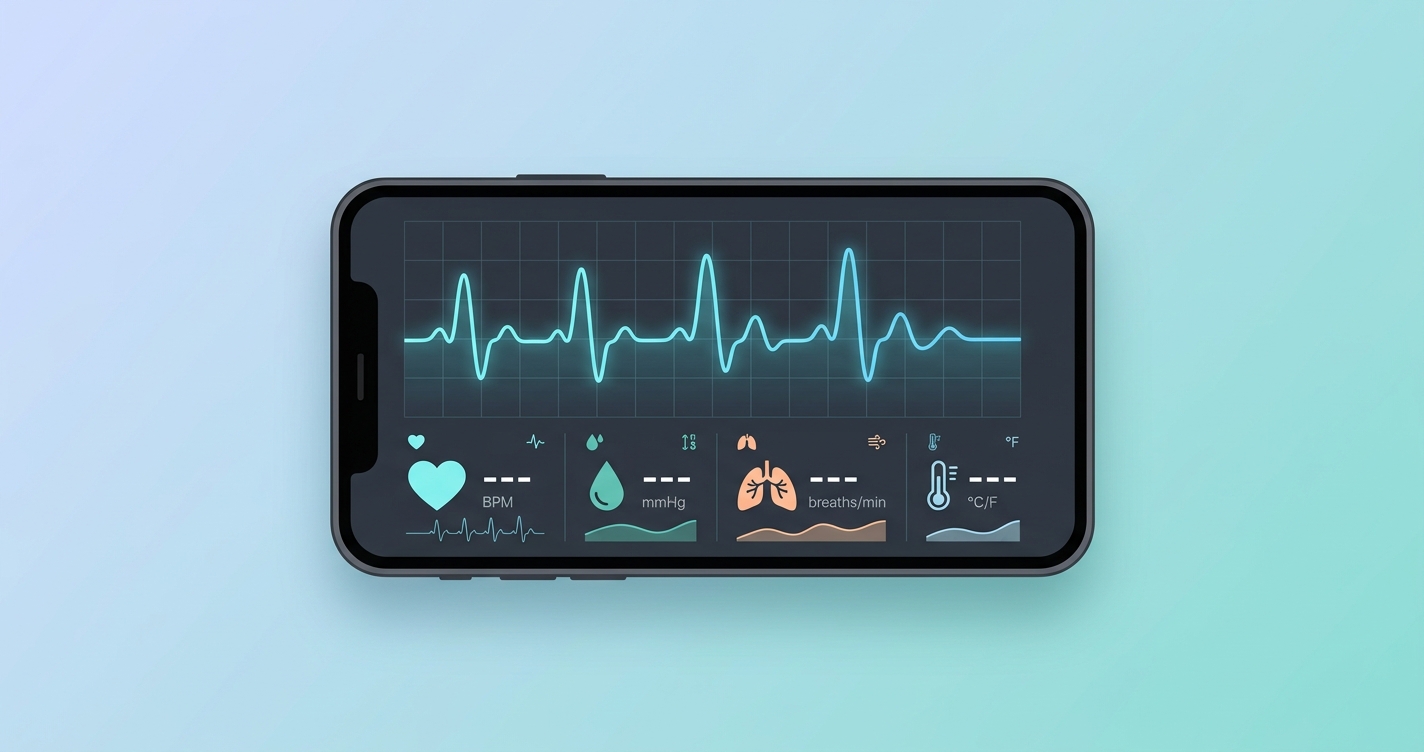
The question sounds like science fiction, but it's becoming a surprisingly common search query: "What can my phone actually tell me about my health in 30 seconds?" For the health-curious consumer, the smartphone is evolving from a communication device into a powerful health assessment tool. Using only the camera you already have, specialized applications can now deliver meaningful insights into your physiological state in about the time it takes to read this paragraph. This isn't about replacing clinical visits, but about providing accessible, on-demand data that empowers individuals to understand their bodies better. The core technology, remote photoplethysmography (rPPG), is moving from the laboratory into the mainstream, enabling a new era of proactive health awareness.
"Within the next decade, we will see a major shift in medicine and healthcare from a predominantly reactive to a more proactive and preventative approach, with the smartphone at its epicenter." - Dr. Keith K. L. Wong, et al. (2020), in their study on mobile health dynamics.
Unpacking the 30-second health scan
When you use a mobile application to get phone health 30 seconds results, you are interacting with a sophisticated process called remote photoplethysmography (rPPG). This technology uses your phone's camera to detect subtle, imperceptible changes in the color of your skin. These changes are caused by the pulse of blood flowing through the capillaries just beneath the surface. With each heartbeat, the volume of blood in these vessels increases, causing a minute shift in how light is reflected. The camera records a short video of your face, and advanced algorithms analyze this video frame by frame to isolate the pulse signal. From this signal, the software can calculate several key vital signs, providing a snapshot of your cardiovascular and respiratory function. Researchers like W. J. Ali, et al. (2022) have extensively documented the methods for extracting these signals from video feeds. The process is entirely contactless and requires nothing more than looking at your phone's camera for a short period, typically 30 to 60 seconds.
| Feature | Phone-Based Scan (rPPG) | Traditional Methods |
|---|---|---|
| Technology | Remote Photoplethysmography (rPPG) | Cuffs, Probes, ECG electrodes |
| Contact Required | No (contactless) | Yes (physical contact) |
| Hardware | Standard Smartphone Camera | Specialized Medical Devices |
| Typical Scan Time | 30-60 Seconds | Varies (minutes) |
| Accessibility | High (anywhere with a phone) | Low (requires clinic/device) |
| Measures | Heart Rate, HRV, Respiration Rate, Blood Pressure Trends | Heart Rate, Blood Pressure, SpO2 |
Industry Applications
The ability to get phone health 30 seconds results has significant implications across various sectors.
Telehealth and remote patient monitoring
Providers can use this technology to gather baseline vitals from patients remotely, helping to triage cases and monitor chronic conditions without requiring an in-person visit. This is particularly valuable for managing large patient populations and for individuals in remote or underserved areas.
Wellness and fitness
Fitness apps and corporate wellness platforms are integrating rPPG to allow users to track their physiological response to exercise, stress, and recovery protocols. It provides a simple way to measure resting heart rate and heart rate variability, key indicators of fitness and stress levels.
Insurance and preventative health
Insurers and employers are exploring this technology for health and wellness programs. By providing an easy way for individuals to monitor their health trends, they hope to encourage preventative behaviors and identify potential health risks earlier.
Current research and evidence
The scientific foundation for rPPG has been building for over a decade. Early research focused on proving the basic concept, while more recent studies have concentrated on improving the accuracy and reliability of the measurements under real-world conditions. A significant body of work comes from institutions like the University of Oxford and MIT.
- Heart Rate: Studies have shown a high degree of agreement between rPPG-derived heart rate and measurements from ECGs and pulse oximeters. For example, a study led by researcher G. Chen and colleagues in 2018 demonstrated the feasibility of using smartphones for this purpose.
- Heart Rate Variability (HRV): HRV, the measure of variation in time between successive heartbeats, is a critical indicator of autonomic nervous system function and stress. Research by teams like X. Wang et al. (2020) has validated the ability of smartphone cameras to measure HRV, comparing favorably to clinical-grade devices under resting conditions.
- Blood Pressure: While obtaining absolute blood pressure readings from a camera alone is still an area of active research, the technology can provide valuable trend data. By calibrating with an initial cuff reading, rPPG can then track changes in blood pressure over time, as explored in research from institutions like Michigan State University.
- Respiratory Rate: The algorithms can also detect the subtle chest movements and changes in the rPPG signal associated with breathing, allowing for an accurate estimation of respiratory rate.
Factors like lighting conditions, user movement, and skin tone can influence the quality of the signal. Ongoing research focuses on developing more robust algorithms that can account for these variables, making the technology reliable for a broader range of users and environments.
The Future of the 30-Second Health Scan
The future of getting phone health 30 seconds results is bright. As smartphone cameras and processing power continue to improve, so will the accuracy and capabilities of rPPG technology. We are moving toward a future where continuous, passive monitoring may be possible. Imagine your phone being able to alert you to changes in your physiological baseline without you even needing to initiate a scan. The integration of rPPG with other data sources, like activity levels from your phone's accelerometer or self-reported mood, will provide a more holistic view of your health. The ultimate goal is to create a personalized health monitoring system that is seamlessly integrated into your daily life, providing actionable insights to help you stay healthy.
Frequently asked questions
Q: How accurate is a health scan from a phone camera? A: The accuracy of phone-based health scans has improved significantly. For measurements like heart rate and respiratory rate at rest, results are often very close to those from wearable devices and clinical instruments. However, factors like movement, poor lighting, and incorrect usage can affect the results. It's best used for tracking trends over time.
Q: What vital signs can be measured in 30 seconds? A: In a typical 30-second scan, applications can measure your heart rate, heart rate variability (HRV), and respiratory rate. Some advanced applications may also provide insights into your stress level or blood pressure trends.
Q: Is it safe to scan my face with a health app? A: Yes. Reputable rPPG applications do not store the video of your face. The video is analyzed in real-time on your device, and only the resulting vital sign data is stored. The process does not involve any imaging that could identify you in the way facial recognition does. Always check the privacy policy of any health app you use.
This new wave of consumer health technology represents a significant step forward in making personal health data more accessible. As the algorithms become more powerful and the hardware in our pockets continues to advance, the answer to "What can my phone tell me about my health?" will only grow more comprehensive. If you are curious to see this technology in action, Circadify is at the forefront of this space, and you can try a scan for yourself by visiting circadify.com/download.