Why do my vital-sign results change throughout the day?
Explore the science behind why vital signs like heart rate, blood pressure, and temperature fluctuate throughout the day, influenced by your internal body clock.
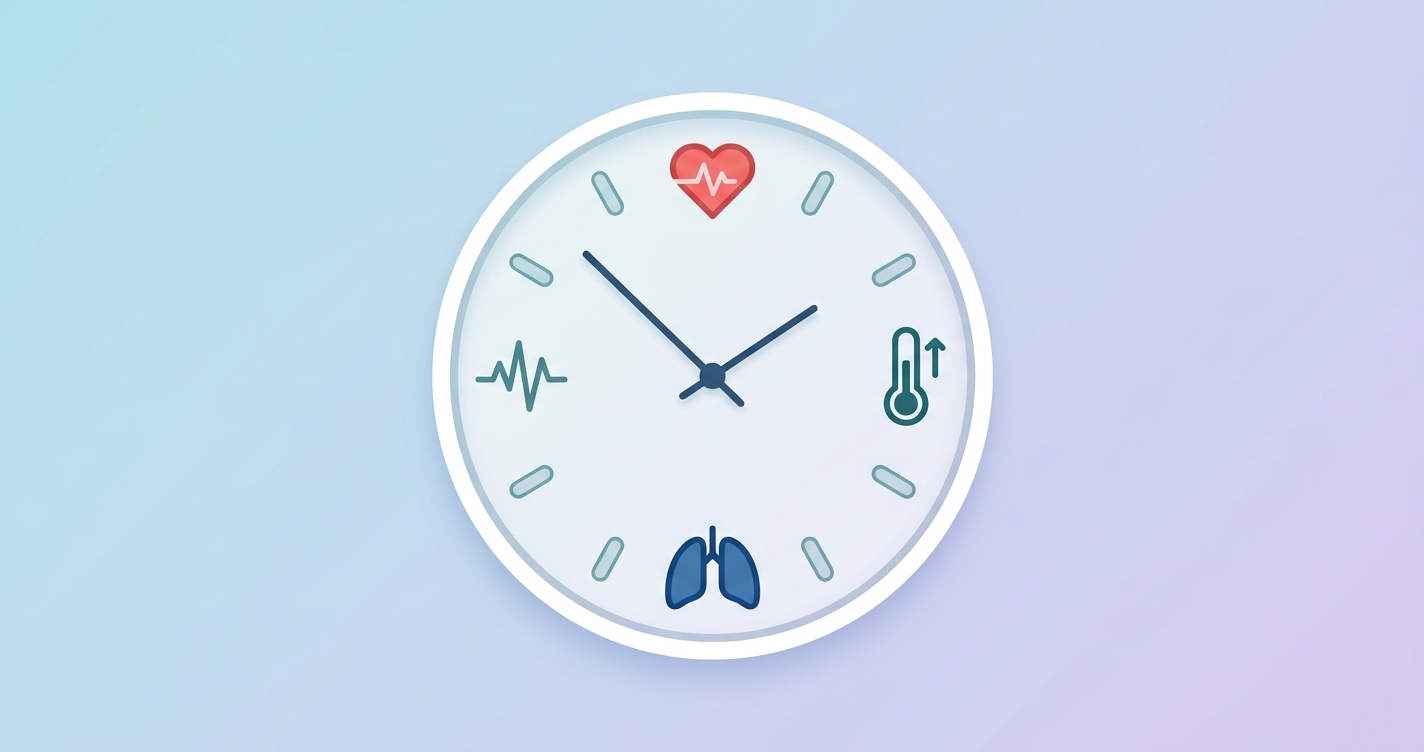
If you've ever taken your vital signs at different times, you've likely noticed they aren't always the same. Your heart rate after a morning coffee is different from your heart rate just before bed. Your blood pressure might be higher in the afternoon than it is first thing in the morning. This isn't a sign of a faulty device or a sudden health problem; it's a completely normal biological process. These fluctuations are a window into your body's internal clock, a sophisticated system that governs nearly every aspect of your physiology, including your vital signs. Understanding why your vital signs change throughout the day is the first step toward interpreting them with greater context.
"Blood pressure typically follows a circadian rhythm, decreasing by 10-20% during nighttime sleep (nocturnal dip) and increasing upon waking. Disruption of this normal rhythm is associated with an increased risk of heart attack and stroke." - (Francesco Portaluppi, University of Ferrara, 2017)
The conductor of your internal orchestra: circadian rhythm
The primary reason your vital signs change throughout the day is due to your body's circadian rhythm. This internal 24-hour clock, located in a part of the brain called the suprachiasmatic nucleus (SCN), acts as a master conductor for your bodily functions. It's influenced by external cues, most notably light, which is why your body naturally wants to be awake during the day and asleep at night. This master clock sends signals to other clocks located in your organs and tissues, ensuring they all work in harmony. This elegant system dictates the daily cycles of your heart rate, blood pressure, body temperature, and even your breathing.
These daily patterns are not random. They are an evolutionary adaptation designed to prepare your body for periods of activity and rest. For instance, as you prepare to wake up, your body starts to release hormones like cortisol, which, along with other signals, causes your blood pressure and heart rate to gradually rise, preparing you for the demands of the day. Conversely, as evening approaches and light fades, your body begins to produce melatonin, a hormone that promotes sleep, and your vital signs begin to dip to their lowest points.
| Vital Sign | Morning (6 AM - 12 PM) | Afternoon (12 PM - 6 PM) | Night (10 PM - 6 AM) |
|---|---|---|---|
| Heart Rate | Rises upon waking, generally moderate | May increase after meals or with activity | Lowest during deep sleep (the "nocturnal dip") |
| Blood Pressure | Sharp rise upon waking, peaks mid-morning | Remains relatively high, may dip slightly | Drops by 10-20% in healthy individuals |
| Body Temperature | Begins to rise before waking, continues to climb | Reaches its peak in the late afternoon/early evening | Drops to its lowest point during sleep to conserve energy |
| Respiratory Rate | Gradually increases upon waking | Stable, reflects activity level | Slowest and most regular during deep sleep |
A deeper look at daily vital sign fluctuations
While circadian rhythm sets the overall template, other factors cause your vital signs to change throughout the day. Understanding these variables can provide a more complete picture of your health.
- Activity Level: Physical exertion is the most obvious factor. Your heart rate, blood pressure, and respiratory rate will all increase during exercise to supply your muscles with oxygen and nutrients.
- Diet: What and when you eat can cause temporary changes. A large meal can divert blood to your digestive system, sometimes causing a slight dip in blood pressure followed by a rise. Caffeine and high-sodium foods can temporarily increase blood pressure and heart rate.
- Stress and Emotions: Your body's "fight or flight" response, triggered by stress, anxiety, or even excitement, releases hormones like adrenaline that rapidly increase heart rate and blood pressure.
- Hydration: Dehydration can cause your heart rate to increase and your blood pressure to drop as your body works harder to circulate a lower volume of blood.
- Body Position: Your vitals change when you go from lying down to sitting or standing. These changes are usually brief as your body adjusts to the effects of gravity.
Current research and evidence
The link between circadian rhythms and cardiovascular health is an area of intense research. Studies by researchers like Dr. Tami Martino at the University of Guelph (2018) have shown how disruptions to the body's internal clock, from things like shift work or inconsistent sleep schedules, can increase the risk of heart disease. The research highlights that it's not just the average value of a vital sign that matters, but also its rhythm.
A study published in the Journal of the American Heart Association (2021) confirmed the importance of the nocturnal blood pressure dip. Researchers found that individuals whose blood pressure did not dip at night ("non-dippers") had a significantly higher long-term risk of cardiovascular events. This growing body of evidence shows that the patterns of how vital signs change throughout the day provide critical information that a single, isolated measurement might miss.
The future of at-home health monitoring
The ability to track how your vital signs change throughout the day from the comfort of your home is a significant development for personal health awareness. While wearables have made continuous tracking more common, contactless methods using smartphone cameras are making it even more accessible. Observing these daily rhythms can help you understand your body's unique patterns and how your lifestyle choices, like sleep, diet, and exercise, are impacting your core physiology. This is not about diagnosing conditions, but about building a more informed, data-driven picture of your overall wellness.
By noticing trends over time, you can have more informed conversations with your healthcare provider. For instance, consistently seeing an elevated heart rate in the evenings might prompt a discussion about stress management, or a flat blood pressure pattern might be worth mentioning at your next check-up.
Frequently asked questions
Q: How much of a change in vital signs throughout the day is considered normal?
A: This varies from person to person. For blood pressure, a drop of 10-20% at night is typical. A resting heart rate can easily vary by 20-30 beats per minute between your most active and most restful points of the day. Body temperature normally fluctuates by about 1°C or 1.8°F. The key is to look for consistent patterns over time.
Q: When is the best time to measure my vital signs for the most accurate reading?
A: For a baseline "resting" reading, the best time is in the morning, after you've had a few minutes to sit quietly but before you've had coffee or started your day's activities. However, to understand your daily patterns, it's useful to take readings at different times, for example, mid-afternoon and before bed, and compare them over several days.
Q: What if my vital signs don't seem to change much during the day?
A: A "flat" or "blunted" pattern, particularly in blood pressure (a lack of the nocturnal dip), can sometimes indicate an underlying issue with your body's internal clock or cardiovascular regulation. If you consistently notice very little variation in your vitals between day and night, it may be worth discussing with a healthcare professional.
Understanding the natural ebb and flow of your body's vital signs is a powerful tool for health awareness. Technology is making it easier than ever to access this information without the need for traditional cuffs or wearables. Circadify is at the forefront of this space, developing solutions that help individuals and organizations harness the power of contactless vital sign monitoring. To see how this technology works for yourself, you can download the app at circadify.com/download?utm_source=trycircadify.