
Try Circadify Free vs Paid Vitals Apps: What You Get
A research-style look at how the free Circadify experience compares to paid vitals apps, so health-curious shoppers can weigh real value before they pay.
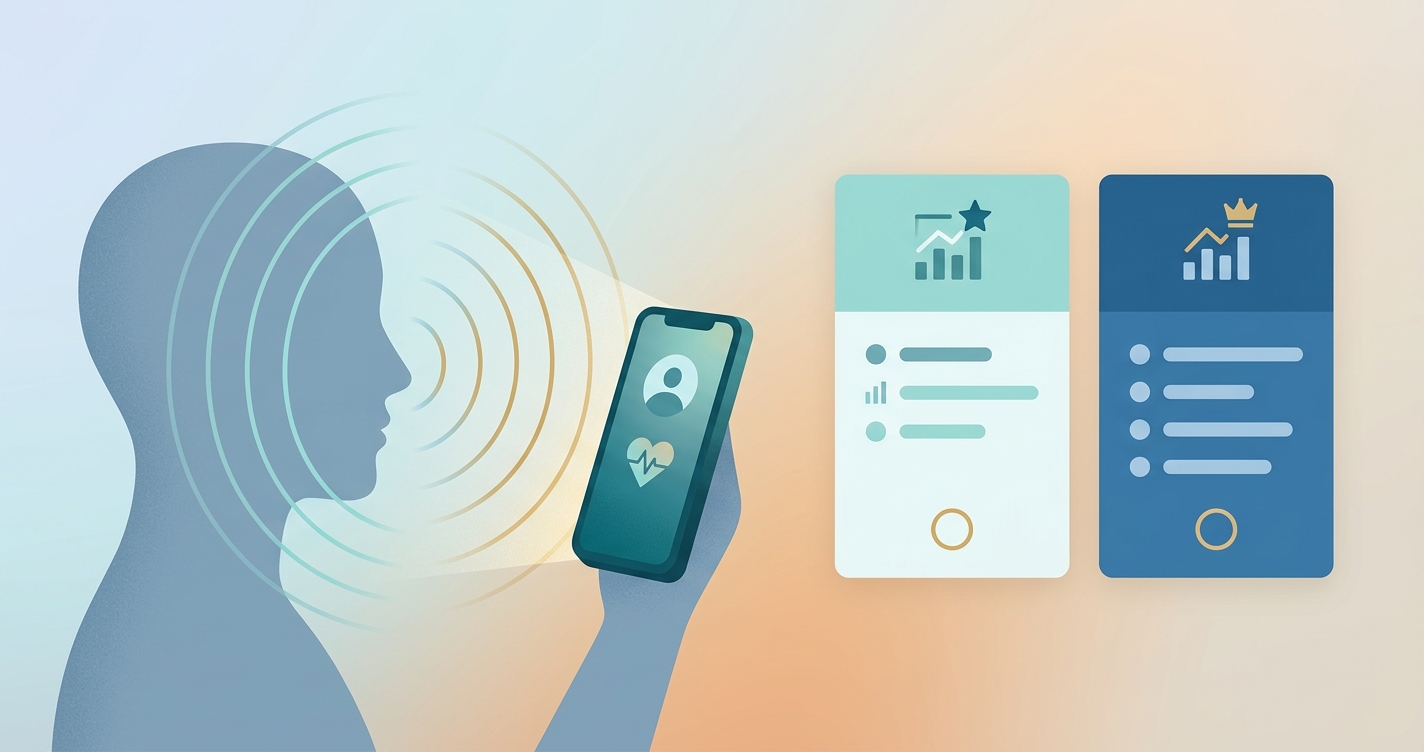
Most people discover contactless vitals apps the same way: a late-night curiosity about their resting heart rate, a search for a way to check breathing without strapping anything to their wrist, and a quick scroll through app store listings that all promise the same thing for wildly different prices. The question buried under that scroll is rarely about the science. It is about money. If you want to try Circadify free, the practical comparison you actually care about is what a no-cost scan gives you versus what a paid vitals subscription unlocks, and whether the gap is worth a recurring charge.
This report breaks down the free versus paid decision for camera-based health apps the way a careful shopper would, using current market data and published research rather than marketing claims.
Subscription revenue contributed roughly 40 percent of the mobile health app market in 2024, and global consumer spending on mobile apps topped 260 billion dollars that year, according to industry market analyses. The freemium model now dominates how health tools reach new users.
What you get when you try circadify free
When you try Circadify free, the core function is a contactless vitals scan that uses your phone's front camera and a technique called remote photoplethysmography, or rPPG. The camera detects tiny color changes in the skin of your face caused by blood flowing beneath the surface, then software converts those signals into readings like heart rate and respiratory rate. No cuff, no chest strap, no finger clip.
The appeal of a free vitals app is that it removes the two biggest barriers to trying the technology: hardware cost and commitment. A wearable asks you to spend a few hundred dollars before you know whether you will use it. A contactless health app costs nothing to test, and the only thing you invest is about a minute of holding your phone steady in decent light.
The free tier is built for exactly this moment of evaluation. It answers the practical question every health-curious shopper asks first, which is simply: does this work on my face, in my lighting, with my phone? Published rPPG research helps set expectations here. A 2024 non-contact photoplethysmography study reported strong heart rate agreement against reference devices for at-rest readings, while a separate analysis from Bielefeld University in 2025 found that rPPG performance can fall at elevated heart rates. Translation: a quiet, seated scan is where the technology is strongest, and that is precisely what a free trial lets you confirm before paying for anything.
Free vs paid vitals apps: a feature comparison
The honest way to compare free vs paid health app tiers is by what each unlocks, not by which one is "better." Most people start free and upgrade only when they want trends and history rather than one-off numbers.
| Feature | Free Vitals App Tier | Paid Vitals App Tier |
|---|---|---|
| Contactless camera scan | Included | Included |
| Core metrics (heart rate, respiratory rate) | Included | Included |
| One-off on-demand readings | Unlimited or generous limit | Unlimited |
| Long-term trend history | Limited or rolling window | Full history retention |
| Additional metrics (HRV, stress indicators) | Often limited | Typically expanded |
| Data export and sharing | Rare | Common |
| Reminders and routines | Basic | Advanced |
| Typical monthly contactless health app cost | 0 dollars | Roughly 5 to 15 dollars |
A few patterns hold across the category:
- Free tiers almost always include the actual scan. The measurement is the hook, not the paywall.
- Paid tiers monetize memory, not measurement. You pay for stored history, longer trend windows, and analysis over time.
- The biggest practical difference for casual users is data retention. If you only want today's number, free is usually enough.
- The biggest practical difference for committed users is trend tracking. A single reading means little without a baseline to compare it against.
Industry applications: who actually needs to pay
Whether a paid tier is worth it depends entirely on why you are scanning in the first place. Three buyer types show up repeatedly in this category.
The curious first-timer
This is the person who searched for a camera health check app after reading that phones can measure pulse. They want proof of concept. For them, the value of a circadify trial is validation, not a data archive. A free scan that returns a believable resting heart rate is the entire job. Most people in this group never need to pay, and that is fine. The free tier exists to convert curiosity into confidence.
The routine tracker
This user scans most mornings and wants to see how stress, sleep, or training is moving their numbers week over week. Here the paid tier starts to earn its contactless health app cost, because trend history is the product. A number without a baseline is trivia. A number plotted against thirty days of your own readings is information.
The caregiver and the household
Families increasingly use one app across several people, checking on an aging parent or a child without disruptive equipment. For these users, the deciding features tend to be multiple profiles, history retention, and easy sharing, all of which usually sit in paid tiers. The free trial still matters, because it is how the household confirms the scan works on every face before anyone commits.
Current research and evidence
The research case for trying before buying is straightforward: rPPG works well within specific conditions, and a free scan is the cheapest way to test whether your conditions qualify.
- A 2024 study on non-contact photoplethysmography-based mobile applications reported close heart rate agreement with reference instruments for at-rest measurement, supporting the use of camera scans for everyday wellness checks rather than diagnosis.
- Researchers at Bielefeld University in 2025 documented that rPPG signal quality can drop at higher heart rates, which is why most apps frame readings around calm, seated conditions.
- Google Research published work toward passive heart monitoring via smartphone camera, reporting a mean absolute percentage error below 10 percent for heart rate across skin tones in its evaluation, a sign the field is actively closing known performance gaps.
The market data points the same direction. With freemium plans holding a large share of health app adoption and subscription revenue making up about 40 percent of the 2024 mobile health market, the industry has effectively standardized the try-then-decide path. Free access is no longer a gimmick. It is the primary distribution model for the entire category.
None of this research establishes a contactless app as a medical device, and these tools are best understood as wellness and awareness aids rather than substitutes for clinical measurement. That distinction is exactly why a free trial is the responsible first step. It lets you calibrate expectations against your own results.
The future of free vs paid vitals apps
The line between free and paid is likely to keep shifting toward more capability at the free tier. As rPPG models improve and run more efficiently on-device, the marginal cost of delivering a basic scan keeps falling, which pushes core measurement firmly into the free column. Differentiation will move further up the stack: deeper longitudinal analysis, multi-person dashboards, integrations, and context that turns raw numbers into guidance.
Expect three trends to define the next phase:
- Free tiers will get more generous, since the scan itself is becoming a commodity and acquisition depends on letting people try it.
- Paid tiers will compete on interpretation, not measurement, selling the meaning of your trends rather than the readings themselves.
- Privacy handling will become a buying factor, with users favoring apps that process scans transparently and keep control in the user's hands.
For a health-curious shopper, the takeaway is encouraging. The smart move is to start with a free scan, build a short baseline, and only pay once you know the trends matter to you.
Frequently asked questions
Is the free version of a vitals app actually usable, or just a teaser?
In most cases the free tier includes the real scan and core metrics, not a locked demo. What you typically give up is long-term history and advanced analysis, not the measurement itself. For a first-timer confirming the technology works, the free experience is usually complete on its own.
What does a paid vitals app subscription typically cost?
Across the category, paid tiers commonly run from about 5 to 15 dollars per month. The recurring charge generally buys trend history, expanded metrics, exports, and routines rather than a fundamentally different scan.
When is it worth upgrading from free to paid?
Upgrade when trends start mattering more than single readings. If you scan regularly and want to compare today against your own thirty-day baseline, the paid features pay off. If you only check occasionally out of curiosity, free is usually enough.
Do free vitals apps give less accurate readings than paid ones?
The underlying measurement method is generally the same across tiers within an app, so the scan does not get sharper when you pay. Paid plans add history and analysis, not a different sensor. Conditions like good lighting and staying still at rest influence results far more than which tier you are on.
If you have been weighing whether camera-based vitals are worth it, the lowest-risk way to find out is to try it yourself before any payment enters the picture. Circadify is building in exactly this space, letting health-curious users run a contactless scan and see real readings first. You can try Circadify free by downloading the app and decide for yourself whether the trend tracking in a paid tier is worth it after you have seen the free scan work on your own face.