Try Circadify Free: Your 30-Second Camera Health Check
Learn how a camera health check works and how to try Circadify free in 30 seconds. Understand the science and factors that ensure an accurate reading.
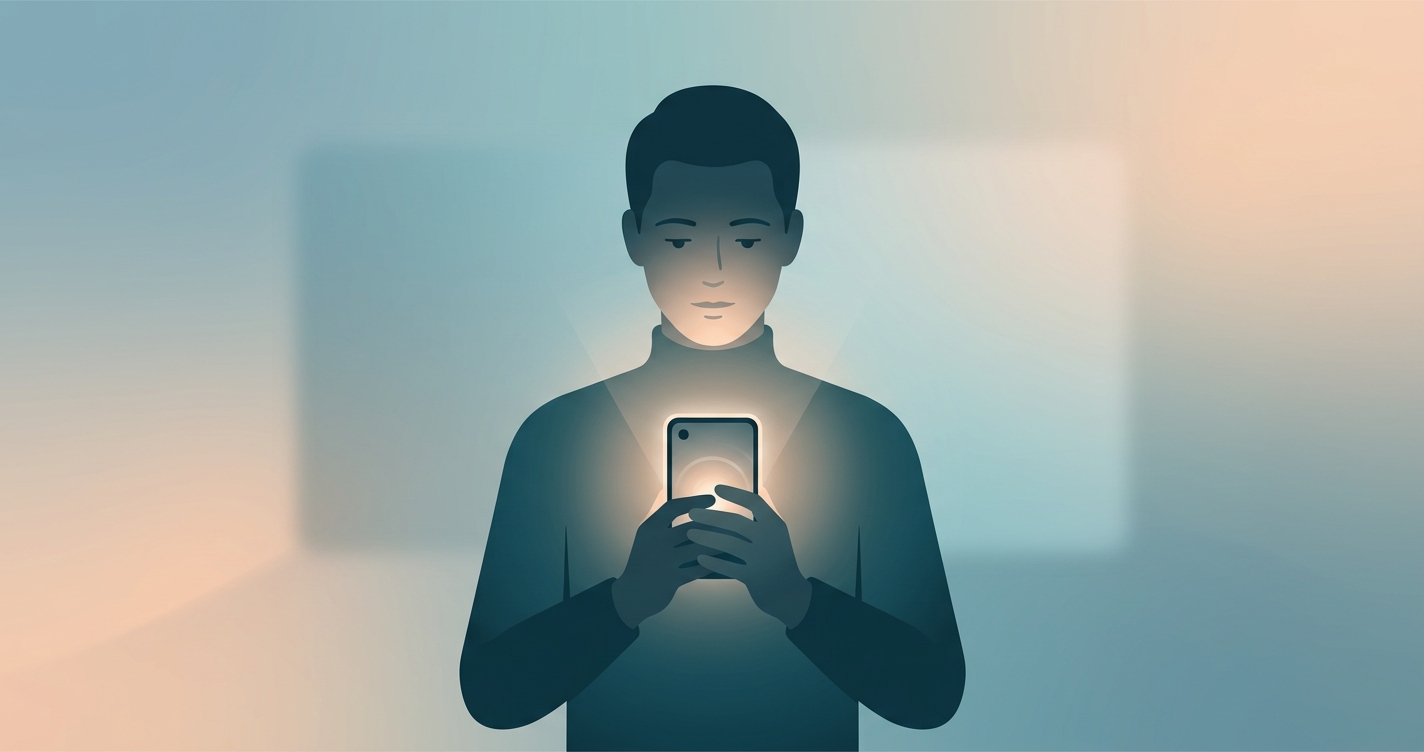
The market for consumer health technology is no longer a niche interest; it's a mainstream phenomenon. As of 2024, more than half of Americans actively track at least one health metric, signaling a fundamental shift in how people engage with their own wellness. This trend is driven by a desire for greater agency and insight, moving routine measurements from the clinic into the home. Among the most accessible of these new tools is the camera health check, a technology that allows individuals to perform a vitals scan in under a minute using the device they already own: their smartphone.
"In 2024, a survey indicated that 58% of Americans utilized virtual care in the past year, with 53% owning a wearable device and over half actively tracking at least one health metric." - Rock Health, Consumer Adoption Survey 2024
The 30-second scan: how to try circadify free
The primary appeal of a camera-based health check is its extremely low barrier to entry. There is no new hardware to purchase and no complex setup. The user experience is designed for simplicity, converting a sophisticated technological process into a few straightforward steps. For those looking to try Circadify free, the process is a clear demonstration of this principle. A qualitative study on the usability of remote photoplethysmography (rPPG) apps, published by researchers at London South Bank University, found that users value simplicity and real-time guidance above all.
The entire process, from opening the app to receiving results, is typically completed in about 30 seconds. This is what it looks like:
- Step 1: Get Ready. The user is guided to a well-lit area, avoiding heavy backlighting or low light. They are prompted to remove any face coverings, such as glasses or masks, to ensure the camera has a clear view.
- Step 2: Position Your Face. Using the phone's front-facing camera, the user positions their face within an on-screen guide. The app provides real-time feedback to ensure optimal distance and framing.
- Step 3: Hold Still. The user is asked to remain still and look at the screen for the duration of the scan, which is usually between 15 and 30 seconds. During this time, the rPPG technology analyzes the light reflected from the user's skin to detect the minute color changes caused by blood flow.
- Step 4: View Results. Immediately after the scan, the application processes the data and displays key vital signs, such as heart rate, heart rate variability, and respiratory rate.
This frictionless experience is central to the value of a camera health check app. It allows for on-demand spot checks that can fit into any part of a person's day, from a morning baseline reading to a post-exercise recovery check.
| Factor | Optimal Condition | Suboptimal Condition & Impact |
|---|---|---|
| Lighting | Diffuse, bright, and stable front-facing light. | Strong backlighting, low light, or rapidly changing light. This can obscure the subtle skin-color changes the camera needs to detect, reducing signal quality. |
| Stillness | Remaining still, with minimal head movement or talking. | Head movements, facial expressions, or talking. Motion introduces significant noise into the rPPG signal, making it difficult to isolate the blood volume pulse. |
| Camera Position | Face centered in the frame, roughly 18-24 inches from the camera. | Being too close or too far from the camera, or having only part of the face visible. The algorithm needs a sufficient region of interest to work effectively. |
| Skin Visibility | Unobstructed skin on the face. | Heavy makeup, glasses, or face coverings. These can block the camera's view of the skin surface where the blood flow signal is measured. |
Industry Applications
The "try free" model for camera-based health checks serves as more than just a consumer entry point; it's a powerful discovery tool that fuels broader enterprise applications. By making the technology accessible, companies can demonstrate its value proposition to a wide audience, which in turn informs its use in more structured environments.
Corporate Wellness
Companies are increasingly integrating contactless scanning into their wellness platforms. The ease of use makes it a simple, scalable way for employees to engage with their health, track stress indicators via metrics like HRV, and participate in wellness challenges without requiring employer-provided hardware.
Telehealth Onboarding
For virtual care providers, getting baseline vitals is a persistent challenge. A free and easy-to-use camera scan can serve as a first step in the patient intake process, providing the clinical team with preliminary data before the virtual consultation even begins.
Insurance and preventative health
Insurers and public health programs have an interest in making preventative health tools widely available. Offering a free camera health check can encourage members to engage in regular self-monitoring, potentially catching early signs of health changes.
Current research and evidence
The technology that powers a camera health check is known as remote photoplethysmography (rPPG). It's the same base technology used in pulse oximeters and smartwatches (photoplethysmography, or PPG), but adapted for a remote, camera-based context. Seminal work by researchers like Ming-Zher Poh at MIT in 2010 demonstrated the feasibility of measuring heart rate from webcam video.
Modern research focuses on refining rPPG algorithms to be more robust against real-world challenges. A 2023 study, "A calibration method for smartphone camera photoplethysmography," highlighted how different camera sensors and video compression can affect signal quality, underscoring the need for advanced signal processing to ensure consistency across devices. Researchers are actively working to improve accuracy in varied lighting conditions and for a diverse range of skin tones, which is critical for equitable health technology.
The future of the camera health check
The future of the camera health check lies in passive and continuous monitoring. As algorithms become more efficient, the technology is moving toward a future where health metrics can be gathered opportunistically during regular device use, such as during a video call or while watching a video. Google Research has published work on this, aiming to turn everyday smartphone use into a passive health monitoring tool. This evolution will further reduce the friction of checking your vitals, transforming it from a deliberate 30-second task into an integrated, background process that provides a more holistic view of a person's health trends over time.
Frequently asked questions
What is a camera health check app? A camera health check app uses the camera on a smartphone or tablet to measure vital signs like heart rate, heart rate variability, and respiratory rate. It uses a technology called remote photoplethysmography (rPPG) to analyze light reflected from the skin and detect the pulse.
Is it safe to scan my face for a health check? Yes. These applications only use the standard camera on your device to passively observe the light reflecting from your skin. No special signals or energy are emitted toward you. The process is as safe as taking a selfie.
How accurate is a free camera health check? When used under the right conditions (good lighting, holding still), camera-based measurements for resting heart rate have shown a high degree of accuracy compared to traditional methods. Accuracy can be influenced by movement, lighting, and camera quality. They are designed for screening and wellness monitoring, not for replacing medical-grade diagnostic equipment.
Your first scan awaits
The ability to check key health indicators is no longer confined to the doctor's office. With advancements in rPPG technology, a powerful wellness tool is now available right on your phone. Circadify is at the forefront of making this technology easy to use and accessible. The best way to understand its potential is to experience it directly. You can try Circadify and perform your first 30-second camera health check by visiting circadify.com/download?utm_source=trycircadify.