Track Your Vitals From Your Phone in Under a Minute
Learn how remote photoplethysmography allows you to track vitals from your phone in under a minute without relying on dedicated wearables or extra hardware.
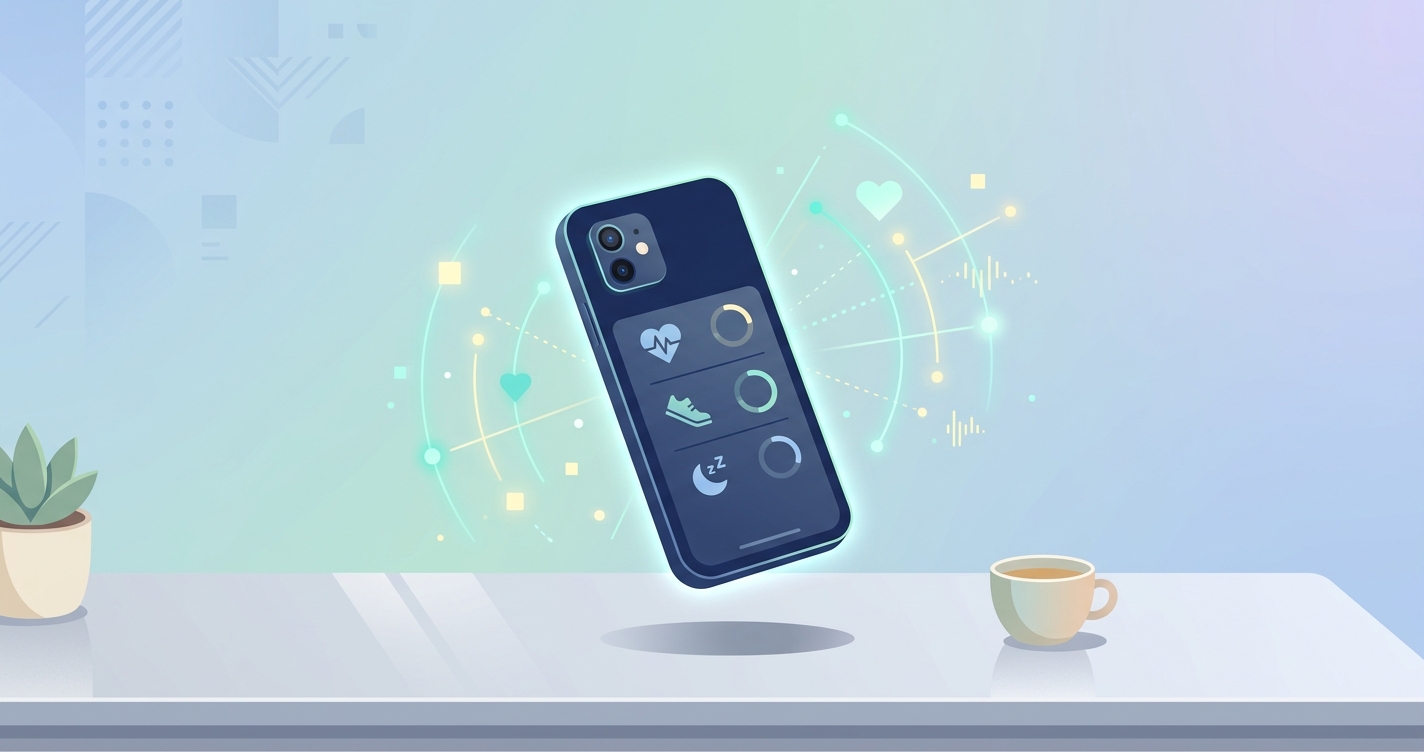
For years, the concept of a personal health check required specialized hardware: a blood pressure cuff squeezing the arm, a chest strap worn during exercise, or at the very least, a dedicated smartwatch securely fastened to the wrist. Today, the optical sensors already built into consumer electronics are replacing the need for single-purpose gadgets. Through rapid advancements in computer vision and artificial intelligence, individuals can now track vitals from your phone using only the standard front-facing camera. This shift from physical contact sensors to optical algorithms allows anyone to complete a 60-second phone health scan from the comfort of their home, capturing baseline cardiovascular data without any extra equipment. The barriers to daily health monitoring are falling away, replaced by software that uses the devices people already carry in their pockets.
"The global photoplethysmography biosensors market, which provides the foundation for contactless vital sign monitoring, reached $459 million in 2023 and is projected to expand to $1.19 billion by 2032 as consumer adoption of optical health tracking accelerates." , Global Market Insights, Photoplethysmography (PPG) Biosensors Market Share Report, 2024
How you can track vitals from your phone
The underlying mechanism that makes a quick vitals check app possible is known as remote photoplethysmography (rPPG). While the terminology sounds complex, the physics operating behind the screen are surprisingly straightforward. Every time the human heart beats, it pumps a fresh volume of oxygen-rich blood through the circulatory system. As this blood reaches the microvascular bed just beneath the skin of the face, it absorbs microscopic amounts of ambient light. To the naked human eye, this rhythmic color shift is entirely invisible. To a digital smartphone camera recording at 30 to 60 frames per second, it is a clear, measurable pattern.
By isolating the red, green, and blue color channels in a continuous video feed, rPPG algorithms extract the pulse wave directly from a user's face. The green color channel is particularly sensitive to hemoglobin absorption, providing the strongest signal for these algorithms to analyze. This means you do not need to purchase a separate wearable to maintain a daily vitals tracking app habit. A standard modern smartphone has sufficient processing power to run these intensive computer vision models locally. When a user holds their device at eye level and remains still, the camera detects the subtle changes in light absorption. The software then translates this optical signal into recognizable physiological metrics, such as a resting heart rate or respiratory rate.
| Feature | Wearable Fitness Tracker | Contactless Smartphone App | Traditional Clinical Monitor |
|---|---|---|---|
| Measurement Method | Physical contact (wrist) | Optical (camera-based rPPG) | Physical contact (cuff/chest) |
| Hardware Required | Dedicated device | Existing smartphone | Dedicated medical device |
| Setup Time | Continuous/Instant | Under 60 seconds | 2 to 5 minutes |
| Accessibility | Requires purchase | High (software download) | Medical facility or prescription |
| Primary Use Case | Activity and sleep | On-demand resting spot checks | Diagnostic clinical care |
To get the most reliable reading from a 60-second phone health scan, users should follow a few consistent practices to optimize the optical signal:
- Rest in a seated position for at least two minutes prior to starting the measurement to achieve a true resting state.
- Ensure the primary ambient light source is in front of the face, not behind the head, to avoid shadows.
- Hold the phone steady at eye level to minimize neck strain, body movement, and camera shake.
- Breathe normally and avoid talking or exaggerated facial expressions during the scanning process.
- Remove heavy cosmetics, thick facial hair, or highly reflective glasses that might obscure the skin surface from the camera lens.
Expanding health applications
The ability to pull physiological data from a standard camera feed extends far beyond simple curiosity. As the mathematical models improve, the applications for this technology are moving into diverse sectors of daily health management.
Personal wellness routines
The most immediate application is personal wellness monitoring. People who want to understand their cardiovascular baselines but dislike wearing a smartwatch to bed are turning to optical scanning. Taking a measurement first thing in the morning provides a consistent, reliable snapshot of resting heart rate and respiratory rate. Over weeks and months, this accumulated data forms a trend line that can highlight changes in physical recovery, stress accumulation, or general aerobic fitness. Consistency is the primary driver of value in personal health tracking, and removing the friction of wearing a device makes daily compliance much easier.
Telehealth Integration
Remote patient monitoring and telehealth are also adopting optical technology to bridge the gap between in-person and digital care. Historically, a virtual doctor's appointment lacked the objective data of a physical exam room. A physician could ask a patient how they felt, but they could not easily check their pulse or breathing rate. By integrating rPPG into telehealth workflows, providers can request that patients run a quick scan before logging into their consultation, adding a layer of objective physiological data to the subjective conversation.
Corporate wellness and stress management
Workplace wellness programs are beginning to utilize optical scanning to help employees manage daily stress. Because the technology requires no physical hardware distribution, large organizations can offer the software to thousands of employees simultaneously without managing a complex supply chain of fitness bands. Workers can take a private, one-minute scan at their desks to assess their physiological stress indicators. When resting metrics elevate beyond normal baseline levels, the application can encourage them to take brief recovery breaks, stretch, or practice controlled breathing techniques.
Why baseline tracking matters
Before the advent of the daily vitals tracking app, most individuals only had their vital signs checked once a year during an annual physical. This traditional approach provides a single snapshot in time. If a patient drank a large coffee or experienced traffic-induced anxiety before their appointment, their heart rate would naturally spike, providing an inaccurate representation of their true resting state.
Optical technology changes this dynamic by enabling high-frequency baseline tracking. When an individual takes a 60-second phone health scan every morning in a calm environment, they establish an accurate, personalized baseline. Deviations from this established norm are far more informative than comparing a single reading to a broad population average. An upward trend in resting heart rate over several days can indicate poor sleep quality, accumulating systemic fatigue, or the early onset of a mild illness. Tracking vitals from your phone shifts the focus from sporadic medical measurements to continuous, proactive wellness observation.
Current research and evidence
The transition of remote photoplethysmography from an academic laboratory concept to a widely available consumer application is backed by a robust and growing body of scientific validation. Early iterations of the technology struggled with variable lighting conditions and darker skin tones, but modern machine learning approaches and advanced neural networks have largely mitigated these initial limitations.
A clinical validation study published by researchers associated with the Cardiio app in the Journal of Medical Internet Research (2022) evaluated the accuracy of facial photoplethysmography using standard smartphone hardware. The research team found that for resting heart rate measurements, the optical approach yielded a Root Mean Square Error (RMSE) of less than 1.5% when compared to traditional clinical benchmark devices. This data indicates a remarkable degree of precision for resting, on-demand measurements taken outside of a hospital environment.
Furthermore, engineering teams at major technology organizations are actively refining the underlying algorithmic models to ensure broad demographic equity. Research published by Google's Health and AI divisions (2023) detailing their Passive Heart Rate Measurement (PHRM) system demonstrated significant improvements in algorithmic fairness. Their updated deep learning models achieved a Mean Absolute Percentage Error (MAPE) of less than 10% across all Fitzpatrick skin types. This achievement effectively meets the accuracy standards expected of commercial fitness devices, ensuring the technology functions reliably regardless of the user's skin tone or complexion.
Additional systematic reviews published in the National Institutes of Health databases confirm that when consumers use these tools in controlled, well-lit environments, the error margins shrink to levels comparable with traditional wrist-worn fitness trackers. The consensus across the scientific literature is that while optical scanning is highly sensitive to motion, its accuracy in a resting state is more than sufficient for consumer health monitoring.
The future of optical health tracking
The current generation of optical health tracking is primarily focused on fundamental metrics like heart rate and respiratory rate, but the future trajectory points toward much more complex physiological modeling. Researchers and bioengineers are actively investigating how the subtle dynamics of the facial pulse wave can be used to estimate continuous changes in blood pressure, analyze detailed heart rate variability (HRV), and even measure peripheral blood oxygen saturation (SpO2) without requiring a physical clip on the finger.
As smartphone processors become increasingly powerful and dedicated neural processing units (NPUs) become standard hardware in consumer devices, the speed and efficiency of these computer vision algorithms will continue to scale. Future iterations of the technology may operate continuously in the background during a video conference call or while a user is reading a digital article on their tablet, providing seamless, zero-friction health monitoring without requiring the user to initiate a specific manual scan. The ultimate goal of the industry is to make vital sign monitoring as invisible, routine, and accessible as checking the weather forecast on a digital screen.
Frequently asked questions
How accurate is a phone-based vitals scan? For resting measurements, phone-based optical scans are highly comparable to consumer wearable devices. Published studies show that when a user is sitting completely still in well-lit conditions, the heart rate estimation typically falls within 1 to 2 beats per minute of a standard physical contact sensor.
Does tracking vitals from my phone work in the dark? Optical scanning relies on a camera lens detecting subtle color changes in your skin, which requires adequate ambient light to function. In complete darkness, a standard front-facing camera cannot pick up the necessary signals. You need a well-lit environment, ideally with a light source facing your face, for the technology to work effectively.
Do I need a special type of smartphone to use this technology? No. The technology relies on software algorithms processing a standard digital video feed. Any modern smartphone manufactured in the last several years with a functioning front-facing camera and an up-to-date operating system has the necessary processing power to run a contactless vitals scan.
Can optical scanning replace my doctor's clinical equipment? No. Camera-based health applications are designed strictly for personal wellness tracking and establishing general physiological baseline trends over time. They are not diagnostic medical tools and are not intended to replace professional medical equipment, physician oversight, or formal clinical evaluations.
If you are interested in exploring how optical technology can fit seamlessly into your daily wellness routine, you can experience the mechanics firsthand. Try a 60-second phone health scan and see how easy it is to build your personal physiological baseline right from your living room. Download the application today to try Circadify free and start tracking your metrics without the need for any additional hardware or complicated gadgetry.