How to Track Your Blood Oxygen Daily Without a Watch
A research-backed guide to track blood oxygen without a watch using only your phone camera, plus what the science says about daily SpO2 trend monitoring.
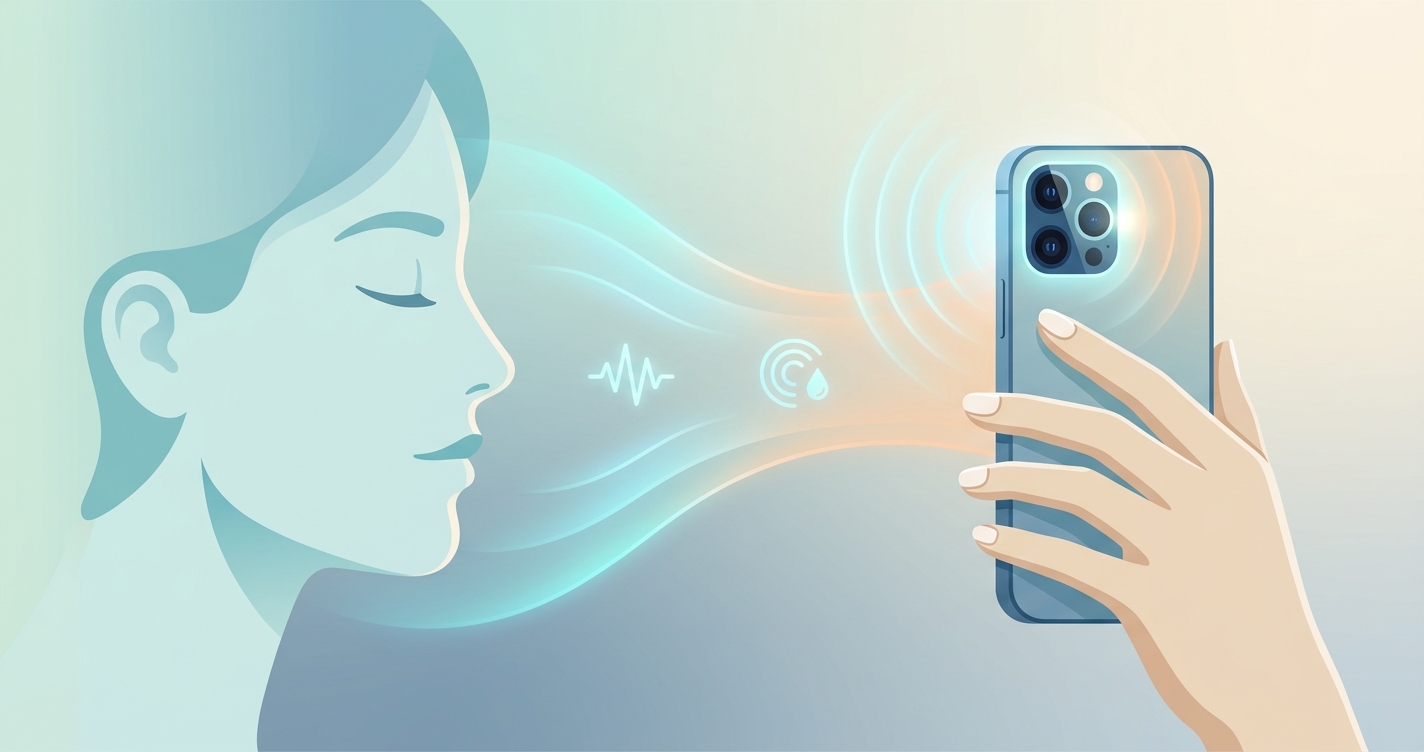
Blood oxygen used to be a number you only saw in a hospital or on a fingertip clip during a respiratory scare. That has changed. A growing body of peer-reviewed work shows that the camera already in your pocket can read the same optical signal a dedicated oximeter relies on, which means you can track blood oxygen without a watch and without buying any new hardware. For the health-curious person who wants to watch a daily trend rather than chase a single clinical number, the phone has quietly become the most accessible tool available.
The reason this works comes down to light. Hemoglobin carrying oxygen absorbs red and infrared light differently than hemoglobin without it. A camera sensor can detect those tiny color changes in your skin as blood pulses through it, a technique researchers call photoplethysmography. When it is done with a finger pressed to the lens it is contact PPG. When it is done by filming your face it is remote PPG, or rPPG. Both extract the same underlying rhythm, and both are now being studied as ways to estimate peripheral oxygen saturation, usually written as SpO2.
In a controlled induced-hypoxemia study published in npj Digital Medicine, researchers from the University of Washington and UC San Diego found a smartphone camera and flash could detect blood oxygen saturation down to 70 percent, the lowest value the U.S. FDA recommends pulse oximeters be tested against, and correctly flagged readings below 90 percent about 80 percent of the time.
How to track blood oxygen without a watch using your phone
There are two practical methods to track blood oxygen without a watch, and they trade off convenience against signal strength.
The first is the contact method. You cover the rear camera and its flash with a fingertip. The flash pushes light through the tissue, the sensor records how much returns, and software converts the red-to-infrared style ratio into an SpO2 estimate. This was the approach in the University of Washington work led by Edward Wang, who began the project as a PhD student before moving to UC San Diego. The strong, steady signal from a fingertip is why this method has produced the most clinically tested results so far.
The second is the contactless method. You hold the phone at arm's length and let the front camera film your face for roughly 30 to 60 seconds. No flash, no contact, no clip. The signal is fainter because ambient light is doing the work, but modern signal processing and deep learning models have closed much of the gap. This is the method most consumer vitals apps now favor because it captures heart rate, respiratory rate, and oxygen trend in a single scan.
Here is how the common ways of checking oxygen compare for someone who wants a daily habit rather than a one-time medical reading.
| Method | Hardware needed | Best use case | Daily-trend friendly | Practical limitation |
|---|---|---|---|---|
| Fingertip pulse oximeter | Dedicated clip device | Spot clinical check | Low, easy to forget | Another gadget to buy and charge |
| Smartwatch SpO2 | Wrist wearable | Overnight spot samples | Medium | Only works when worn and charged |
| Phone finger-on-camera | Smartphone you own | On-demand stronger signal | High | Hand must stay still, lens gets warm |
| Phone facial rPPG scan | Smartphone you own | Fast daily snapshot | Very high | Needs decent lighting and a steady frame |
A few points are worth pulling out of that table:
- The two phone-based rows require zero new hardware, which removes the single biggest reason people abandon oxygen tracking.
- A watch only measures when it is on your wrist and charged, so it misses readings precisely when people take it off.
- For trend watching, the easiest method usually wins, because consistency matters more than any single decimal place.
What you actually need for a reliable phone reading
Daily oxygen monitoring on a phone is sensitive to conditions in a way a hospital oximeter is not. A handful of habits make readings far more repeatable:
- Sit still and rest for a minute before scanning. Movement is the largest source of error in both contact and contactless PPG.
- Find even, indirect light for facial scans. Harsh side light or near darkness starves the camera of usable signal.
- Keep your finger gentle but fully covering the lens and flash for contact readings. Pressing too hard squeezes out the blood flow you are trying to measure.
- Scan at the same time each day, ideally at rest, so you are comparing like with like.
- Treat the number as a personal baseline, not a diagnosis. The trend over a week tells you more than any single scan.
Industry applications for camera-based oxygen tracking
Personal wellness and self-tracking
The most common use is simple curiosity turned into a habit. People recovering from a cold, adjusting to altitude, or watching how poor sleep affects them want to check SpO2 with no wearable on hand. A phone scan fits into a morning routine the way a wrist clip never quite did.
Telehealth and remote check-ins
Clinicians running virtual visits have no way to see a patient's vitals through a screen. A patient-side phone scan gives a provider a contextual oxygen and pulse reading during the call. The University of Washington team specifically framed their work as useful for telemedicine and for screening respiratory conditions at home.
Caregiving and aging in place
Adult children monitoring an older parent often cannot install or maintain medical devices remotely. A familiar phone app that captures an oxygen trend, without a charger to manage or a strap to fasten, lowers the barrier to consistent at-home monitoring.
Current research and evidence
The evidence base for camera-based SpO2 has grown quickly. The npj Digital Medicine induced-hypoxemia study remains a reference point because it deliberately lowered participants' oxygen in a controlled setting and showed the phone tracked the decline rather than only confirming normal readings.
Contactless facial methods are catching up. A study indexed in PubMed on facial multi-region rPPG from smartphone videos reported a mean absolute error as low as 0.578 percent for SpO2 in its best configuration, comparing favorably against finger-based video in the same work. Separate research comparing deep neural network models to the traditional ratio-of-ratios calculation found the learned models cut error substantially, landing around a 1.97 percent mean absolute error where older math struggled.
Validation of full mobile applications is also underway. The WellFie accuracy study posted on medRxiv evaluated remote photoplethysmography for multiple vitals from a phone, part of a wider push to move these methods from lab demonstrations into everyday tools. Reviews from the University of St Andrews and the 2023 wearable photoplethysmography roadmap both note the same caveats: accuracy depends heavily on skin tone diversity in training data, lighting, motion, and the region of the face or finger used.
The honest summary is that contact methods have the strongest clinical track record, contactless methods are improving fast, and both are better suited to spotting trends and meaningful drops than to replacing a calibrated medical oximeter for diagnosis.
The future of tracking blood oxygen without a watch
Three shifts are likely to define the next few years. First, normalization techniques that adjust for individual skin and lighting differences, highlighted in recent full-range contactless SpO2 research, should make readings more consistent across diverse users, which has been the field's hardest problem. Second, on-device neural processing means a scan can run privately on the phone without uploading raw video. Third, fusing oxygen with heart rate, heart rate variability, and respiratory rate from one scan turns a single number into a richer daily picture.
The direction is clear. As models get better at separating real physiological signal from noise, the phone moves from a rough screening tool toward a dependable trend tracker that most people already carry everywhere.
Frequently asked questions
Can I really check my oxygen level without any wearable? Yes. Both contact methods, where you cover the camera and flash with a finger, and contactless facial scans use photoplethysmography to estimate SpO2 from light absorption in your blood. Neither requires a watch or a fingertip clip.
How accurate is a phone oxygen reading compared to a medical oximeter? Research is encouraging but conditions matter. The University of Washington study detected low oxygen below 90 percent about 80 percent of the time, and some facial methods report errors under 1 percent in ideal settings. Treat phone readings as trend indicators, not clinical diagnoses.
What is the best way to get a consistent daily reading? Scan at the same time each day, at rest, in steady indirect light, and hold the phone or your finger still. Consistency in how you measure matters more than chasing a perfect single value.
Should phone oxygen readings replace seeing a doctor? No. They are useful for noticing changes and for context during telehealth visits, but any persistent low reading, breathlessness, or symptom warrants a professional evaluation.
Circadify is building toward exactly this kind of contactless, hardware-free vitals tracking, letting you capture an oxygen and pulse snapshot from a quick camera scan. If you want to see how it works on your own phone, you can try the free Circadify scanner and start watching your own daily trend.