
Resting Heart Rate in Your 40s: What's Normal?
A clear guide to resting heart rate in your 40s: normal ranges, what high or low readings suggest, and how to track your pulse daily with a phone camera.
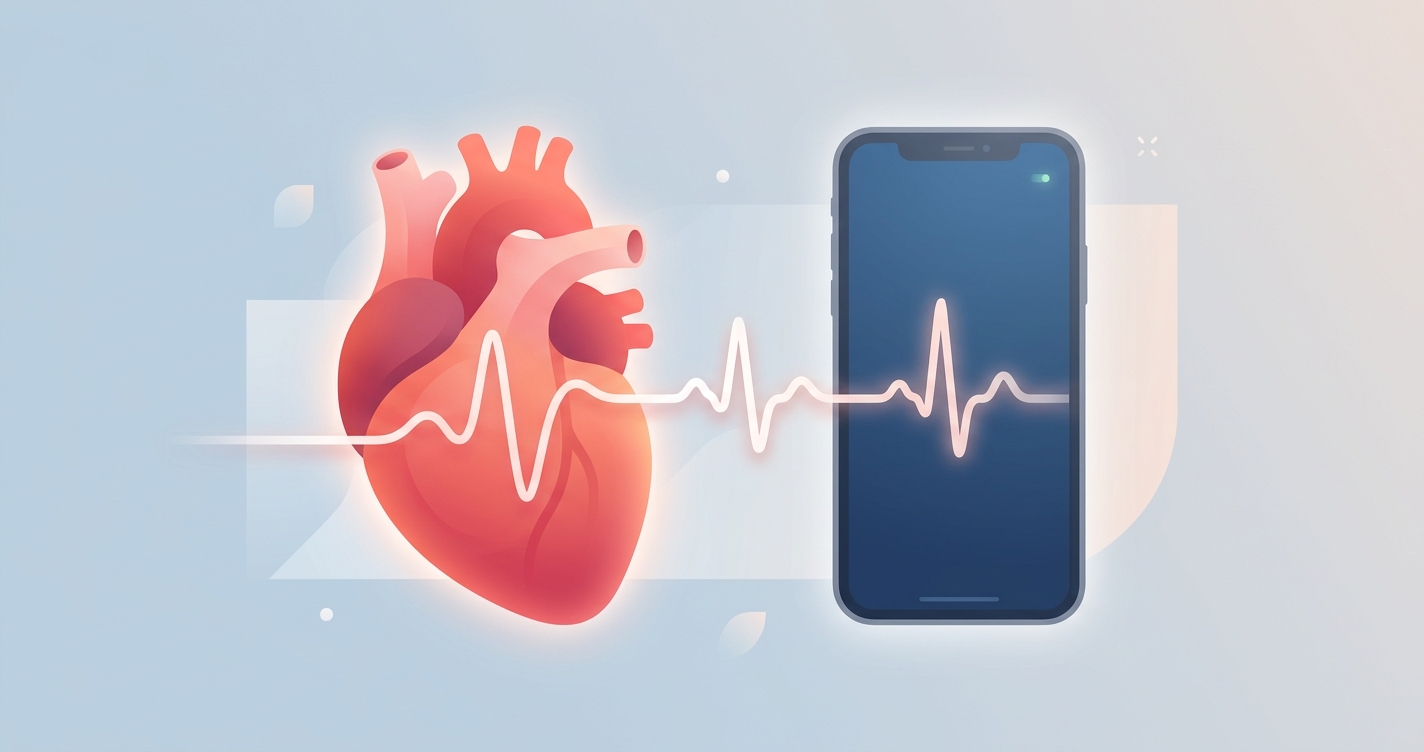
The decade between 40 and 49 is when many people start paying closer attention to numbers they ignored in their twenties. Body weight, blood pressure, and cholesterol all earn a second look, but one of the most telling figures is also the easiest to measure: your pulse at rest. Understanding your resting heart rate in your 40s gives you a low-effort window into cardiovascular fitness, stress load, and how your body is handling the slow metabolic shifts of middle age. The good news is that the number rarely lies, and tracking it no longer requires a clinic visit or a wrist-worn band.
"For every 10 beats per minute increase in resting heart rate, the risk of all-cause mortality rose by 16 percent," reported Magnus Thorsten Jensen and colleagues in their 16-year follow-up of the Copenhagen Male Study, published in Heart (2013).
What a normal resting heart rate in your 40s looks like
The most widely cited reference range comes from the American Heart Association, which places a normal resting heart rate for most adults between 60 and 100 beats per minute (bpm). That range does not shrink or expand much simply because you turned 40. Resting heart rate is driven far more by fitness, sleep, stress, hydration, and medication than by age alone. A sedentary 25-year-old and a fit 45-year-old can easily swap numbers.
That said, many cardiologists argue the upper end of the standard range is generous. Research consistently shows that people sitting near 100 bpm carry more risk than those in the 50s and 60s, even when both are technically inside the normal band. A practical, fitness-aware target for healthy resting pulse in middle age tends to land between 55 and 75 bpm for someone who exercises regularly.
A few points worth keeping in mind about a normal heart rate in your 40s:
- Lower is usually better, within reason. Endurance training can push a healthy resting rate into the 40s without any problem.
- A single high reading means little. Caffeine, a poor night of sleep, a stressful morning, or simply standing up can add 10 to 20 bpm.
- Trends matter more than snapshots. A resting rate creeping up over weeks is more informative than one isolated number.
- Time of day counts. The most reliable reading is taken in the morning, before coffee and before getting out of bed.
Reference ranges by fitness level
The table below frames resting heart rate in your 40s by general fitness category rather than by a single one-size-fits-all cutoff. These are orientation figures, not diagnoses.
| Category | Approx. resting heart rate (bpm) | What it typically reflects |
|---|---|---|
| Athlete / very fit | 40 to 54 | Strong cardiovascular conditioning, efficient stroke volume |
| Above average | 55 to 64 | Regular aerobic activity, good recovery |
| Average / acceptable | 65 to 75 | Standard for moderately active adults in their 40s |
| Below average | 76 to 90 | Often linked to low fitness, stress, or poor sleep |
| Elevated (watch) | 91 to 100+ | Worth monitoring; may warrant a clinician conversation |
The pattern researchers keep finding is a graded one. In the Copenhagen Male Study, men with a resting rate above 90 bpm had roughly three times the mortality risk of those at or below 50 bpm, with risk rising steadily across every band in between. That is why the difference between 70 and 85 bpm is not trivial, even though both sit inside the "normal" label.
What high and low readings suggest
When the number runs high
A consistently elevated resting heart rate, sometimes called tachycardia when it exceeds 100 bpm, can have ordinary explanations and serious ones. Common drivers include dehydration, too much caffeine, alcohol, chronic stress, poor sleep, fever, anemia, thyroid imbalance, and simple deconditioning. For someone in their 40s, an upward drift over months is frequently a fitness and lifestyle signal rather than an emergency. The reading becomes more concerning when it pairs with symptoms such as chest discomfort, shortness of breath, dizziness, or palpitations, which deserve prompt medical attention.
When the number runs low
A low resting heart rate, or bradycardia below 60 bpm, is often a sign of excellent fitness. Trained athletes routinely sit in the 40s with no issue at all. The picture changes only when a low rate comes with fatigue, fainting, lightheadedness, or breathlessness, which can point to an electrical conduction issue and should be checked. Context is everything: a marathon runner at 48 bpm and a sedentary person who suddenly drops to 48 bpm are two very different stories.
Industry Applications
Consumer self-tracking
The biggest shift over the past few years is who gets to measure this number and how often. Daily resting heart rate used to be the territory of clinics and dedicated wearables. Now a phone heart rate check in your 40s takes under a minute using the front camera, no strap required. This matters because frequency beats precision for trend tracking. A reading taken every morning paints a far clearer picture than one taken annually at a physical.
Preventive and corporate wellness
Employers and insurers increasingly treat resting heart rate as a cheap, scalable proxy for cardiovascular fitness across middle-aged populations. Because the metric correlates with downstream risk, it slots neatly into preventive screening programs that aim to catch decline early rather than treat disease late.
Camera-based measurement
The technology behind contactless readings is remote photoplethysmography, or rPPG. A camera detects tiny color changes in the skin of your face as blood pulses through capillaries with each heartbeat. Software converts that rhythm into a heart rate. The approach removes the friction of charging a device or wearing one to bed, which is exactly the friction that causes most people to stop tracking.
Current research and evidence
The evidence base linking resting heart rate to long-term outcomes is large and consistent. The Jensen study (2013) remains one of the cleanest demonstrations because it controlled for physical fitness directly, showing that resting heart rate carried independent risk even after accounting for how fit the men actually were. Each 10 bpm rise mapped to a 16 percent increase in all-cause mortality across the 16-year window.
Broader reviews echo this. The American Heart Association notes that higher resting heart rate tracks with lower physical fitness, higher blood pressure, and greater body weight, all of which compound during the 40s if left unattended. Mayo Clinic guidance reinforces the practical takeaway: a resting rate trending lower over time, toward the 50s and 60s for an active adult, is generally a marker of improving cardiovascular health.
What the research does not support is panic over a single reading. Heart rate is a noisy signal moment to moment. Its value comes from repetition. This is precisely why accessible daily measurement has become more useful than occasional high-precision snapshots.
The future of resting heart rate tracking
Three trends are shaping where this goes next. First, measurement is becoming ambient. Instead of a deliberate act, resting heart rate is increasingly captured passively during things people already do, like looking at a phone screen in the morning. Second, the metric is being combined with others, including heart rate variability and respiratory rate, to build a fuller daily readiness picture rather than a single isolated number. Third, the barrier to entry keeps falling. As camera-based methods mature, the population able to track resting heart rate in their 40s expands from device owners to nearly anyone with a smartphone.
The likely endpoint is a world where knowing your baseline resting pulse is as routine as knowing your weight, and where a slow upward drift triggers a lifestyle nudge long before it becomes a clinical problem.
Frequently asked questions
What is a good resting heart rate for someone in their 40s? For most adults in their 40s, 60 to 100 bpm is considered normal, but a fitness-aware target of roughly 55 to 75 bpm is a healthier zone for someone who exercises regularly. Lower generally reflects better cardiovascular conditioning, as long as you feel well.
Should I worry about a resting heart rate over 80 in my 40s? Not from one reading. A rate in the high 70s or 80s is often tied to stress, caffeine, poor sleep, or low fitness rather than disease. If it stays elevated over weeks, or comes with chest pain, breathlessness, or dizziness, talk to a clinician.
When is the best time to measure my resting heart rate? First thing in the morning, before getting out of bed and before any caffeine, gives the most reliable baseline. Measuring at the same time each day makes trends easier to spot.
Can my phone really check my heart rate accurately? Yes. A phone heart rate check in your 40s uses the camera to detect blood-flow color changes in your skin, a technique called rPPG. For a calm, on-demand resting reading, it is well suited to tracking your daily trend over time.
Circadify is building in exactly this space, making a daily resting heart rate check something you can do in under a minute with the camera you already own. If you want to start watching your own trend instead of guessing, you can try a free Circadify scan and capture your resting rate from tomorrow morning onward.