7 Things a Phone Health Scanner Can Measure in 60 Seconds
A phone health scanner can read heart rate, HRV, breathing, oxygen and more in under a minute. Here are the 7 vitals a 60 second scan captures.
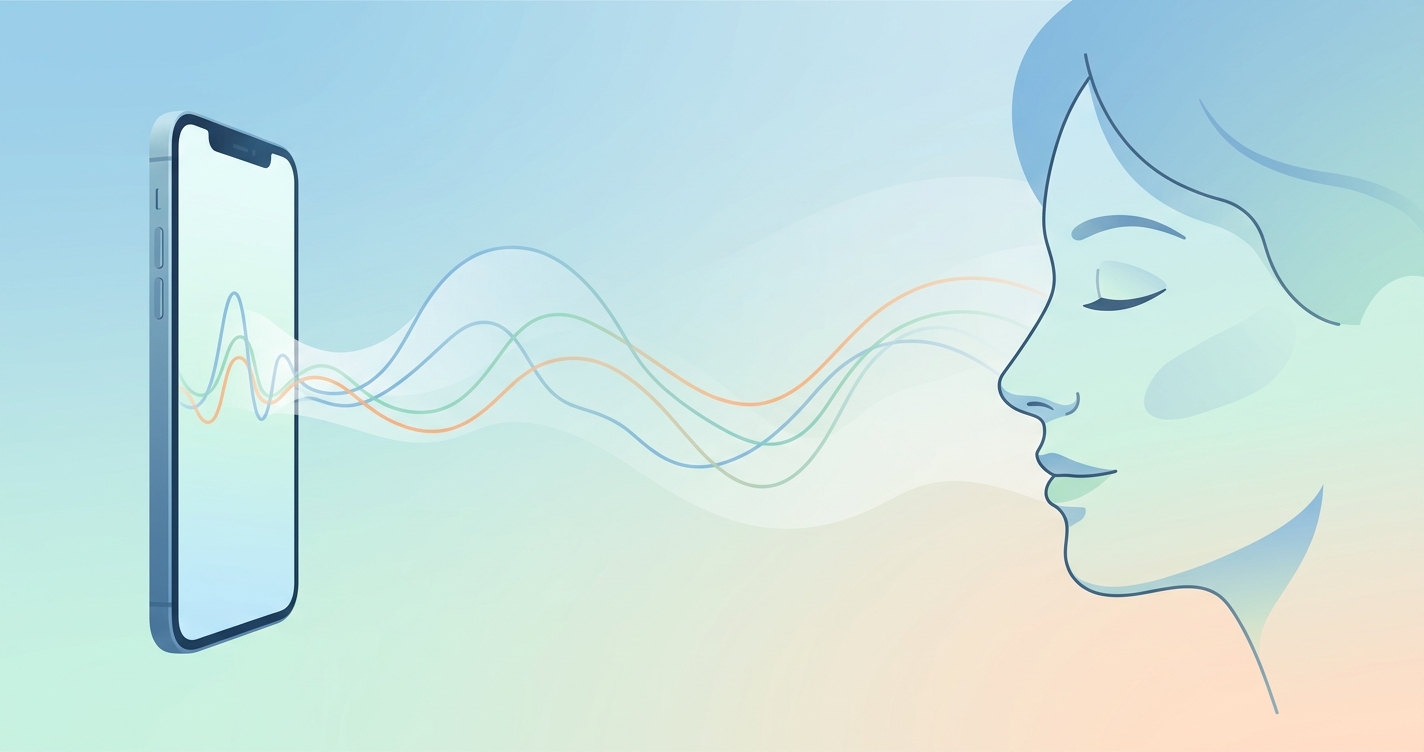
The smartphone in your pocket has quietly turned into a measurement instrument. Using nothing but the front-facing camera and a steady minute of stillness, a phone health scanner can now read several of the same vital signs a nurse records at the start of a clinical visit. The technology behind this is called remote photoplethysmography, or rPPG, and it works by detecting the tiny color changes in your skin as blood pulses through the vessels in your face. Those changes are invisible to the naked eye but clear to a camera sensor. For the millions of people searching for what a phone scan can actually do, the honest answer is more than most expect, and it happens fast.
"Camera-based photoplethysmography can estimate heart rate from facial video with mean absolute errors of just a few beats per minute under good conditions," reported Daniel McDuff and colleagues at the Massachusetts Institute of Technology Media Lab, whose foundational rPPG research helped define the field.
What a phone health scanner measures in a 60 second health scan
A phone health scanner does not replace a blood draw or a hospital monitor. What it does is capture a focused set of cardiovascular and respiratory signals that respond to your daily habits, stress, sleep, and recovery. The appeal is the time window. A single 60 second health scan, taken while you sit still and look at the camera, can surface a snapshot of how your body is functioning that morning. Below are the seven metrics that modern camera-based scanning can estimate, why each one matters, and how reliable the underlying signal tends to be.
The science is rooted in optics. When your heart beats, it pushes a fresh wave of blood into the capillaries just beneath your skin. That wave subtly shifts how much green light your skin absorbs versus reflects. A camera recording at 30 frames per second captures enough of these fluctuations to reconstruct your pulse waveform, and from that single waveform a surprising number of derived metrics become possible.
| Metric | What it reflects | Typical scan time | Signal confidence |
|---|---|---|---|
| Heart rate | Cardiovascular load and effort | 20-30 seconds | Strong |
| Heart rate variability | Stress and recovery balance | 60 seconds | Moderate to strong |
| Respiratory rate | Breathing effort and calm | 30-45 seconds | Strong |
| Blood oxygen trend | Oxygen saturation pattern | 45-60 seconds | Moderate |
| Stress index | Autonomic nervous system state | 60 seconds | Moderate |
| Pulse rhythm regularity | Beat-to-beat consistency | 60 seconds | Moderate |
| Blood pressure trend | Relative pressure changes over time | 60 seconds | Emerging |
1. heart rate
Heart rate is the anchor metric of any phone vitals app. It is the easiest signal to extract from facial video because the pulse wave is strong and periodic. A resting reading taken first thing in the morning is one of the most useful numbers you can track, since a creeping upward trend often hints at poor sleep, dehydration, or the early stage of illness before symptoms appear.
2. heart rate variability
Heart rate variability, or HRV, measures the tiny differences in timing between consecutive beats. Counterintuitively, more variation is usually healthier, signaling a flexible nervous system. HRV is the metric most closely tied to stress and recovery, which is why athletes obsess over it. A camera scan needs the full 60 seconds to estimate HRV well, because it has to capture enough beats to measure their spacing.
3. respiratory rate
Breathing rate is the vital sign clinicians value most and patients think about least. As you breathe, subtle motion and blood flow changes ripple through the pulse signal, allowing the scanner to count breaths per minute without a chest strap. A resting adult typically sits between 12 and 20 breaths per minute, and readings outside that band can flag stress or respiratory strain.
4. blood oxygen trend
Oxygen saturation reflects how well your lungs are loading oxygen into your blood. Camera-based estimation of this signal is harder than heart rate because it depends on comparing light absorption across color channels, which is sensitive to lighting. As a trend tracked over days rather than a single absolute number, it gives useful context, especially during recovery from a cold or at altitude.
5. stress index
A stress index is a composite score derived from heart rate and HRV patterns that approximates the balance between your fight-or-flight and rest-and-digest systems. It is not a diagnosis, but a directional reading. Many people use it to decide whether to push through a hard workout or take a lighter day.
6. pulse rhythm regularity
By examining the spacing of each detected beat, a phone health scanner can flag whether your pulse is steady or irregular. This is an awareness signal, not a clinical arrhythmia detector, but noticing consistent irregularity is a reasonable prompt to mention it to a physician.
7. blood pressure trend
This is the newest and most experimental of the seven. Researchers are working on extracting blood pressure changes from the shape of the pulse waveform, known as pulse transit features. The most realistic use today is tracking relative movement, whether your pressure pattern is drifting up or down over weeks, rather than producing a single cuff-equivalent number.
Industry Applications
The same 60 second health scan technology is being adapted across several sectors, each valuing the speed and lack of hardware.
Consumer Wellness
For health-curious individuals, the draw is friction-free tracking. There is no device to charge, strap on, or replace. A morning scan becomes a habit similar to checking the weather, giving people a baseline they can watch over time.
Telehealth and remote care
Virtual visits have exposed a gap: the clinician on the screen cannot take your vitals. Camera-based scanning lets patients capture heart rate, breathing, and oxygen trends during a video consultation, adding objective data to a conversation that was previously all self-report.
Workplace and insurance screening
Organizations exploring large-scale wellness programs see value in a tool that requires nothing more than the phones employees already carry. A quick scan can encourage engagement without the cost and logistics of distributing wearables to thousands of people.
Current research and evidence
The evidence base for camera-based vitals has grown quickly. Beyond McDuff's work at MIT, researchers Wim Verkruysse, Lars Svaasand, and J. Stuart Nelson at the University of California demonstrated as early as 2008 that ambient-light facial video could capture a clean plethysmographic signal, the study that opened the field. More recent work has refined the algorithms to handle motion and varied skin tones.
- A 2017 review by Wenjin Wang and colleagues at Eindhoven University of Technology formalized the signal-processing methods that make rPPG robust under real-world conditions.
- Studies have repeatedly shown that heart rate is the most reliable camera-derived metric, with respiratory rate close behind.
- Lighting quality, camera resolution, and subject stillness remain the biggest variables affecting how dependable a reading is.
Researchers consistently stress that these tools are best understood as wellness and trend instruments rather than diagnostic devices. The strongest results come from controlled conditions: even, natural lighting, a stable phone position, and a still face for the full scan window.
The future of phone health scanning
The trajectory points toward more metrics measured more reliably from the same 60-second capture. Improvements in smartphone camera sensors, combined with machine learning models trained on larger and more diverse datasets, are steadily narrowing the gap between camera estimates and reference devices. The metrics still considered experimental today, particularly blood pressure trends and oxygen saturation, are the ones drawing the most active research investment. As models improve at correcting for skin tone, lighting, and movement, the practical accuracy of an everyday scan should keep climbing.
The likely outcome is not that phones replace clinical equipment, but that a quick scan becomes a normal first layer of personal health awareness, prompting people to seek proper care earlier when something looks off.
Frequently asked questions
What can a phone scan actually measure? A modern phone scan can estimate heart rate, heart rate variability, respiratory rate, a blood oxygen trend, a stress index, pulse rhythm regularity, and an experimental blood pressure trend, all from facial video in under a minute.
How does a phone health scanner work without any sensors? It uses the camera to detect minute color changes in your skin caused by blood flow, a technique called remote photoplethysmography. Software reconstructs your pulse waveform from these changes and derives the other metrics from it.
Is a 60 second health scan accurate enough to rely on? Heart rate and respiratory rate are the most dependable signals, especially in good lighting while you stay still. Treat the readings as wellness trends to watch over time, not as clinical diagnoses, and confirm anything concerning with a healthcare professional.
Do I need special hardware or good lighting? No extra hardware is needed beyond a smartphone with a front camera. Even, natural lighting and a steady, still position produce the most reliable results.
Circadify is building in exactly this space, turning the camera you already own into a fast, contactless way to measure health with your phone. If you are curious what your own numbers look like, you can try the scanner free by visiting the Circadify app download and running your first 60 second health scan today.