How Accurate Are Phone Health Scanner Apps? (2026)
A research-based look at phone health scanner accuracy in 2026: what affects camera vitals readings, when results are trustworthy, and how it compares.
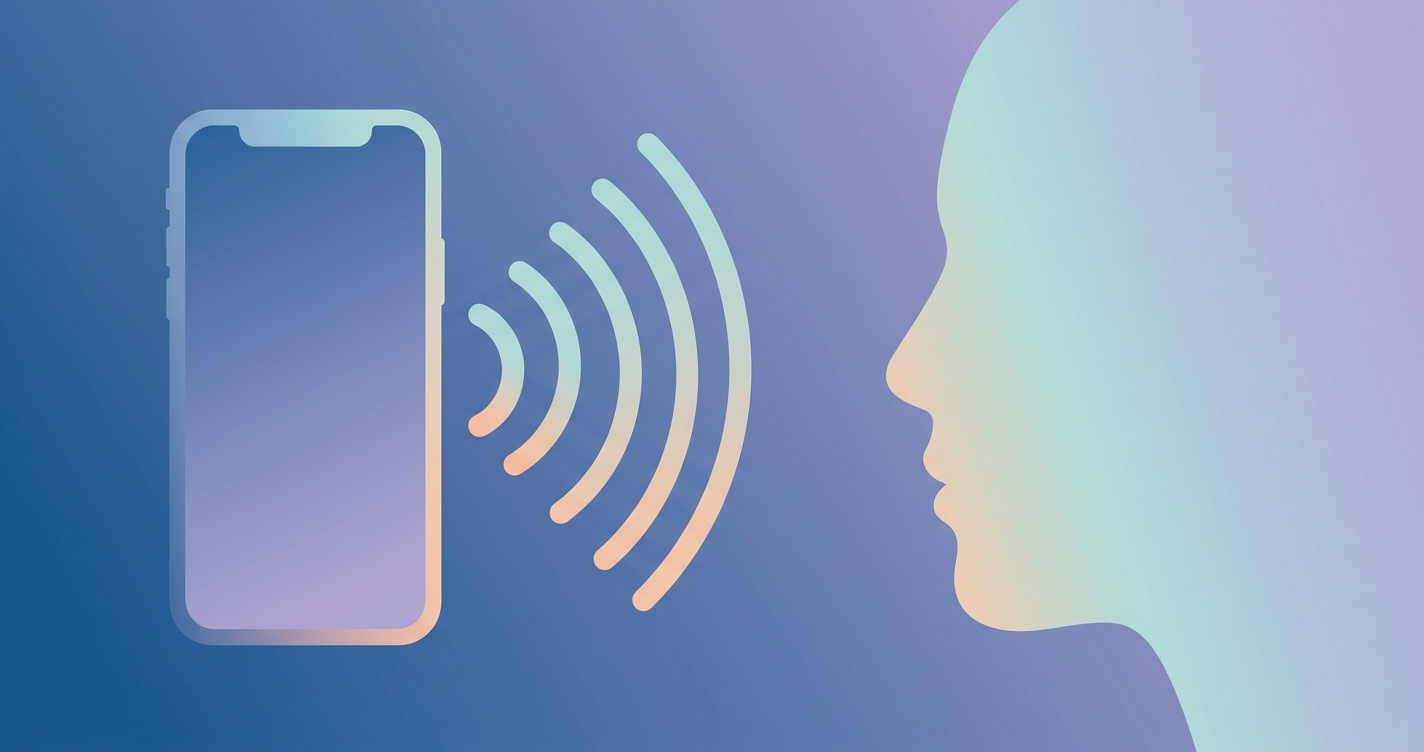
The skeptic's question is a fair one. If a strip of plastic on your wrist or a clip on your finger has been the gold standard for years, how can a phone camera pointed at your face possibly read your pulse? Phone health scanner accuracy is the single biggest objection that keeps health-curious people from trying a camera-based vitals app, and it deserves a straight, evidence-led answer rather than marketing reassurance. The honest version is that accuracy is not a fixed number. It moves up and down depending on lighting, motion, skin tone, the metric being measured, and how well you follow the capture instructions. Understanding those variables is the difference between a reading you can act on and one you should ignore.
A 2025 review of smartphone photoplethysmography found correlations with electrocardiography for resting heart rate ranging from r = 0.98 to 1.0 under controlled conditions, while real-world systems such as Google's passive monitoring reported a mean absolute percentage error under 10 percent across skin tones.
What determines phone health scanner accuracy
The technology behind most camera health apps is remote photoplethysmography, usually shortened to rPPG. As your heart beats, it pushes blood through the tiny vessels under your facial skin. That cyclical change slightly alters how much light your skin absorbs and reflects. A phone camera, sampling many frames per second, can detect those micro-fluctuations in color that are invisible to the human eye, then convert the rhythm into a heart rate. Respiratory rate is derived from the same signal plus subtle head and chest movement. Stress estimates and heart rate variability come from the spacing between detected beats.
Because the signal being measured is so small, anything that adds noise degrades it. That is the core reason people ask whether camera health apps are accurate and get inconsistent personal results. The method itself is sound. The capture conditions are what vary. The main factors that move phone health scanner accuracy up or down are:
- Lighting: even, diffuse light on the face produces the cleanest signal. Harsh shadows, backlighting, or near-darkness starve the camera of usable color data.
- Motion: talking, swaying, or holding the phone unsteadily introduces artifacts that can swamp the pulse signal.
- Skin tone: research has documented a less favorable signal-to-noise ratio for darker skin types, though newer algorithms are closing that gap.
- The metric: resting heart rate is the most reliable output. Blood pressure trends and oxygen estimates are harder and should be read as directional, not diagnostic.
- Elevated values: rPPG accuracy is strongest at rest and drops at high heart rates, which matters for post-exercise readings.
How camera vitals compare to other methods
No measurement tool is perfect, including the clinical ones. A blood pressure cuff has its own error margins, and consumer wrist wearables drift during motion. The useful question is not whether a phone scan is flawless but how its reliability compares for a given use case. The table below summarizes typical expectations based on published validation work and consumer-grade conditions.
| Method | Best metric | Typical accuracy at rest | Main weakness | Convenience |
|---|---|---|---|---|
| Phone camera scan (rPPG) | Resting heart rate | Within a few bpm of ECG in good conditions | Motion, low light, elevated HR | No hardware, ~60 seconds |
| Wrist wearable | Continuous heart rate | Close at rest, drifts with motion | Fit, tattoos, must be worn | Always on, requires charging |
| Finger pulse oximeter | Blood oxygen, pulse | High for SpO2 and HR | Single-purpose, cold fingers | Cheap but separate device |
| Clinical ECG / cuff | Reference standard | Reference standard | Not available on demand | Clinic visit required |
The pattern is clear. For a quiet, on-demand reading at rest, a contactless vitals app sits surprisingly close to contact methods. Where it gives ground is continuous monitoring during movement and any clinical-grade decision. Contactless vitals app accuracy is best framed as a screening and trend tool, not a replacement for a diagnosis.
Industry applications and where reliability matters most
Phone health scan reliability is not a single bar that every use case must clear. Different applications tolerate different error margins, which is why the same technology can be appropriate in one setting and inappropriate in another.
Personal trend tracking
For an individual checking resting heart rate each morning, day-over-day consistency matters more than absolute precision to the decimal. If your reading climbs from a personal baseline of 58 to 72 over several mornings, that trend is meaningful even if the exact figure is a beat or two off. This is the most forgiving and most common consumer use.
Telehealth and remote triage
Clinicians using camera vitals during video visits care about flagging values that fall outside normal ranges. Hospital-based trials of rPPG for respiratory rate have reported mean absolute errors below one breath per minute in controlled settings, which is adequate for triage when a patient cannot easily measure themselves.
Wellness and workplace screening
Employers and wellness platforms use contactless scans for low-stakes, high-volume checks where no hardware can be distributed. Here the value is scale and accessibility, with any concerning result routed to a proper clinical follow-up.
Current research and evidence
The peer-reviewed picture in 2026 is more encouraging than skeptics expect, with clear caveats. A 2025 scoping review of contact-based smartphone photoplethysmography compared with electrocardiography found correlations for resting heart rate ranging from r = 0.98 to 1.0 in healthy subjects under controlled conditions. The WellFie rPPG validation study reported a relative mean absolute percentage error of about 2.66 percent for heart rate, and separate work has shown mean absolute percentage errors as low as 1.6 percent in favorable conditions.
The limitations are documented just as carefully. Researchers studying remote photoplethysmography have shown that accuracy drops sharply at elevated heart rates, a meaningful constraint for anyone scanning immediately after exercise. On skin tone, evaluations of remote monitoring technology across diverse participants have confirmed a historically weaker signal-to-noise ratio for darker skin, while newer methods report no significant performance decrease across skin tone groups, suggesting the gap is an engineering problem being actively solved rather than a permanent ceiling. Google's passive heart rate monitoring system, built on the front camera, reported a mean absolute percentage error under 10 percent and an error of roughly 4.39 bpm against wearable references in real-world use, which is the kind of evidence that matters because it reflects messy everyday conditions rather than a lab.
The consistent theme across this literature is that controlled-condition accuracy is strong and uncontrolled-condition accuracy is variable. That is exactly why guidance on how to capture a good scan is not a formality. It is the lever that determines whether you land near the high end or the low end of the published range.
The future of phone health scanner accuracy
Three developments are likely to narrow the gap between lab and living room. First, sensor hardware keeps improving, with higher frame rates and better low-light performance on mainstream phones, which directly raises the quality of the raw signal. Second, deep-learning models trained on larger and more diverse datasets are improving robustness to motion and skin tone, the two variables that hurt phone health scan reliability most today. Third, regulators and standards bodies are beginning to define what validation should look like for contactless vitals, which will give buyers a clearer way to separate evidence-backed apps from novelty ones.
The realistic forecast is not that camera scans replace clinical instruments. It is that the reliable envelope keeps widening, so more metrics and more conditions move from directional to dependable. For health-curious users, the practical takeaway is that following the capture basics gets you most of the available accuracy today, and the floor keeps rising.
Frequently asked questions
Are camera health apps accurate enough to rely on?
For resting heart rate measured in good light while holding still, published studies show camera scans land within a few beats of clinical references. Treat them as a strong screening and trend tool, not a diagnostic device. Anything unusual should be confirmed with a clinician.
Why do my readings vary between scans?
Variation usually comes from changing capture conditions rather than a broken algorithm. Dim light, movement, talking, or scanning right after activity all add noise. Scanning at the same time each day in the same lighting gives the most consistent results.
Does skin tone affect contactless vitals app accuracy?
It can. Research has documented a weaker signal for darker skin tones, but newer algorithms trained on diverse datasets are reducing that difference, with some studies reporting no significant performance gap across skin tone groups.
Is a phone scan as accurate as a finger pulse oximeter or cuff?
For pulse at rest, a phone scan is close. For blood oxygen and blood pressure, dedicated devices remain more accurate, and phone-based estimates for those metrics are best read as trends rather than exact clinical values.
The most reliable way to judge phone health scanner accuracy is to test it against something you already trust. Circadify is building in this space and offers a free contactless scan, so you can compare a reading to your own pulse count or wearable and see where it lands. Try Circadify free and test the accuracy yourself.