
Phone Camera vs Finger Pulse Oximeter for Heart Rate
A head-to-head look at phone camera vs pulse oximeter heart rate readings, comparing accuracy, convenience, and what the research actually shows for each method.
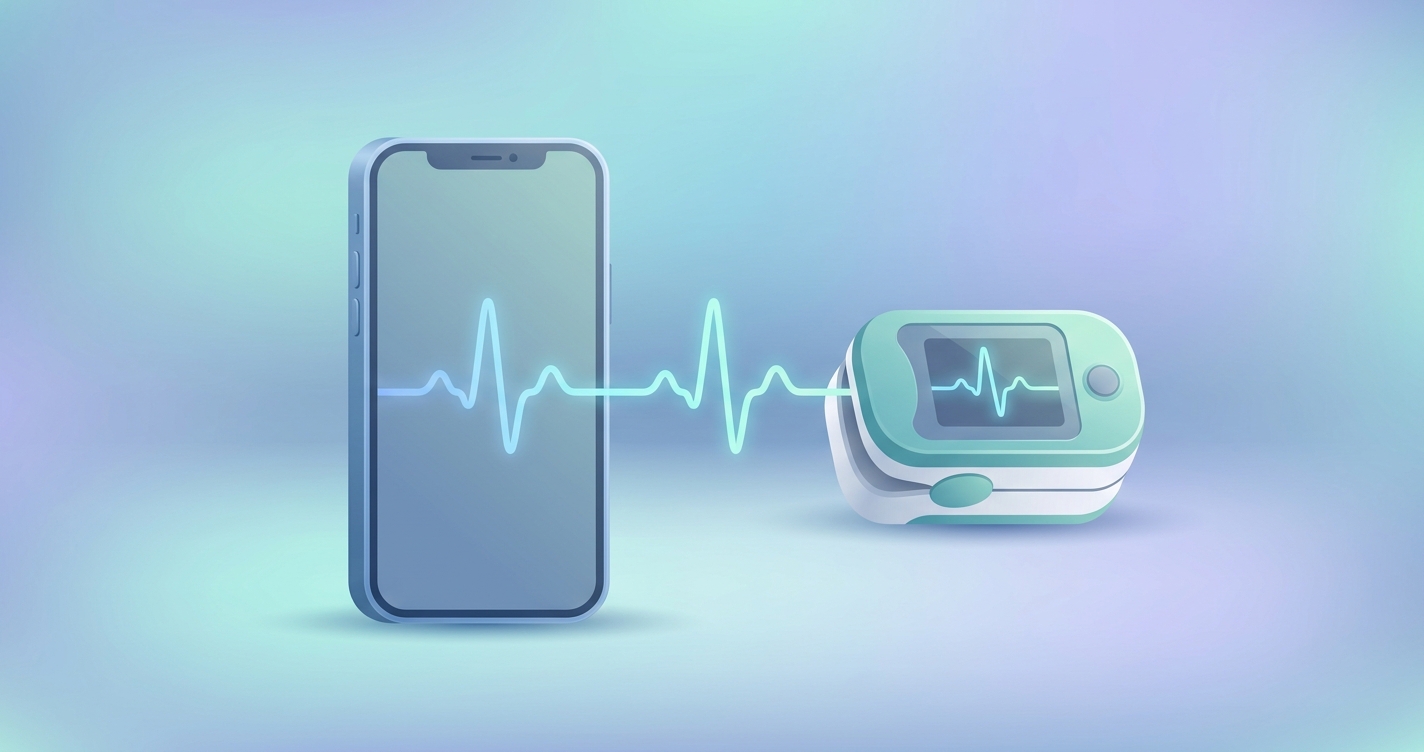
Anyone shopping for a quick, reliable way to check their pulse at home runs into the same fork in the road: spend twenty dollars on a clip-on finger device, or open an app and let the phone already in your hand do the work. Both approaches measure the same underlying signal, but they capture it in very different ways, and the trade-offs matter more than the marketing suggests. This is the practical reality behind the phone camera vs pulse oximeter question, and the honest answer depends on what you actually need a reading for.
Both methods rely on photoplethysmography, or PPG, the optical technique of reading subtle changes in blood volume through light. A finger oximeter shines light through your fingertip and measures what passes through. A phone camera reads light reflected back from your skin, either from a fingertip pressed to the lens or from your face during a contactless scan. Same physics, different geometry.
A 2024 validation study published in JMIR found that fingertip photoplethysmography captured by a smartphone camera estimated resting heart rate with a root mean square error as low as 1.03 beats per minute compared with ECG, while facial scans also performed strongly at rest.
Phone camera vs pulse oximeter: how each method captures your pulse
The core difference in the phone camera vs pulse oximeter comparison is contact versus distance, and transmission versus reflection. A finger pulse oximeter uses transmission PPG: the light source sits on one side of your fingertip and the sensor on the other, so it reads the light that survives the trip through your tissue. That tight, enclosed optical path is part of why dedicated oximeters are stable and why they can also estimate blood oxygen saturation, not just heart rate.
A phone camera works by reflection. When you press a fingertip over the rear lens, the flash illuminates the skin and the camera records the rhythmic color shifts as each heartbeat pushes blood through the capillaries. A contactless face scan does the same thing from across the room, using remote PPG (rPPG) to detect tiny fluctuations in facial skin tone the eye cannot see. The signal is fainter and noisier, which is the central engineering challenge, but modern processors and algorithms have closed much of the gap for resting measurements.
A few distinctions worth keeping straight:
- A finger oximeter measures both heart rate and SpO2 (blood oxygen). Most camera heart rate methods focus primarily on pulse and pulse-derived metrics.
- The fingertip-on-lens method needs contact and steady pressure. A face scan needs none.
- Oximeters require a separate device you have to find, charge or replace batteries, and carry. The phone is always with you.
- Camera readings are more sensitive to motion, lighting, and skin contact than a clipped sensor.
Finger sensor vs phone scan: a side-by-side comparison
The heart rate camera app vs oximeter decision comes down to where each tool is strong. The table below lays out the practical differences for someone choosing between them.
| Factor | Finger Pulse Oximeter | Phone Camera (Fingertip) | Phone Camera (Face Scan) |
|---|---|---|---|
| Measures | Heart rate + SpO2 | Heart rate, HRV | Heart rate, HRV, respiratory rate |
| Hardware needed | Dedicated clip device | Phone you already own | Phone you already own |
| Contact required | Yes, fingertip clip | Yes, finger on lens | No, contactless |
| Resting accuracy | High (reference grade) | Close to reference | Strong at rest |
| Accuracy during motion | Good | Degrades | Degrades more |
| Cost | $20 to $50 device | Free with app | Free with app |
| Convenience | Must locate device | Always available | Always available, hands-free |
| Best for | On-demand SpO2 checks | Quick pulse without a device | Effortless daily trend tracking |
Neither column is a clean winner. A clip-on oximeter is the better tool when you specifically need oxygen saturation, such as monitoring a respiratory condition. For heart rate alone, especially as a habit you want to repeat daily, the phone closes most of the accuracy gap while removing the friction of owning and finding a separate gadget.
Accuracy of phone heart rate readings: what the pulse check comparison shows
The accuracy of phone heart rate measurement has been studied enough that we no longer have to guess. In a 2024 JMIR validation study, researchers compared fingertip and facial smartphone PPG against ECG and reported root mean square error near 1 bpm for fingertip readings at rest, with facial readings also performing well at rest but losing precision after exercise. That pattern is consistent across the literature: camera-based pulse checks are most reliable when you are still.
A 2023 medRxiv evaluation of an rPPG smartphone application reported heart rate agreement of roughly 97 percent against certified medical devices. And researchers at Google Research, in work on passive smartphone-camera heart monitoring, reported a mean absolute error of about 4.39 bpm for daily resting heart rate compared with wearable trackers, with a mean absolute percentage error under 10 percent across all skin tones.
That last point deserves attention, because the finger oximeter has a known weakness here. A widely cited body of work, including reviews summarized by Harvard Medical School and a systematic review and meta-analysis in 2024, found that conventional pulse oximeters can overestimate blood oxygen in people with darker skin pigmentation, a problem called occult hypoxemia. In 2024 and early 2025 the FDA proposed updated guidance recommending more diverse clinical testing and standardized skin-tone scales such as the Monk Skin Tone scale. Notably, that bias is most pronounced for SpO2; the same meta-analysis found no statistically significant skin-tone bias in pulse rate readings. So for heart rate specifically, the playing field between the two methods is more level than the oximetry headlines imply.
The realistic summary of the finger sensor vs phone scan question:
- For resting heart rate, both methods are accurate enough for everyday self-tracking.
- For SpO2, a dedicated oximeter remains the appropriate tool, with the skin-tone caveat in mind.
- For motion or exercise, contact methods hold up better than contactless scans.
- For consistency over weeks and months, the always-available phone wins simply because you will actually use it.
Industry Applications
Home and family monitoring
Households increasingly want a no-friction way to spot-check a pulse without keeping medical devices in a drawer. A camera scan lets a caregiver check a resting heart rate trend without waking someone or fumbling for a clip, while an oximeter stays useful for households managing a specific respiratory diagnosis.
Remote and preventive care
Telehealth providers value methods that require no shipping of hardware. Camera-based pulse checks let a patient capture a reading on the device they already have, lowering the barrier to routine check-ins. Oximeters still anchor protocols where oxygen saturation is the clinical question.
Everyday wellness tracking
For the health-curious person comparing options before buying anything, the appeal of a camera method is that the trial cost is zero. You can establish a resting heart rate baseline today, then decide whether a dedicated device adds anything you actually need.
Current research and evidence
The evidence base for camera heart rate has matured quickly. The 2024 JMIR validation study established near-reference accuracy for fingertip smartphone PPG at rest. The 2023 medRxiv rPPG evaluation reported roughly 97 percent agreement with medical-grade references. Work from Google Research demonstrated resting heart rate within about 4.39 bpm of wearables across skin tones, an important signal that reflection-based methods can be engineered to work equitably.
On the oximeter side, the FDA's 2024 to 2025 review process and the 2024 systematic review and meta-analysis reframed the conversation: the long-standing accuracy advantage of clip-on devices is real for SpO2 in controlled conditions, but it carries a documented pigmentation bias for oxygen readings that regulators are actively working to fix. For pulse rate, the gap between methods is small. The consistent caveat across all of this research is motion: every PPG method, contact or contactless, degrades when the subject moves, which is why resting measurement is the recommended use case for both.
The future of at-home pulse checks
The trajectory points toward measurement becoming ambient rather than something you stop to do. As front-facing cameras, neural processors, and rPPG algorithms improve, contactless scanning is moving from a novelty toward a credible daily-tracking layer that needs no hardware purchase at all. Dedicated oximeters will not disappear, particularly for oxygen-specific monitoring, but the friction of owning a single-purpose gadget is hard to justify when the phone in your pocket can capture the same heart rate signal. Expect the next few years to bring tighter validation, better motion handling, and clearer regulatory frameworks for software-based vitals, all of which favor the always-available camera for routine pulse trends.
Frequently asked questions
Is a phone camera as accurate as a finger pulse oximeter for heart rate? For resting heart rate, the gap is small. Validation studies report smartphone fingertip PPG within roughly 1 bpm of ECG at rest, and contactless face scans also perform well when you stay still. A clip-on oximeter still leads when you need blood oxygen, not just pulse, or during movement.
Which should I buy, a pulse oximeter or a camera app? If you specifically need to track blood oxygen for a respiratory condition, get an oximeter. If you mostly want a quick, repeatable heart rate and trend, the camera method costs nothing to try and is always with you, so it is the lower-risk place to start.
Does skin tone affect these readings? For oxygen saturation, yes. Research and FDA review found conventional oximeters can overestimate SpO2 in people with darker skin. For heart rate specifically, a 2024 meta-analysis found no significant skin-tone bias, and recent camera research reported consistent pulse accuracy across skin tones.
Why are my camera readings inconsistent? Camera PPG is sensitive to motion, lighting, and contact. Take readings seated, still, in even light, and with steady finger pressure if using the fingertip method. Movement is the main reason any PPG method, contact or contactless, loses accuracy.
Circadify is building in exactly this space, turning the camera you already own into a contactless way to check your pulse and other vitals without buying another device. If you are weighing a clip-on oximeter against a phone scan, the simplest next step is to test the camera approach for yourself. Try Circadify free and see how a no-hardware pulse check fits into your routine.