How to Measure Your Vitals Before a Workout at Home
Learn why establishing a pre-workout baseline for heart rate and HRV is critical, and how to measure vitals before workout sessions using a smartphone camera.
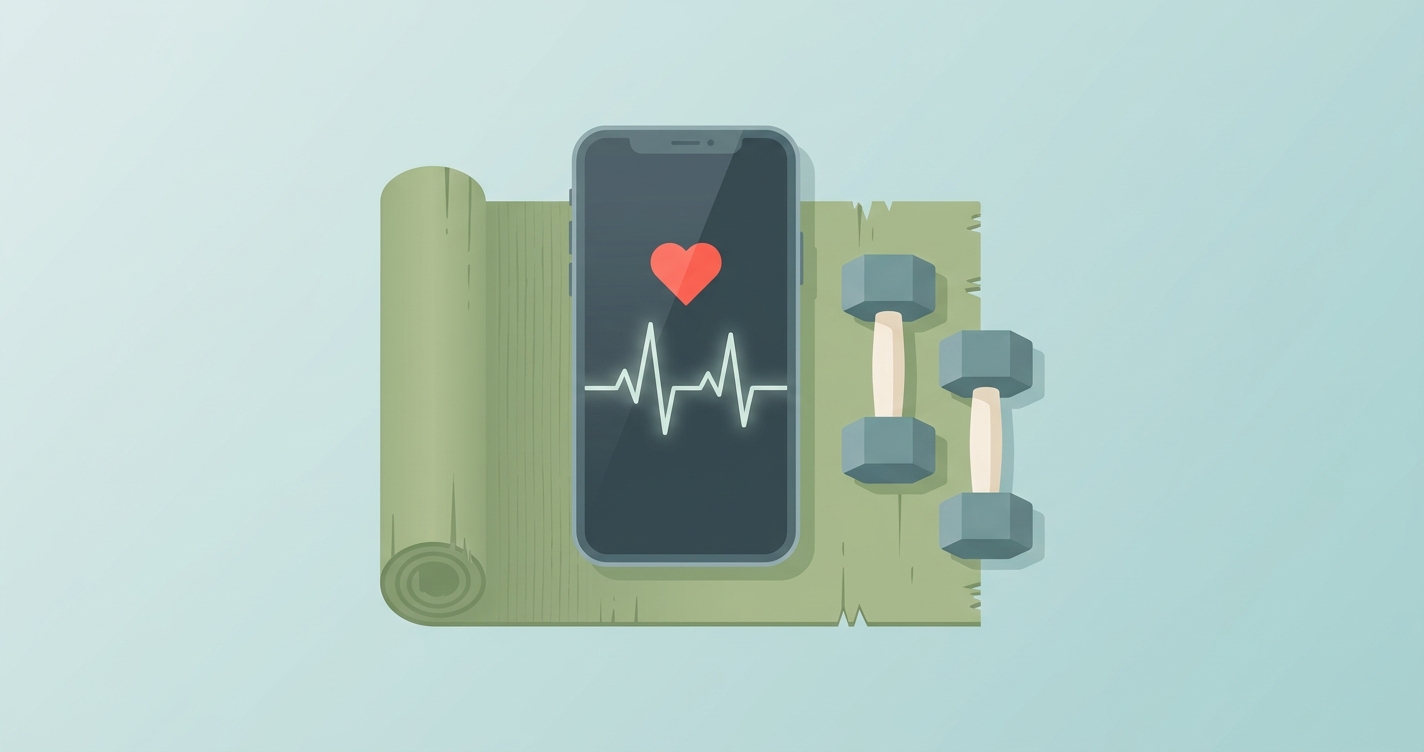
The expectation that individuals should blindly follow a predetermined exercise routine regardless of their physiological state is shifting. Historically, assessing training readiness required laboratory equipment, meaning only elite athletes had access to objective data about whether they should push hard or focus on recovery. Today, consumer-grade technology is closing this physical and financial gap. Modern optical sensors and smartphone cameras now allow anyone to measure vitals before workout sessions, capturing biometric data like resting heart rate, respiratory rate, and heart rate variability from the comfort of their home. By checking these metrics prior to lacing up their running shoes or lifting weights, fitness-curious individuals can avoid the common pitfalls of overtraining and align their exertion levels with their body's actual capacity for physical stress on any given day.
"By utilizing daily heart rate variability measurements to guide training intensity, individuals can achieve significant improvements in cardiovascular function and fitness parameters while actually reducing the number of high-intensity training days required." - Antti Kiviniemi, Department of Exercise and Medical Physiology at the University of Oulu, 2007.
Why to measure vitals before workout sessions
The concept of establishing a biological baseline is fundamental in modern exercise science. A single isolated heart rate reading provides very little contextual value on its own. However, tracking that exact same metric over a sustained period reveals a pattern of normal physiological behavior unique to the individual. When individuals measure vitals before workout routines consistently, they create an individualized reference point that acts as a daily readiness score.
If a Tuesday morning reading shows a resting heart rate ten beats per minute higher than the established baseline, the central nervous system is likely still recovering from previous stress. This stress could be physical, such as a heavy lifting session the day before, or it could be environmental, stemming from poor sleep, dehydration, or psychological tension.
Monitoring these variables shifts the training paradigm from a reactive approach to a proactive strategy. Instead of realizing halfway through a long run that the body is exhausted and risking mechanical injury, a simple optical scan provides that information before the individual even leaves the house. This approach relies heavily on consistent data collection. For the data to be valid, the environment must remain stable, measurements should occur at roughly the same time each day, and the individual should be in a completely resting state.
The core benefits of establishing this daily routine include:
- Identifying early signs of accumulated fatigue before an overuse injury occurs.
- Adjusting training volume and intensity to match true physiological readiness.
- Tracking long-term cardiovascular adaptations to new exercise protocols.
- Recognizing the physical impact of external stressors like poor sleep or nutrition.
- Creating a reliable feedback loop that connects subjective feeling with objective data.
Methods for tracking baseline biometrics
The tools available for capturing physiological data have expanded rapidly. Below is a comparison of the primary methods fitness enthusiasts use to check their status before exercising.
| Method | Data Points Captured | Hardware Required | Accessibility |
|---|---|---|---|
| Traditional Pulse Check | Heart rate | None | Moderate |
| Chest Strap Monitor | Heart rate, HRV | Dedicated strap | Low |
| Wrist-Worn Wearable | Heart rate, HRV, Sleep | Smartwatch | Moderate |
| Contactless Vitals App | Heart rate, HRV, Respiration | Smartphone camera | High |
The traditional manual pulse check remains the most basic form of measurement. It requires no equipment, but it is highly prone to human error and cannot calculate complex metrics like heart rate variability.
Chest strap monitors are widely considered the gold standard for consumer accuracy. They detect the electrical activity of the heart directly. However, they are uncomfortable to wear outside of active exercise, making them impractical for a quick morning readiness check.
Wrist-worn wearables have popularized daily tracking. They use optical sensors to measure blood flow continuously. While convenient, they require a significant financial investment, and users must wear them to bed to get accurate morning readiness scores.
Contactless smartphone applications represent the newest category. By utilizing the existing camera on a mobile device, these applications observe the face to detect micro-vascular changes. This method offers high accessibility because it requires zero additional hardware and takes only a minute to perform.
Key metrics for evaluating readiness
Understanding what the numbers mean is just as critical as capturing them. Three primary metrics dominate the pre-exercise screening conversation.
Resting heart rate
Resting heart rate represents the total number of times the heart beats per minute while the body is completely at rest. It serves as a gross indicator of cardiovascular efficiency and autonomic nervous system status. A lower resting heart rate generally indicates a stronger, more efficient heart capable of pumping more blood with each contraction. An elevated resting heart rate prior to exercise often indicates incomplete recovery, incubating illness, or high psychological stress. Consistent tracking allows individuals to spot these upward deviations immediately and adjust their workout plans accordingly.
Heart rate variability
Heart rate variability measures the microscopic, millisecond time differences between consecutive heartbeats. While a perfectly steady pulse sounds ideal to most people, a healthy cardiovascular system actually exhibits slight irregularities in these intervals. These variations are driven by the competing sympathetic and parasympathetic branches of the autonomic nervous system. High variability indicates a nervous system capable of quickly adapting to stress, making it an ideal day for an intense, high-yield workout. Low variability suggests the body is already burdened and fighting to maintain homeostasis, signaling a clear need for active recovery, mobility work, or complete rest.
Respiratory Rate
Often overlooked in consumer fitness applications, the number of breaths taken per minute at rest remains remarkably stable in healthy individuals. A sudden spike in resting respiratory rate can be an early indicator of respiratory distress, severe overtraining, or the onset of illness. Measuring this metric without specialized clinical equipment previously required manual counting, which is notoriously inaccurate because people unconsciously alter their breathing when they focus on it. Modern camera-based applications solve this problem by quietly extracting the data through observation of subtle movements in the chest and shoulders during a facial scan.
Current research and evidence
The scientific foundation for daily biometric monitoring is robust and spans several decades of exercise physiology research. In a 2007 study, researcher Antti Kiviniemi and his colleagues at the University of Oulu demonstrated that adjusting training based on daily heart rate variability yielded significantly superior results. The researchers found that male participants who trained intensely only when their variability was at or above their personal baseline improved their maximum running velocity and oxygen consumption rates more than those following a rigid, predetermined schedule.
This concept was further expanded by Martin Buchheit in 2010. Buchheit's research into post-exercise heart rate recovery demonstrated that the autonomic nervous system's response to training loads could be quantified to monitor daily fitness levels. By tracking how quickly the heart returned to its baseline, coaches could precisely measure an athlete's tolerance to the current training block.
In 2014, researcher Dan Plews at the Sports Performance Research Institute New Zealand identified heart rate variability as a core physiological indicator for individualizing training loads. Plews concluded that tracking autonomic nervous system status allows athletes to evaluate exercise-induced fatigue accurately, rather than relying solely on subjective questionnaires or generalized recovery timelines.
More recently, the validation of consumer optical technology has expanded the reach of these exact methodologies. In 2017, researcher Andrew Flatt at Georgia Southern University examined the agreement between smartphone camera pulse sensors and traditional electrocardiography. Flatt's research validated that mobile devices utilizing photoplethysmography could accurately determine resting variability. This validation is critical for consumers who want to track their recovery without purchasing specialized medical hardware. The consensus across the current literature is that consistent, accessible measurement leads to smarter training decisions and better long-term health outcomes.
The future of pre-exercise screening
The evolution of pre-workout monitoring is moving rapidly away from hardware dependency toward software-defined sensors. Historically, capturing clinical-grade readiness data required strapping on a chest monitor, sleeping with a specialized ring, or investing in expensive laboratory equipment. The next generation of health technology uses the powerful processing capabilities already built into modern smartphones.
Remote photoplethysmography utilizes the standard front-facing camera on a mobile device to detect microscopic changes in skin color caused by pulsatile blood flow beneath the surface. As the neural processors inside smartphones become faster and more efficient, the algorithms interpreting these optical signals become increasingly sophisticated. In the near future, opening a camera application to check physical recovery status will be as ubiquitous and normal as checking the weather forecast before heading out for a run. This frictionless approach completely removes the barrier to entry for the general public, allowing anyone to gather objective recovery data without wearing a device to bed or purchasing expensive proprietary equipment.
Frequently asked questions
What is the best time to check vitals for a baseline?
The most accurate baseline is established by measuring vital signs immediately upon waking up in the morning, before consuming caffeine, checking emails, or engaging in physical activity. Consistency in timing, lighting, and posture is critical for reliable longitudinal data.
How long does it take to establish a reliable baseline?
Most exercise physiologists suggest tracking your metrics daily for at least one to two full weeks. This duration provides enough individual data points to calculate a normal physiological range and accurately identify meaningful deviations later on.
Can a phone camera accurately read my pulse?
Yes. Modern smartphones use advanced remote photoplethysmography to detect subtle changes in light absorption on your face as blood flows through the capillaries. Under good lighting and resting conditions, these readings match traditional optical sensors very closely.
What should I do if my pre-workout metrics are abnormal?
If your resting heart rate is unusually high or your heart rate variability is significantly depressed compared to your baseline, it is often advisable to reduce the volume or intensity of your planned workout. Switching to an active recovery day can prevent overtraining and immune system suppression.
The ability to capture objective physiological data is no longer limited to professional athletic facilities or clinical environments. As software continues to replace physical hardware, establishing a daily recovery baseline is becoming highly accessible to anyone with a smartphone. Circadify is actively building technology that allows users to seamlessly check their vitals using only their device's camera. For those interested in understanding their body's readiness before their next training session, you can download the application and experience a quick, contactless reading today by visiting circadify.com/download?utm_source=trycircadify.