Is it safe to trust a free phone app over my doctor?
Exploring the accuracy and safety of contactless vitals apps. Learn how phone-based health scans compare to clinical devices and their best use as health trend monitoring tools.
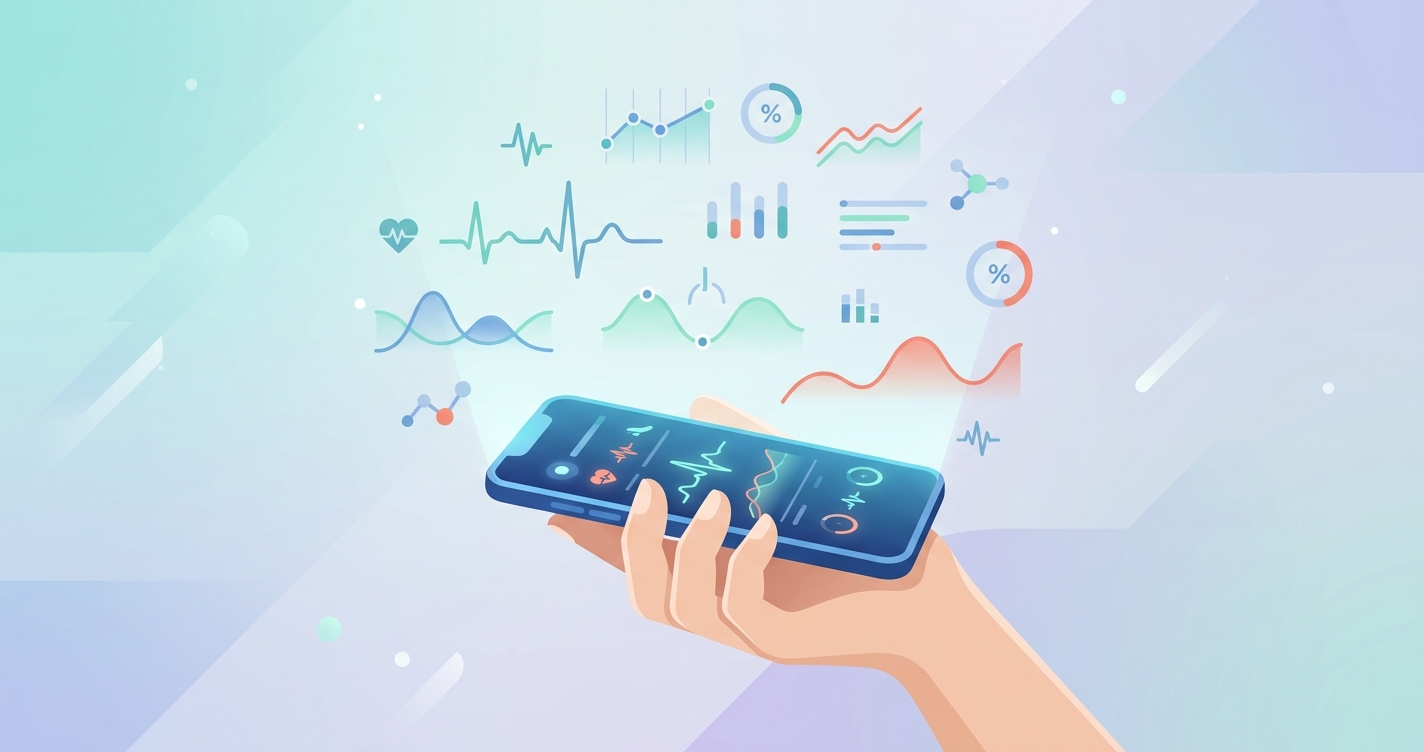
The question of whether to trust a free phone app over a doctor is becoming increasingly common. With hundreds of thousands of health apps available, the ability to check your vital signs using just your smartphone camera has moved from a novelty to a mainstream wellness tool. This new accessibility, however, leads to a critical question: is a camera-based health scan a reliable replacement for a traditional clinical check-up? The short answer is no. The better answer is that it's the wrong question. These tools are not meant to replace doctors but to provide a new, powerful way for individuals to track their health trends between visits.
"The global mHealth (mobile health) market was valued at approximately $62.7 billion in 2023 and is projected to reach $71.9 billion in 2024." - Grand View Research, 2024
The question of contactless vitals app accuracy
The core technology behind most camera-based health apps is remote photoplethysmography (rPPG). It works by analyzing the subtle, imperceptible changes in the color of your skin as blood flows through the vessels in your face. As your heart beats, the volume of blood in these vessels changes, causing tiny shifts in how light is reflected back to the phone's camera. Sophisticated algorithms process this video feed to translate those changes into measurements like heart rate, respiratory rate, and heart rate variability.
The conversation around contactless vitals app accuracy must be grounded in the technology's capabilities and limitations. Research has shown that under the right conditions, rPPG can be surprisingly accurate for certain measurements. A 2023 pre-print study evaluating the WellFie app, for instance, found high accuracy for heart rate (97.34%) and promising results for blood pressure in adults at rest compared to certified devices.
However, accuracy is not absolute and can be influenced by several factors:
- Lighting Conditions: Poor or strongly directional lighting can make it difficult for the camera to detect the subtle color changes in the skin.
- Movement: The user must remain still during the scan, as motion can introduce significant noise and lead to inaccurate readings.
- Skin Tone: Early rPPG algorithms sometimes struggled with darker skin tones due to the physics of light absorption, though newer models are being trained on more diverse datasets to mitigate this.
- Camera Quality: The quality of the smartphone's camera can impact the clarity of the video signal being analyzed.
Blood pressure measurement presents a unique challenge. While rPPG is effective at detecting a pulse, translating that pulse data into a blood pressure reading that matches a traditional cuff is far more complex. For this reason, most apps in this space focus on providing blood pressure trends rather than diagnostic numbers, which is still a significant step forward for at-home monitoring.
| Feature | Phone-Based Vitals Scan | Clinical Measurement (Doctor's Visit) |
|---|---|---|
| Primary Purpose | Wellness trend monitoring | Diagnosis, treatment, and management of medical conditions |
| Frequency | On-demand, as often as desired | Episodic, often annually or when symptoms arise |
| Data Context | Longitudinal trends over time | Single-point-in-time, clinical-grade snapshot |
| Environment | At home, work, or any quiet setting | Controlled medical office or hospital |
| Cost | Often free or low-cost subscription | Involves co-pays, insurance, and consultation fees |
| Immediacy | Instant results for personal awareness | Results may require follow-up appointments |
How are these apps intended to be used?
Understanding the intended purpose of contactless health apps is key to using them safely and effectively. They are not designed to diagnose disease but to empower users with information.
Personal health awareness
For the first time, individuals can get a snapshot of their vital signs in seconds, without any special hardware. This allows people to build a baseline understanding of their body. Tracking how metrics like resting heart rate or respiratory rate change over days and weeks can provide valuable insights into how lifestyle factors like stress, sleep, and diet are impacting their health.
Fitness and wellness tracking
Athletes and fitness enthusiasts can use these apps to monitor their heart rate before and after workouts or to track their heart rate variability (HRV) as an indicator of recovery. This data can help optimize training schedules and prevent overtraining.
Supporting telehealth consultations
While not a replacement for clinical devices, patient-provided data from these apps can add valuable context to a remote doctor's visit. A patient who can show their doctor a multi-week trend of their resting heart rate may provide a more complete picture than a single measurement taken during the appointment itself.
Current research and evidence
The scientific community is actively studying the potential and limitations of rPPG. Researchers have noted that while the technology is robust for heart rate monitoring, more validation is needed for other parameters across larger, more diverse populations in real-world conditions. A 2023 study published in JMIR mHealth and uHealth confirmed that contactless monitoring technologies showed acceptable accuracy for heart rate and breathing rate in sleeping older adults.
The primary takeaway from the current body of research is that context is everything. Contactless vitals app accuracy is highest when the technology is used as intended: for spot-check measurements on a stationary person in a well-lit environment. It is not intended for continuous monitoring during intense physical activity or for use in uncontrolled environments.
The future of app-based health monitoring
The trajectory for contactless health monitoring is pointed firmly towards increasing accuracy, a broader range of measurable biomarkers, and deeper integration into the digital health ecosystem. As smartphone cameras and processing algorithms continue to improve, the precision of these apps will only get better. We are moving toward a future where a quick, passive scan can provide a reliable overview of your general health state, alerting you to trends that may warrant a conversation with a medical professional. This technology empowers individuals to move from being passive recipients of healthcare to active participants in their own wellness journey.
Frequently asked questions
Can a phone app diagnose a medical condition? No. Contactless vitals apps are designed for wellness purposes to help you track health trends. They are not medical devices and cannot diagnose, treat, or prevent any disease. A diagnosis must always come from a qualified healthcare professional.
How does contactless vitals app accuracy compare to a smartwatch? Both technologies often use light-based measurement (photoplethysmography). For on-demand spot checks of heart rate while at rest, the accuracy can be very comparable. Smartwatches are designed for continuous monitoring, including during exercise, while phone-based scans are optimized for obtaining a high-quality reading in a quiet, stationary setting.
What data do these free apps collect? Reputable apps are designed with privacy in mind. The app uses your phone's camera to analyze the video feed of your face in real-time. The video stream is typically processed on the device and then deleted without being stored or transmitted. Always review the privacy policy for any health app you consider using.
The emergence of phone-based vitals scanning is not about replacing the vital role of doctors but about augmenting it. By providing accessible tools for health awareness, companies like Circadify are helping people become more informed and engaged partners in their own health. These apps serve as a valuable early-warning system, helping you understand your body's trends so you know when it's time to seek professional medical advice.
Ready to see how your vitals change throughout the day? You can download the Circadify app for free at circadify.com/download?utm_source=trycircadify and start tracking your trends today.