Is it safe to scan my face with a health app?
Face scan health apps are growing in popularity, but are they safe? We analyze the data privacy, security, and science behind camera-based health monitoring.
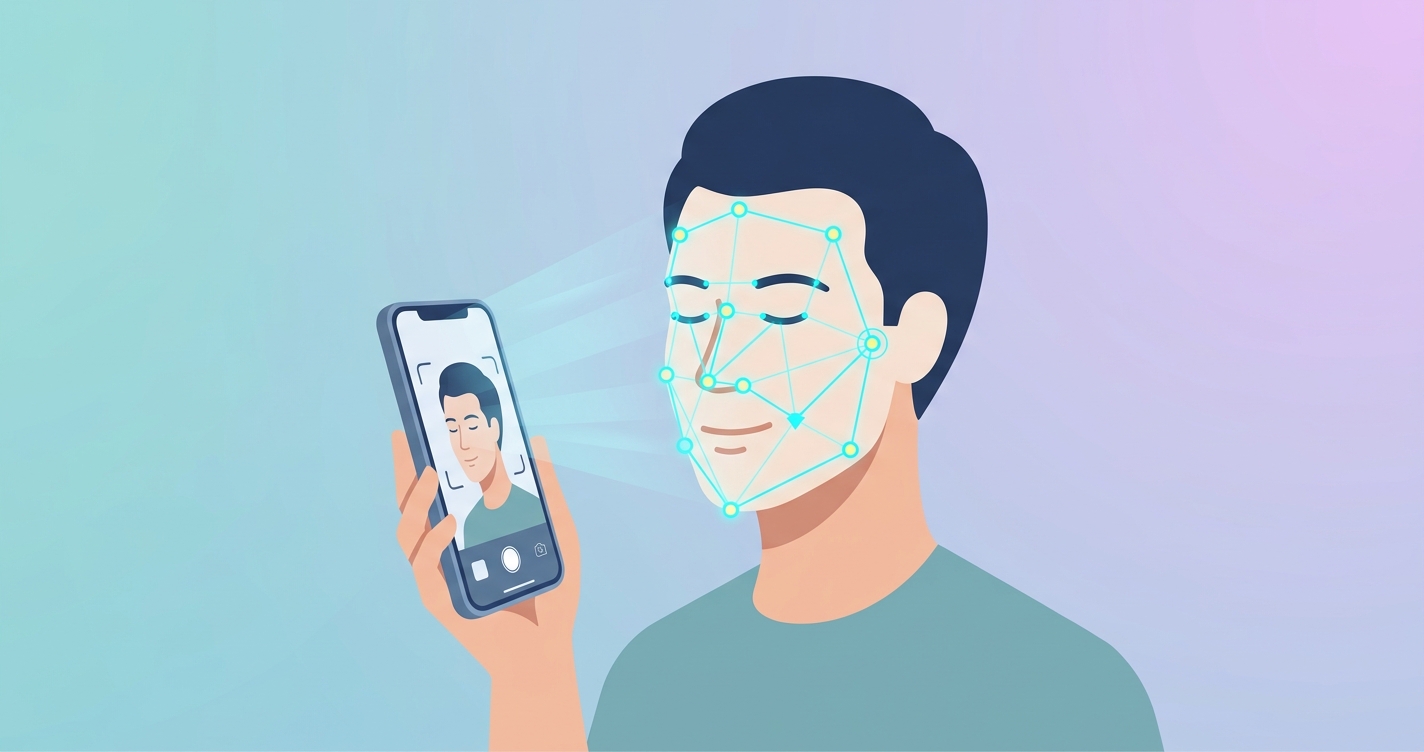
The question of face scan health app safety has become increasingly common as more people discover they can measure vital signs like heart rate, respiratory rate, and even blood pressure trends using the device that's already in their pocket. While the technology feels futuristic, it's built on a well-understood scientific principle. The real questions for consumers are not about the science, but about their data: what is being collected, how is it stored, and is it secure? Answering these questions requires a closer look at how these apps function and the different approaches developers take to privacy and security.
"Many mHealth apps have been found to have serious privacy problems, including inadequate privacy disclosures and sharing user data with third parties." - Privacy and Security in Mobile Health (mHealth) Research, Journal of Medical Internet Research (2016)
How face scan health apps work
At the core of this technology is a technique called remote photoplethysmography (rPPG). When your heart pumps, it sends a pulse of blood through your circulatory system. This blood flow causes microscopic changes in the color of your skin, invisible to the human eye. The camera on your smartphone, however, is sensitive enough to detect these changes in the light reflected from your face.
Advanced algorithms analyze the pixels in the video feed of your face to isolate this blood flow signal. By tracking the frequency and pattern of these color changes, the app can calculate your heart rate, heart rate variability (HRV), and respiratory rate. Some advanced models can also derive insights into your stress levels and blood pressure trends. The primary concern for users isn't the measurement itself, but what happens to the video data used to generate it.
Analyzing face scan health app safety
The safety of a face scan health app depends almost entirely on its design, specifically how it handles your data. The central difference comes down to whether the processing happens on your device or in the cloud. This single architectural choice has significant implications for your privacy.
Data processing: on-device vs. cloud
On-device processing means the video feed from your camera is analyzed directly on your phone. The raw video data never leaves your device and is often deleted immediately after the scan is complete. Only the resulting measurements-like a heart rate of 65 bpm-are stored by the app. This method provides a much higher level of privacy and security because your facial video is not transmitted or stored on a remote server where it could be vulnerable to data breaches.
Cloud-based processing involves sending the video data from your phone to a remote server for analysis. While this can enable more complex computations, it introduces significant privacy risks. The video of your face travels over the internet and is stored, even temporarily, on a server outside of your control. This exposes the data to potential interception and makes it a target for security breaches. A 2020 study on facial privacy protection for rPPG highlighted these concerns, noting that the sensitivity of facial data requires robust security measures, especially when transmitted to the cloud.
Data encryption and regulatory compliance
When data must be transmitted, encryption is non-negotiable. Reputable health apps use end-to-end encryption to protect data in transit. At rest, on a server, data should also be encrypted. However, the most secure approach is data minimization-collecting and storing as little information as possible.
In the United States, healthcare data is protected by the Health Insurance Portability and Accountability Act (HIPAA), but its applicability to consumer wellness apps can be ambiguous. A study published in JMIR by a team of researchers in 2016 found that many health apps have inadequate privacy disclosures. A developer's lack of security knowledge can lead to significant vulnerabilities. Therefore, it's crucial to look for apps that have clear, transparent privacy policies and demonstrate a commitment to data security best practices, whether by adhering to HIPAA or the EU's General Data Protection Regulation (GDPR).
| Feature | On-Device Processing Apps | Cloud-Based Processing Apps |
|---|---|---|
| Video Data Location | Stays on the user's phone; never transmitted. | Sent to a remote server for analysis. |
| Privacy Risk | Low. Facial video is not exposed to the internet. | High. Data is vulnerable during transmission and on the server. |
| Data Storage | Only final metrics (e.g., heart rate) are stored. | Video data may be stored, increasing breach risk. |
| Internet Required? | No, scan can be done offline. | Yes, requires an active connection. |
| Security Model | Controlled by the phone's native security. | Dependent on the provider's server security. |
Industry Applications
The technology is being applied in several key areas:
- Telehealth and Remote Patient Monitoring: Clinicians can use this technology to gather patient vitals during a virtual consultation without requiring the patient to own any special medical devices.
- Corporate Wellness Programs: Companies are incorporating contactless scanning into employee wellness platforms to provide health insights and encourage preventative care.
- Consumer Health & Fitness: The largest and most visible application is in consumer apps that allow individuals to track their health trends at home or at the gym.
Current research and evidence
The underlying science of rPPG is well-established and has been the subject of academic research for over a decade. A foundational study by Wim Verkruysse, Lars Svaasand, and J. Stuart Nelson in 2008 demonstrated the feasibility of measuring pulse rate from a distance using a simple digital camera.
More recent research focuses on improving accuracy and expanding the range of measurable biomarkers. Studies are actively exploring how to compensate for different lighting conditions, skin tones, and user movement, which are primary challenges for accuracy. For instance, researchers are developing new deep learning models to better isolate the blood volume pulse from "noise" in the video. A 2021 study published on medRxiv evaluated the accuracy of a smartphone rPPG application and found it to be comparable to standard pulse oximeters under controlled conditions. This ongoing research continues to enhance the reliability and utility of face scan health apps.
The future of face scan health technology
The trend is moving decisively toward on-device processing as the standard for consumer privacy and face scan health app safety. As smartphones become more powerful, the need to offload processing to the cloud diminishes. We can expect to see apps that can perform even more complex analyses, such as assessing mental stress or tracking blood pressure trends, entirely on the device.
Another key development is the integration of multi-modal AI. Future apps may combine rPPG with voice analysis and other sensor data from the phone to provide a more holistic picture of a person's health. The focus will remain on user-controlled data, with clear consent and transparent policies being the mark of a trustworthy application.
Frequently asked questions
Q: Can a face scan health app diagnose a medical condition?
A: No. These apps are designed for wellness and informational purposes only. They can provide valuable insights into your health trends, but they are not a substitute for a medical diagnosis from a qualified healthcare professional.
Q: How accurate is the heart rate measurement from a face scan?
A: When used correctly in good lighting with minimal movement, the accuracy of leading rPPG apps is comparable to wrist-worn wearables and pulse oximeters for measuring resting heart rate. Accuracy can be affected by lighting, movement, and camera quality.
Q: Is my picture or video stored when I use a health scan app?
A: This depends entirely on the app. Apps that prioritize privacy and safety perform all analysis on your device and do not store or transmit your video. You should always check the app's privacy policy to understand how your data is handled.
The evolution of contactless health monitoring is moving quickly, and the conversation around face scan health app safety is crucial. As a company at the forefront of this technology, Circadify is committed to a privacy-first, on-device approach. We believe that you should have access to your health data without compromising your personal data. To learn more about our on-device processing and try a scan for yourself, visit circadify.com/download?utm_source=trycircadify.