
Heart Rate Camera App: 5 Times It's Better Than a Watch
When a phone beats a wearable: 5 real situations where a heart rate camera app is the more convenient way to check your pulse, plus phone heart rate vs watch evidence.
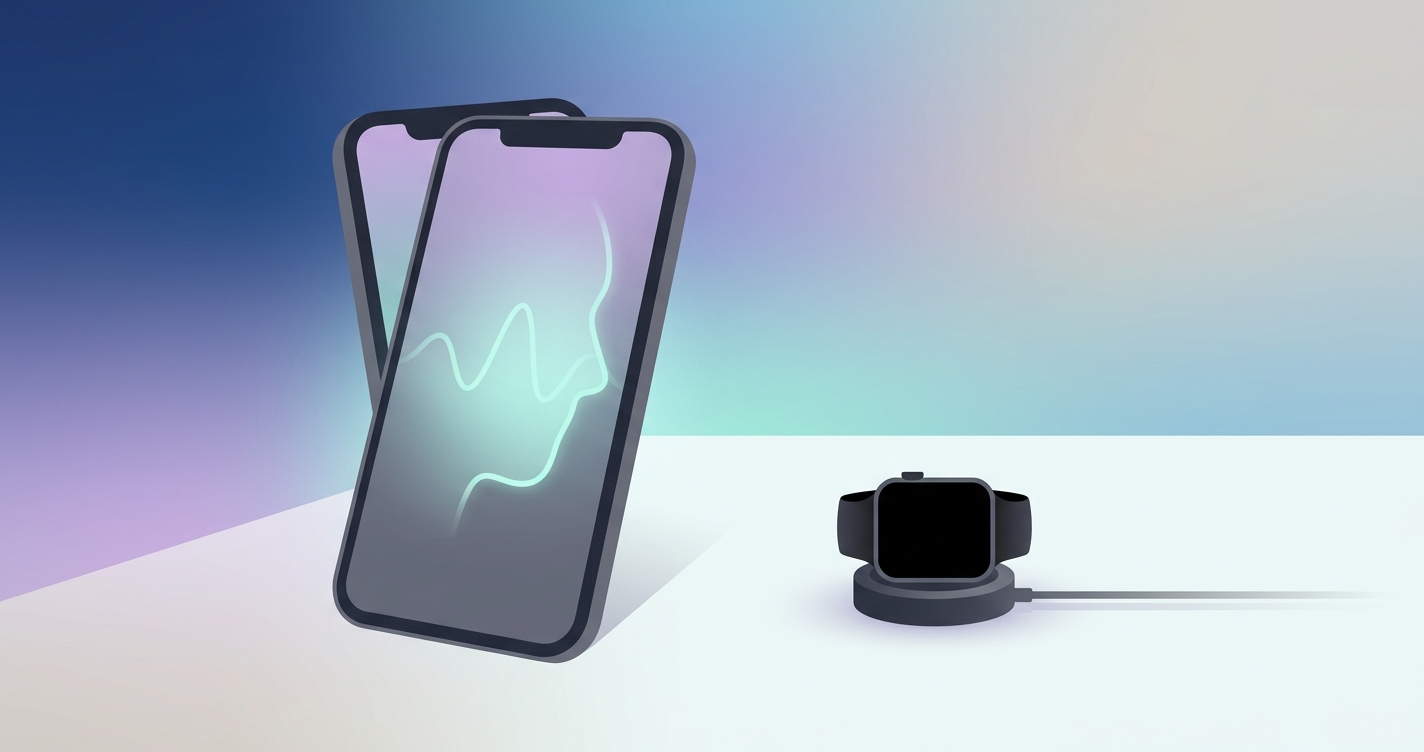
A smartwatch is a remarkable piece of engineering, but it has one stubborn limitation: it only measures the wrist it is strapped to, and only when you are wearing it. That gap is where a heart rate camera app quietly earns its place. Using the same camera already in your pocket, these apps read the faint color changes in your skin caused by each heartbeat, turning a phone into an on-demand pulse reader. For the millions of people who already own a wearable, the question is not whether to replace the watch. It is recognizing the specific moments when reaching for a phone is simply the smarter move.
A 2024 systematic review and meta-analysis by Jonathan Carter and colleagues at Lancaster University reported very strong agreement between smartphone photoplethysmography and electrocardiography for resting heart rate, with correlation coefficients ranging from r = 0.98 to 1 in healthy adults under controlled conditions.
Phone heart rate vs watch: where a heart rate camera app wins
The case for a heart rate camera app is not that it dethrones the wearable. Both tools rely on photoplethysmography, the optical method of detecting blood volume changes by how skin absorbs and reflects light. A watch uses contact sensors pressed against your wrist. A phone uses remote photoplethysmography, or rPPG, capturing the same signal from your face or fingertip through the camera lens. The difference is one of availability and reach, not fundamentally of physics.
What makes the phone compelling is that it covers situations a wrist sensor structurally cannot. A watch reads one body, continuously, as long as the battery holds and the band stays on. A phone reads any body, on demand, with nothing to charge or strap on first. Understanding when to use phone heart rate over a watch comes down to five recurring scenarios.
| Scenario | Smartwatch | Heart Rate Camera App |
|---|---|---|
| You forgot or removed the watch | No reading available | Works instantly, no device needed |
| Checking a family member's pulse | Only your own wrist | Scans anyone with a camera |
| Quick spot check during the day | Reliable if worn | Equally fast, always in pocket |
| Charging or sleeping without it | Dead zone | Phone fills the gap |
| Sharing or comparing readings | Tied to one account | Multiple people, one device |
1. You Left the Watch at Home
Wearables get forgotten on nightstands, left on chargers, and taken off for showers and workouts. A 2023 validation study using an rPPG-enabled smartphone application reported 97.34 percent accuracy with a relative mean absolute percentage error of just 2.66 percent for heart rate at rest. That level of performance means a phone is a genuine fallback, not a toy, on the days your wrist is bare.
2. you want to check someone else
This is the clearest structural advantage. Your watch cannot read your child's pulse, your partner's, or an aging parent's. A contactless heart rate monitor built into a phone can scan anyone who holds still in front of the lens. For caregivers and parents, that flexibility turns a single device into a shared household tool rather than a personal accessory.
3. a fast spot check
Sometimes you just want a number right now, without raising your wrist, waking the watch face, and waiting for a stable reading. Opening an app and resting your fingertip on the camera, or facing it for a few seconds, is a low-friction way to capture resting heart rate in the moment.
4. while the watch is charging or off
Every wearable has a dead zone during charging and overnight removal. Research from Google on passive heart health monitoring via the smartphone camera, published in 2024, demonstrated wearable-level accuracy for daily resting heart rate with a mean absolute error below 5 beats per minute. The phone you are already holding can cover the hours your watch cannot.
5. sharing and comparing across people
A watch is bound to one account and one wrist. A phone app lets several people take turns, compare resting readings, or track a relative's numbers over time without buying each of them a device. That makes the camera app a practical entry point for whole-family awareness.
Industry applications of contactless heart rate monitoring
The same technology that makes a heart rate camera app convenient for individuals is being adopted in settings where strapping a sensor on every person is impractical.
Home and family health
Households increasingly treat the phone as a shared vitals station. Parents check a feverish child, adult children monitor an elderly parent, and partners compare resting trends, all without dedicating a wearable to each person. The appeal is reach: one phone, many users.
Fitness and recovery
Athletes already lean on wearables, but a phone camera adds a second touchpoint for spot checks before and after training, particularly when a watch is off for an event or has run out of charge. A fingertip or facial scan provides a quick recovery snapshot without interrupting a routine.
Frontline and workplace screening
In clinics, triage settings, and workplaces, contactless readings reduce the friction of cleaning and sharing contact sensors. A camera-based check captures heart rate, and in many systems respiratory rate, in under a minute without physical contact, which matters when many people are screened in sequence.
Current research and evidence
The peer-reviewed record on smartphone heart rate measurement has grown substantially. A meta-analysis published in JMIR mHealth and uHealth found no significant difference between heart rate measured by smartphone photoplethysmography apps and validated reference methods in adults at resting sinus rhythm. A separate validation study of fingertip and facial photoplethysmography using a smartphone camera, also published in JMIR mHealth and uHealth, confirmed strong agreement with reference heart rate both at rest and after exercise.
Researchers including Benjamin De Ridder, Bart Van Rompaey, and Tinne Dilles have contributed to this body of work, repeatedly finding Pearson correlation coefficients of 0.90 or higher between smartphone-derived heart rate and validated methods in adults. More recent deep learning systems have pushed performance further. Google's PHRM research reported a mean absolute percentage error below 10 percent across all skin tones and outperformed 15 other leading rPPG models in published comparisons.
The literature is candid about limits. Accuracy drops with motion, arrhythmias, very high heart rates, and in free-living conditions where lighting is uncontrolled. Valid measurement rates can be lower for darker skin tones outside of controlled settings. The consistent finding is that a quiet, still, well-lit reading at rest is where a heart rate camera app performs best, which happens to be exactly the spot-check scenario most people need.
The future of the heart rate camera app
The trajectory points toward the phone and the watch working together rather than competing. As deep learning models close the accuracy gap across skin tones and lighting conditions, the camera app becomes a reliable complement that fills every moment the wrist sensor misses. Passive monitoring research suggests future apps may capture heart rate during ordinary phone use, without a deliberate scan at all.
The broader shift is toward layered, contactless vitals: heart rate, respiratory rate, heart rate variability, and stress indicators, all from a camera. In that model, the question stops being phone versus watch and becomes which sensor is closest when you need a reading. For most people, that is the phone in their hand.
Frequently asked questions
Is a heart rate camera app as accurate as a smartwatch? For a still, resting reading in good light, published validation studies show smartphone photoplethysmography agrees closely with reference methods, often within a few beats per minute. Watches still have the edge for continuous tracking during movement and exercise, so the two tools cover different needs.
When should I use phone heart rate instead of my watch? Use the phone when the watch is off, charging, or forgotten, when you need to check another person, or when you want a fast spot check without raising and waking the wrist device. Keep the watch for all-day continuous monitoring.
How does a contactless heart rate monitor work without touching me? It uses remote photoplethysmography. The camera detects tiny color changes in your skin caused by blood pulsing with each heartbeat, then converts that signal into a heart rate. A fingertip on the lens or a steady facial scan both work.
Can a phone heart rate app scan more than one person? Yes. Unlike a watch tied to one wrist and account, a phone app can read anyone who holds still in front of the camera, which makes it practical for families and caregivers.
If you already wear a watch and want to see how a phone fills the gaps it leaves, Circadify is building contactless vitals scanning that works from the camera you already carry. You can try it free and check your own heart rate, or a family member's, in under a minute at circadify.com/download.