
Can I predict how I'll feel tomorrow from my vitals today?
Explore the science behind using vital signs like heart rate variability (HRV) and resting heart rate to predict your mood and well-being for the next day.
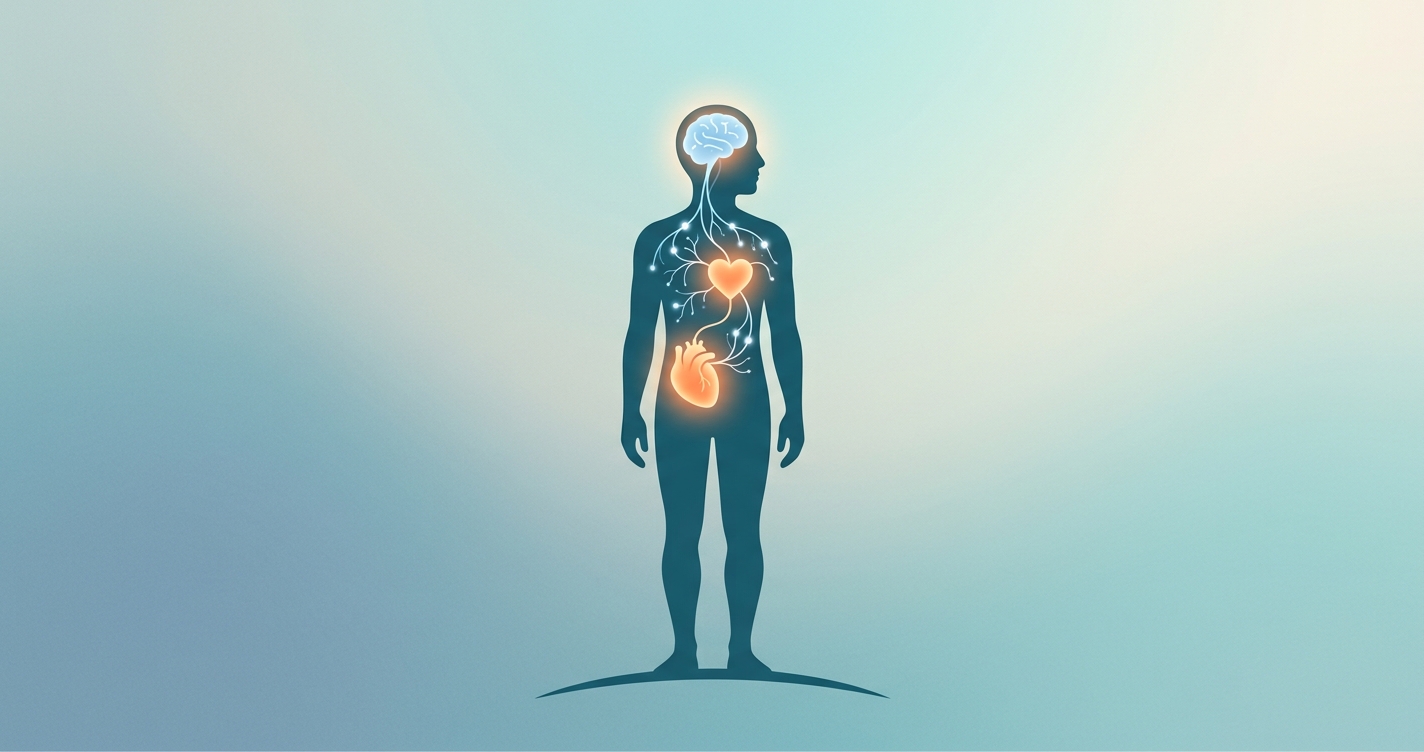
The desire to know what the future holds is a fundamentally human trait. We check the weather forecast to decide what to wear and watch financial reports to anticipate market shifts. It is no surprise that in an era of unprecedented access to personal health data, we are turning that same predictive curiosity inward. People are increasingly using wearables and smartphone apps to track their vital signs, moving beyond historical record-keeping to ask a more ambitious question: Can the data from my body today tell me how I will feel tomorrow? The answer is more complex than a simple yes or no, but the science exploring this connection is one of the most compelling fields in modern wellness technology.
"Analysis of continuous cardiorespiratory monitoring in unselected individuals reveals that the resting heart rate (RHR) and its variability can predict the self-reported well-being of a person on the next day." - Dr. E. G. Tolpegina, A. A. Pyatnitskiy, and team (2022)
The physiological basis for predicting tomorrow's mood from vitals
The ability to predict tomorrow mood from vitals is not based on mysticism but on the intricate workings of the autonomic nervous system (ANS). The ANS is the body's silent command center, regulating all the functions we don't consciously think about, such as heart rate, respiration, and digestion. It has two main branches: the sympathetic nervous system (SNS), which triggers our "fight-or-flight" response to stressors, and the parasympathetic nervous system (PNS), which governs our "rest-and-digest" state. An imbalance in these systems, often caused by stress, poor sleep, or illness, can manifest in our vital signs long before we consciously register a change in our mood or well-being.
Heart Rate Variability (HRV), the measurement of the variation in time between each heartbeat, is a direct reflection of this ANS activity. A high HRV indicates a healthy, adaptable state where the parasympathetic system is active. Conversely, a chronically low HRV suggests the sympathetic system is in overdrive, a physiological sign of stress. Research from scientists like Julian F. Thayer has consistently shown that lower HRV is associated with conditions like anxiety and depression. By tracking HRV and other vitals like resting heart rate and respiratory rate, we are essentially gathering data on the state of our nervous system. A day of high stress and low HRV is more likely to be followed by a day of feeling fatigued, irritable, or "off," as the body has had insufficient time to recover and re-engage its parasympathetic "rest-and-digest" functions.
| Vital Sign | What it Measures | Potential Indication for Tomorrow's Mood |
|---|---|---|
| Heart Rate Variability (HRV) | The variation in time between consecutive heartbeats, reflecting autonomic nervous system balance. | A significant drop in HRV today may indicate higher physiological stress, potentially leading to lower reported well-being or fatigue tomorrow. |
| Resting Heart Rate (RHR) | The number of times your heart beats per minute while at complete rest. | An elevated RHR (outside of exercise) can signal stress, dehydration, or poor sleep, all of which can negatively impact mood and energy levels the next day. |
| Blood Pressure Trend | The general direction of your blood pressure readings over time (e.g., trending up or down). | While not a direct mood predictor, a consistently upward trend may reflect chronic stress, which is a known factor in mood disorders and low well-being. |
| Respiratory Rate | The number of breaths you take per minute. | A faster-than-usual respiratory rate at rest can be a sign of anxiety or physiological stress, which may carry over to the next day's emotional state. |
Industry Applications
The potential to connect today's physiology with tomorrow's psychology is being explored across several industries.
Personal wellness and fitness
For athletes and wellness enthusiasts, this data provides a powerful tool for optimizing training and recovery.
- Training Readiness: An app might analyze your HRV and RHR overnight and suggest a lighter workout or a rest day if your nervous system appears to be under strain, preventing overtraining and injury.
- Recovery Insights: After a hard workout, tracking how quickly your vitals return to baseline can offer clues about your overall fitness and how recovered you will be for the next day's activities.
Mental health technology
Emerging mental health platforms are incorporating vital sign tracking to provide a more holistic view of a user's well-being. By correlating self-reported mood with physiological data, these tools can help individuals identify the specific stressors (e.g., poor sleep, long work hours) that impact their ANS and, consequently, their emotional state. This can empower users to make proactive lifestyle changes.
Workplace Wellbeing
Forward-thinking companies are exploring opt-in programs that use aggregated, anonymized physiological data to monitor workforce stress levels. Anonymized data showing a collective drop in HRV across a department could, for instance, signal a need for intervention long before burnout leads to measurable declines in productivity or employee retention. This moves wellbeing from a reactive perk to a proactive strategy.
Current research and evidence
The link between vitals and next-day well-being is an active area of scientific inquiry. A notable 2022 study by Tolpegina et al., published in the Journal of Medical Internet Research, analyzed cardiorespiratory data from over 900 individuals. Their findings provided clear evidence that resting heart rate and HRV could indeed predict a person's self-reported well-being on the following day.
Similarly, a 2018 study led by an international team including researchers from the University of Notre Dame and Trinity College Dublin explored the use of wearable sensors to predict mood. They found that physiological signals, particularly those related to sleep and heart rate, were significant predictors of next-day mood ratings. These studies are part of a growing body of evidence that uses machine learning to find patterns in physiological data that are too subtle for humans to detect on their own.
The future of predicting mood from vitals
The future of this technology lies in multi-modal data fusion and increasingly sophisticated predictive models. Imagine an app that does not just predict tomorrow mood from vitals but also integrates data from your calendar, your activity levels, and even your sleep patterns. This holistic view would provide much richer and more personalized insights. For example, it could learn that your HRV drops significantly after meetings with a specific team or that your mood is consistently better on days following a 7.5-hour sleep cycle. The challenge will be to develop these powerful tools while ensuring user privacy and data security remain critical. The goal is not surveillance but empowerment, giving individuals a deeper, data-driven understanding of their own body and mind.
Frequently asked questions
What is the most important vital sign for predicting mood? Heart Rate Variability (HRV) is widely considered the most indicative metric because it directly reflects the balance of your autonomic nervous system, which is closely linked to your stress and recovery states. A lower HRV often points to physiological stress that can precede a decline in mood.
How accurate are these predictions? The accuracy is still a subject of ongoing research and depends heavily on the quality of the data and the sophistication of the algorithm. It's more about identifying correlations and tendencies rather than making a deterministic prediction. Think of it as a weather forecast for your body, it provides a probable outlook, not a guarantee.
Do I need a special device to track this? While medical-grade ECGs and dedicated wearables were once required, modern technology has made tracking more accessible. Certain advanced smartphone apps can now perform a contactless scan using the phone's camera to measure heart rate, HRV, and respiratory rate, providing a convenient way to gather this data.
The journey to understand the deep connections between our bodies and minds is just beginning. As technology allows us to listen more closely to the subtle signals of our physiology, the ability to anticipate our future well-being is becoming less of a question and more of a practical tool for a healthier life. If you are curious to see what your vitals can tell you, new tools are making it easier than ever to get started. Circadify is at the forefront of this space, and you can try a contactless scan for yourself by visiting circadify.com/download?utm_source=trycircadify.