Can I check my dad's heart rate at 2am without waking him?
Explore how caregivers can non-intrusively monitor a sleeping parent's heart rate using phone camera technology (rPPG), offering peace of mind without disturbance.
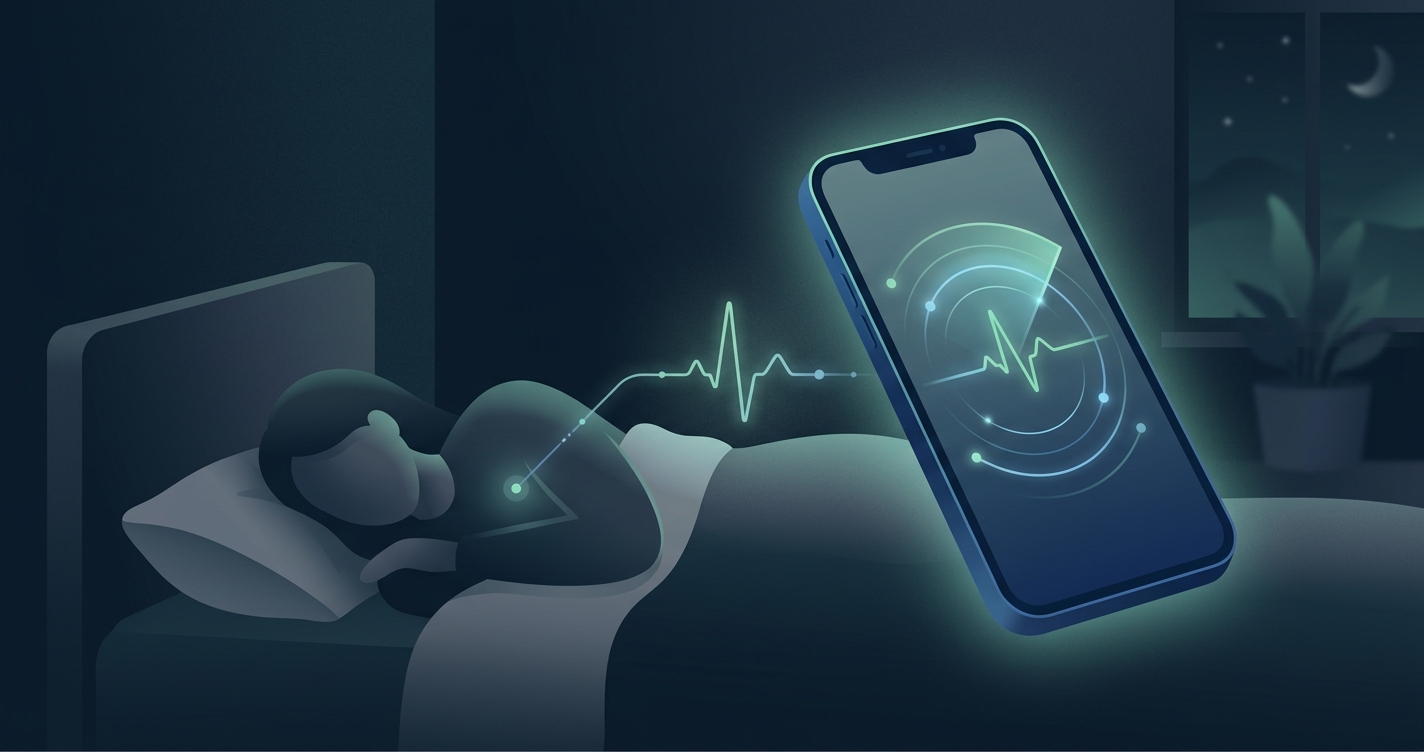
The house is quiet. It's 2 a.m. and the familiar weight of worry settles in. For the millions of adult children caring for an aging parent, this feeling is a common, unwelcome companion. Is Dad sleeping soundly? Is his heart okay? The urge to check is powerful, but so is the need to let him rest without interruption. This scenario highlights a central conflict for caregivers: the need for information versus the need for non-intrusiveness. Fortunately, the technology in your pocket may offer a solution, allowing you to check heart rate with phone camera technology, providing a glanceable peace of mind that was previously impossible.
"Between 40% and 70% of family caregivers exhibit clinically significant symptoms of depression, with another quarter to half meeting the criteria for major depression." - (BrainsWay, 2023, citing various studies)
The dilemma of nocturnal checks and how to check heart rate with phone camera
Overnight heart rate is a valuable indicator of cardiovascular health. A lower resting heart rate during sleep typically signifies good recovery and fitness. Conversely, an unusually high or erratic heart rate can be an early warning sign of underlying issues. The challenge has always been how to gather this data. A manual check risks waking your parent, disrupting the very rest that is so crucial for their health. Wearable devices can be uncomfortable, get removed, or run out of battery. This is where the science of remote photoplethysmography (rPPG) comes in.
rPPG is a contactless sensing method that uses a light source, like the flash on a smartphone, and an optical sensor, the camera, to detect changes in the light reflected from human skin. These changes, invisible to the naked eye, correspond to the pulsing of blood in the vessels beneath the skin. By analyzing this data, an application can calculate a person's heart rate and other vital signs. This technology allows you to check heart rate with phone camera from a short distance, providing a silent, non-invasive spot-check.
| Monitoring Method | Intrusiveness | How It Works | Key Data Point | Setup Complexity |
|---|---|---|---|---|
| Phone Camera Scan (rPPG) | Very Low | Detects subtle skin color changes from blood flow using the phone's camera. | Heart Rate, HRV, Respiratory Rate | Low - uses existing phone |
| Wearable Smartwatch | Low-Medium | Optical sensors on the wrist continuously measure blood flow. | Continuous Heart Rate, SpO2, Sleep Stages | Medium - requires device pairing & charging |
| Bedside Monitor | Low | Radar or pressure sensors under the mattress detect micro-movements. | Sleep Cycles, Respiratory Rate, HR | Medium - requires placement & power |
| Manual Pulse Check | Very High | Physically finding a pulse point (wrist or neck) and counting beats. | Heart Rate (single point in time) | Low - requires physical presence |
This technology provides a new option for caregivers, fitting neatly between doing nothing and doing too much. It's a way to answer that late-night question without creating a new problem.
- Heart Rate: The number of times the heart beats per minute.
- Heart Rate Variability (HRV): The variation in time between each heartbeat, a key indicator of nervous system health.
- Respiratory Rate: The number of breaths taken per minute.
Industry Applications
The ability to check vital signs with a phone camera is moving from research labs into practical applications that directly benefit caregivers and health-conscious individuals.
Geriatric care tech
For companies developing solutions for elder care, rPPG offers a way to build passive monitoring into tablets, smart displays, or dedicated devices. This allows for regular, automated checks that can alert caregivers or staff to concerning trends without requiring the elderly individual to wear a device or do anything special.
Remote patient monitoring
Healthcare providers are using camera-based technology to augment telehealth visits. A quick scan during a video call can provide the doctor with objective data, complementing the patient's subjective description of their symptoms. This is particularly useful for managing chronic conditions in elderly patients who may have mobility challenges.
Consumer wellness apps
For the health-curious individual or concerned family member, consumer apps are making this technology directly accessible. These apps provide on-demand spot-checks of vital signs, empowering users to track their health trends and gain a better understanding of how their body is functioning.
Current research and evidence
The primary question for any caregiver is whether this technology is reliable, especially in a dark room. Research in this area is robust and encouraging. A significant study published in a National Institutes of Health (NIH) journal focused on the reliability of rPPG under challenging conditions, specifically low illumination and elevated heart rates.
The researchers developed the CHILL dataset to test various rPPG algorithms. Their findings, published by researchers from institutions like the University of Oulu in 2023, were surprising: low light had a statistically smaller negative impact on accuracy than an elevated heart rate did. This suggests that for a calm, sleeping individual, a scan in a dimly lit room is quite feasible.
Further research from the University of Surrey has demonstrated the viability of contactless monitoring for aging populations during sleep. Scientists are continually refining the algorithms, often using infrared capabilities of modern smartphone cameras and advanced image enhancement techniques to improve the signal-to-noise ratio in near-darkness. While not a medical-grade diagnostic tool for critical conditions, it is a powerful technology for gaining peace of mind through informed, non-disruptive observation.
The future of contactless monitoring
The ability to check heart rate with phone camera is just the beginning. The future of this technology lies in what is often termed "glanceable vitals." Imagine a smart display in a parent's room that provides a simple, color-coded status of their resting vitals, or an alert sent to a caregiver's phone if nocturnal heart rate deviates significantly from its normal baseline over several nights.
As the algorithms improve and integrate with other ambient sensors, we can expect a richer, more contextual understanding of a person's health state. The goal is not to replace medical professionals but to provide better data that allows for earlier and more effective interventions, all while preserving the dignity and comfort of the person being cared for.
Frequently asked questions
Q: How can a phone camera really check my heart rate? A: It uses a technology called remote photoplethysmography (rPPG). The camera detects tiny, invisible changes in the color of your skin as blood flows through the vessels. Complex algorithms analyze these changes to calculate your heart rate.
Q: Is it accurate in a dark room at night? A: Research shows that modern rPPG algorithms can be surprisingly effective in low-light conditions. While bright, even lighting is ideal, studies indicate that for a resting person, the technology can perform well. Many systems use the phone's flash or infrared light to ensure a clear signal without being disruptive.
Q: What else can it measure besides heart rate? A: Depending on the specific application, camera-based scanning can also estimate other key vital signs, including respiratory rate (breaths per minute) and heart rate variability (HRV), which is a powerful indicator of stress and recovery.
Caring for an aging parent is a journey of balancing their independence with your need to ensure their safety. The anxiety that often accompanies this role is real, but new tools are emerging to provide reassurance. Technology that allows you to discreetly check heart rate with phone camera is a significant step forward, offering a non-intrusive way to gather information and gain peace of mind. Circadify is at the forefront of making this technology accessible, providing a way for health-curious individuals and concerned caregivers to see it in action. You can explore this for yourself by downloading the free app at circadify.com/download.