What a Camera Health Check Reads Before a Doctor Visit
A research look at the vitals a camera health check before doctor visit captures, and how phone-logged trends help anxious patients arrive prepared.
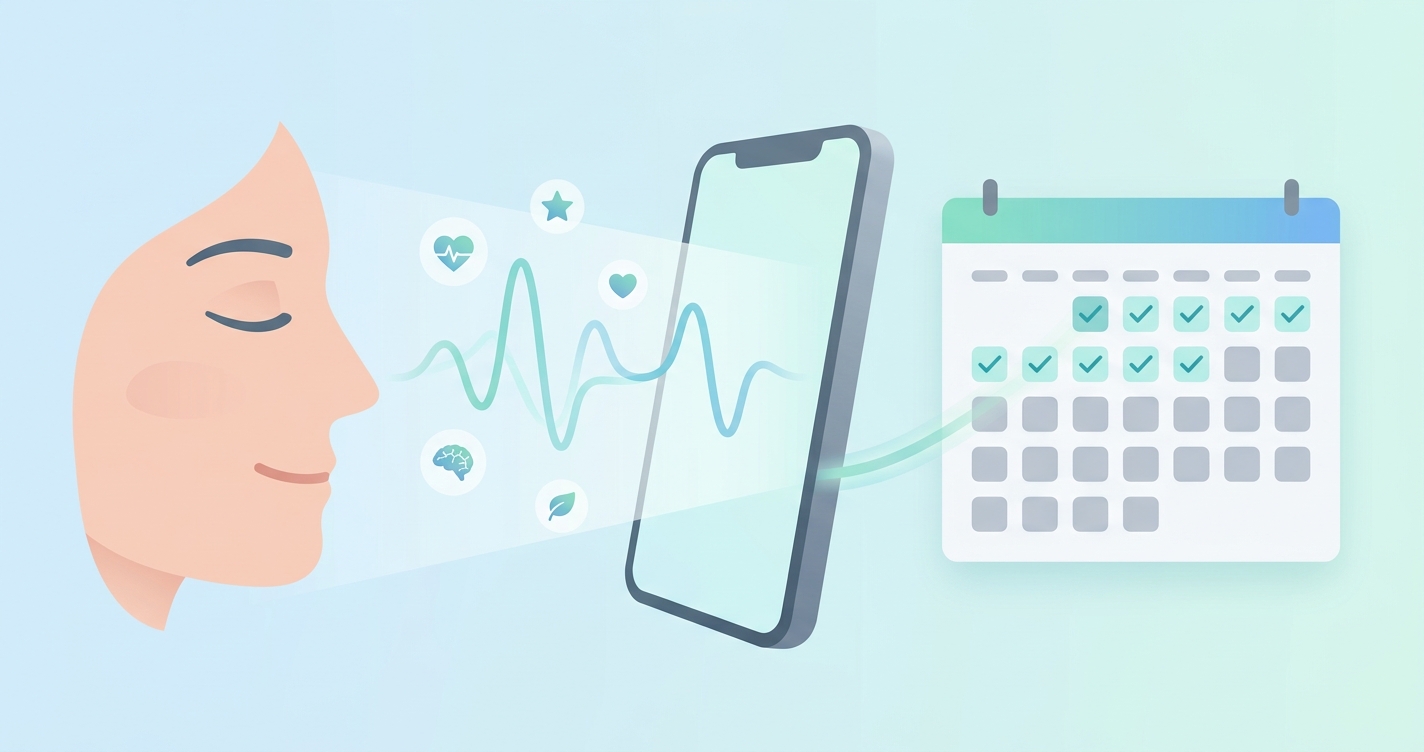
Walking into an exam room with a single reading taken minutes after fighting traffic, sitting in a noisy waiting room, and feeling your pulse climb is one of the quietest sources of bad medical data in primary care. A camera health check before doctor visit changes the starting point of that conversation. Instead of a doctor working from one snapshot taken at your most stressed moment, you arrive with a short history of numbers gathered in your own home over normal days. The technology behind it, remote photoplethysmography (rPPG), reads subtle color shifts in the skin of your face as blood pulses through it, turning an ordinary front camera into a contactless vitals sensor. For health-curious people who get anxious before appointments, that shift from one reading to a logged trend is the practical value.
Published studies show that 40 to 80 percent of medical information given by clinicians is forgotten immediately after the visit, and nearly half of what patients do remember is recalled incorrectly. Walking in with written numbers removes part of that memory burden.
What a camera health check before doctor visit actually measures
A camera health check before doctor visit does not replace the instruments in a clinic. What it does is capture the metrics that benefit most from being measured repeatedly in a calm setting, where a single in-office reading is least representative. rPPG works by analyzing tiny brightness and color changes in facial blood flow recorded by the camera, then converting those waveforms into vital sign estimates.
The metrics a phone scan can reasonably log before an appointment fall into a few groups:
- Resting heart rate, ideally taken at the same time each morning before coffee or activity
- Heart rate variability (HRV), a marker tied to stress, recovery, and autonomic balance
- Respiratory rate, useful context for breathlessness or anxiety complaints
- Blood pressure trend direction, captured as relative movement rather than a diagnostic cuff number
- Stress or perfusion indicators that some apps derive from the same waveform
The point is not precision to a clinical decimal. The point is pattern. A doctor learns far more from seven morning readings showing a resting heart rate drifting from 68 to 82 over two weeks than from one number taken during a stressful visit.
How phone scan prep compares to alternatives
Different ways of arriving prepared each carry trade-offs. The table below frames a contactless vitals checkup against the other common options patients use.
| Prep method | What it captures | Effort | Cost | Best for |
|---|---|---|---|---|
| Camera health check (rPPG) | HR, HRV, respiratory rate, BP trend, stress | Low, one minute per scan | Free to low | Daily trend logging before a visit |
| Cuff blood pressure monitor | Blood pressure, pulse | Moderate, requires device | Medium | Confirmed hypertension follow-up |
| Smartwatch or wearable | HR, HRV, sleep, sometimes ECG | Low but must be worn | Higher upfront | Continuous all-day tracking |
| Memory and verbal recall | Symptoms described from memory | Low | Free | Nothing better available |
| Manual pulse counting | Heart rate only | Moderate | Free | A quick single check |
Each row answers a different question. The camera approach earns its place because it logs several vitals at once, demands almost no setup, and produces a dated record you can hand over.
Why the starting number matters so much
The clinical problem a camera health check addresses has a name. White coat hypertension describes blood pressure that reads high in a clinic but sits normal at home, driven by the stress of the setting itself. Research summarized by Duke Health has long confirmed this white coat effect, and home monitoring is now the standard recommendation for separating real elevation from situational anxiety. The same logic extends to heart rate. A pulse of 90 in an exam room means something very different if your home mornings consistently read 65.
This is where phone health scan prep helps a nervous patient most directly. By the time you sit down with a clinician, you are not relying on a single anxious reading or on memory. You have:
- A baseline gathered across several normal days
- Time stamps that show when each reading was taken
- A visible direction of travel rather than an isolated dot
- A prompt for the questions you actually want to ask
Industry Applications
Primary care and chronic condition follow-up
For routine checkups and conditions like hypertension, the value of a contactless vitals checkup is the trend it supplies. Clinicians managing blood pressure increasingly ask for home readings precisely because office numbers can mislead. A patient who logs morning scans for two weeks before an appointment gives the doctor a richer dataset to work from than the visit alone could produce.
Telehealth and remote consultations
Video appointments removed the nurse who normally takes vitals at the door. A camera-based scan partly fills that gap, letting a remote patient share recent heart rate, respiratory rate, and trend data before or during a call. As contactless measurement matures, this fits naturally into the remote consultation flow.
Anxiety and symptom documentation
People who experience health anxiety often struggle to describe vague symptoms under the pressure of a short visit. Logging vitals to track before appointment turns a fuzzy worry into something concrete. Instead of saying "my heart felt fast last week," a patient can show the readings from the days it happened.
Current research and evidence
The science behind contactless vitals has matured quickly. A 2023 validation study of the rPPG-based WellFie application, published on medRxiv, compared smartphone-derived readings against clinical standards in 150 normotensive adults and reported strong agreement for heart rate and good agreement for respiratory rate. Separately, a prospective validation published in 2022 (available through PubMed Central) tested smartphone heart rate and respiratory rate algorithms and found a mean absolute percentage error under 2 percent for heart rate and a mean absolute error under one breath per minute for respiratory rate.
On the clinical-need side, the case for home data is well established. Work cataloged in NIH-indexed reviews on patients' memory for medical information documents that most spoken medical advice is forgotten or misremembered soon after a visit, which is exactly the gap a written log of vitals helps close. Reporting in Medical Economics on remote patient monitoring describes how home readings routinely surface white coat and masked hypertension that office visits miss entirely.
A few caveats run through this evidence:
- Most validation has focused on heart rate and respiratory rate, which are the most mature contactless metrics
- Blood pressure from a camera is best read as a trend, not a substitute for a calibrated cuff diagnosis
- Lighting, motion, and skin tone can affect signal quality, so consistent conditions matter
- Estimates are screening-grade context for a clinician, not a self-diagnosis
The future of pre-visit vitals logging
The direction of travel points toward the pre-visit scan becoming a normal part of preparing for an appointment, the way fasting before bloodwork already is. Several trends support that. Regulatory bodies have begun clearing specific contactless measurements, signaling that the underlying methods are being taken seriously. Telehealth platforms need a way to capture vitals when no nurse is present. And patients increasingly expect to participate in their own data rather than receive a single number passively.
The most likely near-term shift is integration. Rather than a patient reading numbers aloud, a short pre-visit history could attach to an appointment automatically, giving the clinician context before the first question. The metrics will stay screening-grade, but their job is not to diagnose. Their job is to make sure the conversation starts from your real baseline instead of your most stressed moment.
Frequently asked questions
What vitals should I track before a doctor appointment? Focus on the ones that benefit from repeated measurement in a calm setting: resting heart rate, heart rate variability, respiratory rate, and blood pressure trend direction. Take readings at the same time each day, ideally in the morning, for a week or two before your visit so you arrive with a pattern rather than a single number.
Can a phone camera really read my vitals before a checkup? Yes, within limits. Remote photoplethysmography reads color changes in facial blood flow to estimate heart rate, respiratory rate, and related metrics. Validation studies in 2022 and 2023 found close agreement with clinical references for heart rate and respiratory rate. Treat the results as screening-grade context to share, not as a diagnosis.
Will my doctor actually use the readings I bring? Many clinicians welcome home data, especially for blood pressure, because office readings can be skewed by the white coat effect. A dated log of trends helps separate situational stress from a real change and supports the memory gap that makes so much verbal advice hard to recall later.
How many days of scans should I log before my visit? One reading is not a trend. Aim for roughly seven to fourteen daily scans under similar conditions before the appointment. That window is usually enough to show a clear direction while staying realistic to maintain.
Circadify is building in this space, offering free contactless scans so you can log daily vitals and walk into your next appointment with a real trend instead of a single anxious number. You can start daily scans before your next checkup by downloading the app at circadify.com/download.