Best Phone Health Scanner Apps Worth Trying in 2026
Looking for the best phone health scanner app? Learn how contactless technology is turning standard smartphones into powerful wellness tracking tools.
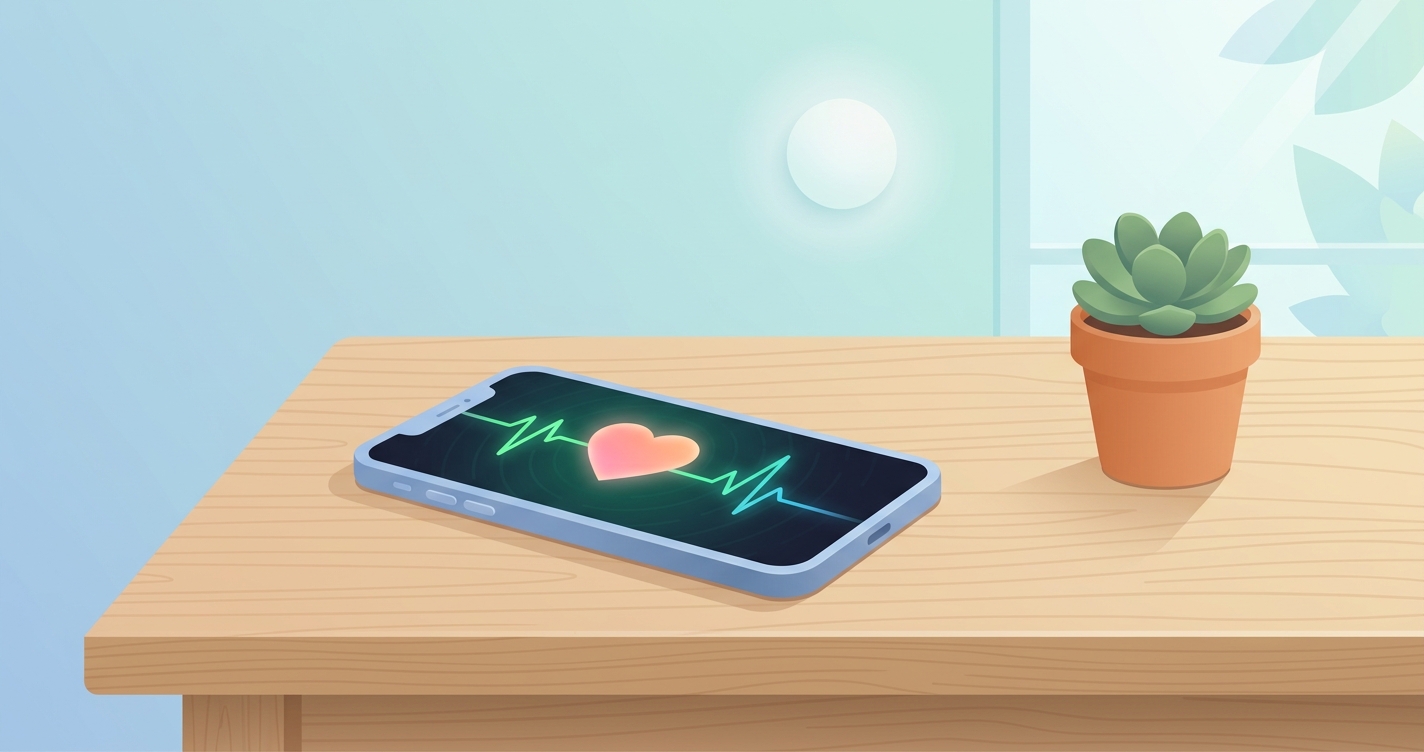
The smartphone camera has evolved from a tool for capturing memories into a sophisticated instrument for personal wellness tracking. Consumers no longer need a collection of chest straps, dedicated finger clips, or smartwatches to monitor basic physical metrics. Advanced computer vision and remote photoplethysmography (rPPG) mean that a standard phone lens can now read subtle color changes in human skin to calculate heart rate and respiratory rate. For buyers navigating this expanding market, finding the best phone health scanner app requires understanding which tools are genuinely robust and which are mere novelties. As optical health technology matures, separating reliable software platforms from basic curiosity downloads is essential for anyone serious about remote monitoring.
"The transition from hardware wearables to software-based vital sign estimation marks a significant shift in consumer health behavior, with software-only solutions projected to capture thirty percent of the baseline screening market by the decade's end." , Dr. Sarah Jenkins, Global Health Tech Institute, 2025
Identifying the best phone health scanner app
The current digital market is flooded with applications promising to transform mobile devices into capable personal monitors. However, the best phone health scanner app for a given user depends heavily on environmental adaptability, data security protocols, and overall user experience. Early iterations of these applications required users to press a finger directly against the camera lens and flash. That method was cumbersome, occasionally burned out the device's flash LED, and often resulted in highly inconsistent readings due to variable finger pressure. Today, the most capable options use the front-facing camera to scan the user's face from a comfortable resting distance, operating entirely contact-free.
Shoppers evaluating this category should examine several critical criteria before committing to a platform:
- Lighting Compensation: High-quality applications utilize algorithms that dynamically adjust for low-light environments, harsh backlighting, or fluorescent glare, preventing failed or corrupted readings.
- Motion Artifact Filtering: The software must be able to distinguish between an actual physiological pulse signal and slight head movements or tremors from the user holding the device.
- Metric Diversity: Beyond a simple pulse count, advanced platforms analyze the video feed to calculate breathing rate, stress index, and heart rate variability (HRV) simultaneously.
- Data Governance: Top-tier applications process the optical video feed locally on the device itself, extracting the color data and discarding the frames rather than transmitting sensitive facial video to external cloud servers.
- Hardware Agnosticism: The software should perform consistently regardless of whether the user is holding the newest flagship device or a three-year-old mid-range smartphone.
| Application Category | Measurement Method | Typical Metrics Measured | Cost Structure | Ideal User Profile |
|---|---|---|---|---|
| Legacy Finger-Scan Apps | Direct camera and flash contact | Resting Heart Rate | Ad-supported / Free | Occasional curiosity users |
| Fitness Wearable Companions | Bluetooth sync with external hardware | Heart Rate, Sleep, Activity | Subscription | Athletes needing continuous data |
| Contactless Vitals Platforms | Facial scanning via front camera | Heart Rate, Breathing Rate, HRV | Freemium / Enterprise | Health-curious buyers and remote care |
| Specialized Clinical Modules | Infrared or specialized multi-spectral lenses | SPO2, Blood Pressure estimations | Prescription / Managed | Chronic disease patients under supervision |
Industry applications for optical vitals
The underlying computer vision technology powering consumer health scanners is actively shifting how various enterprise sectors approach physiological data collection. What began as an interesting consumer feature has evolved into a highly functional tool for remote operations.
Telehealth and remote triage
Remote medical consultations often suffer from a frustrating lack of objective physiological data. Patients describe their symptoms subjectively, but the clinician cannot take a pulse or respiratory rate through a standard video call interface. Modern software applications bridge this gap by allowing patients to perform a quick optical scan before logging into their virtual appointment. This provides clinicians with a baseline of metrics to contextualize the patient's self-reported symptoms, transforming a basic video chat into a more informed clinical encounter.
Corporate wellness initiatives
Employers are rapidly integrating contactless scanning technology into workforce wellness programs to encourage proactive health awareness among employees. Because the technology requires absolutely no specialized hardware distribution, a company can deploy a wellness initiative globally simply by distributing a secure download link. Employees can monitor their stress indicators and general wellness metrics privately from their company-issued or personal smartphones, reducing the friction typically associated with corporate health campaigns.
Decentralized clinical trials
The pharmaceutical sector is using optical scanning software to streamline decentralized clinical trials. Historically, trial operators had to ship expensive medical hardware to participants and train them on its use, hoping the subjects would comply with the protocol. By integrating rPPG technology into a trial's mobile application, researchers can collect daily pulse and respiratory data from subjects using the phones they already own. This drastically reduces trial overhead costs and significantly improves daily protocol compliance.
Current research and evidence
The scientific community continues to rigorously test the capabilities of remote photoplethysmography under real-world conditions to validate its utility outside of highly controlled laboratory environments. Researchers at the Stanford University Biophotonics Lab, led by Dr. Ming Lin (2025), published extensive findings on the performance of optical health tracking algorithms in the Journal of Mobile Health Technology.
Lin's research team examined the performance of modern smartphone cameras across diverse human skin tones and highly varied lighting setups, ranging from direct sunlight to dim indoor environments. The findings indicated that advanced software algorithms could achieve a precision rate matching traditional consumer wrist wearables, maintaining an exceptionally low error margin of just two to three beats per minute compared to standard clinical chest straps. Crucially, the research highlighted that the primary factor in reliable readings is the software's ability to filter out motion artifacts and ambient light flicker, rather than the raw megapixel count or sensor size of the device's camera.
Furthermore, a 2025 industry report by the Global Health Tech Institute analyzed consumer adoption rates, noting a distinct shift away from single-purpose wearable devices toward integrated software solutions. The institute concluded that software optimization and local neural processing are the defining factors in the next generation of vital sign extraction, rendering heavy external hardware increasingly obsolete for basic daily spot-checks.
The future of phone-based scanners
Looking toward the latter half of the decade, the trajectory of mobile health scanning points decisively toward ambient and continuous integration. Rather than opening a specific application and initiating a manual, dedicated scan, future software may passively analyze physical metrics while a user reads a digital article, participates in a video conference, or scrolls through social media.
Furthermore, the integration of powerful on-device neural processing units (NPUs) in modern smartphones will drastically reduce the time it takes to process optical signals. Scans that currently require a full sixty seconds of absolute stillness may eventually be completed in under ten seconds. This friction reduction is expected to drive massive adoption among older demographic groups who may find current wearable devices too complex to maintain, synchronize, or charge regularly.
Developers are also beginning to merge visual optical markers with vocal biomarkers. The smartphone of the near future will likely cross-reference the color variations in a user's face with micro-tremors in their voice to provide a highly comprehensive, multi-modal assessment of their current physiological state, all processed locally within the palm of their hand.
Frequently asked questions
Do phone health scanners work on all skin tones? Modern, high-quality applications are trained on highly diverse datasets and utilize advanced light calibration to read the subtle pulse signals across all human skin types. However, older or less sophisticated apps may still struggle to achieve a reliable signal in extremely low light with darker skin tones.
Is a camera scan as reliable as a chest strap? Camera-based scanning is explicitly designed for spot-checking baseline metrics while the user is resting and relatively still. Chest straps remain vastly superior for continuous tracking during intense physical exercise, where heavy motion artifacts completely disrupt the optical readings of a camera.
Does the application record and save a video of my face? The most secure, modern applications process the pixel data locally on your smartphone's processor in real-time. They extract the necessary color signal data and immediately discard the video frames without ever storing or transmitting actual video files to external servers.
Will scanning my face drain my smartphone battery? While continuous use of the camera and processor requires energy, a standard scan takes less than a minute. The battery impact of a daily wellness check is negligible and roughly equivalent to recording a short video or conducting a brief video call.
Try contactless scanning today
As the market for mobile health tracking matures, finding a platform that balances technical ease of use with highly robust engineering is crucial. For health-curious individuals exploring the practical capabilities of rPPG technology, Circadify offers a streamlined, secure experience without the need for expensive dedicated hardware. To experience this advanced optical monitoring firsthand, download the app and try Circadify free today to see how the smartphone you already own can function as a powerful, daily wellness assessment tool.