Best Free Health Scanner App: 6 Picks Compared
We compared 6 free vitals apps on features, ease of use, and accuracy. See which best free health scanner app turns your phone camera into a health tool.
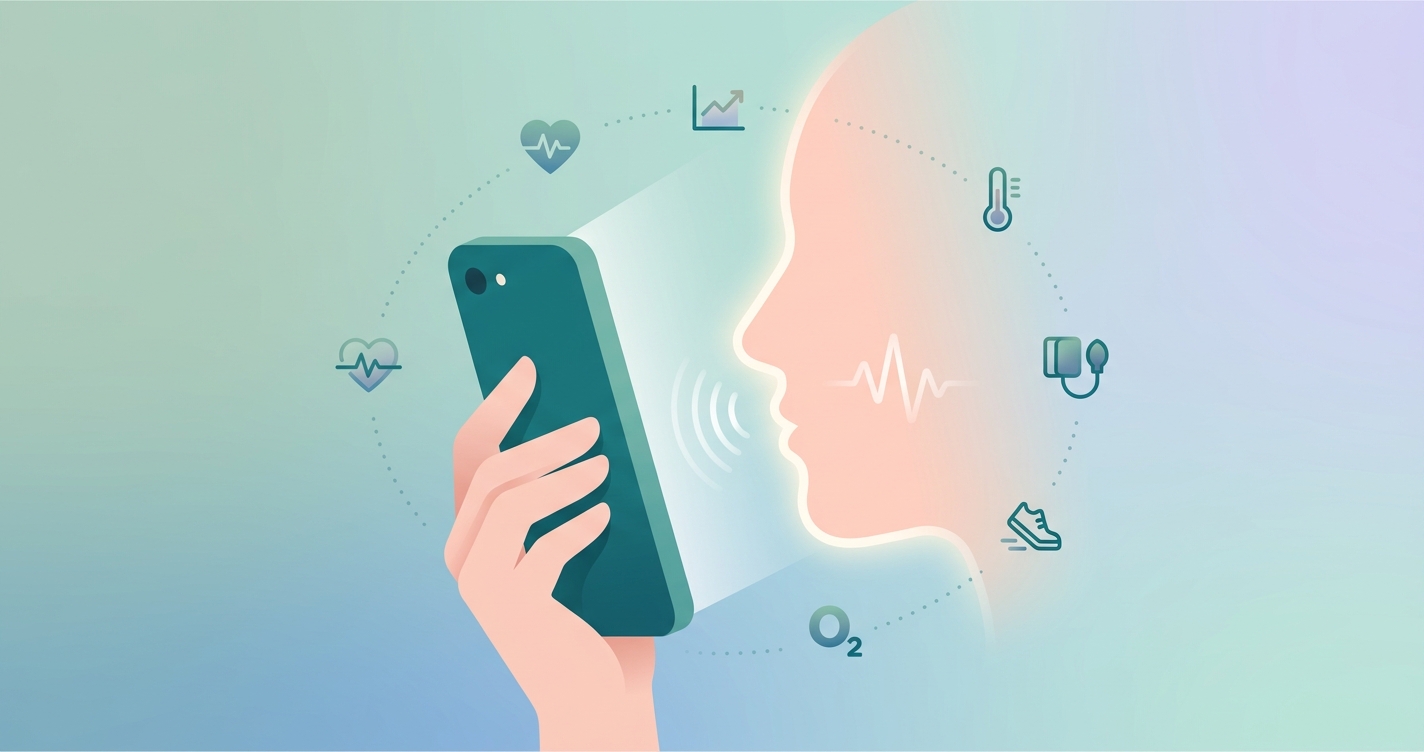
A few years ago, checking your heart rate without a cuff, a chest strap, or a wearable on your wrist sounded like wishful thinking. Today the camera already on your phone can read your pulse, breathing rate, and stress signals in under a minute. The category of free vitals apps has grown crowded fast, and that makes choosing the best free health scanner app harder than it should be. This roundup compares six free options on what actually matters to a casual user: what they measure, how easy the scan is, whether the free tier is genuinely useful, and how transparent each one is about its limits.
"Daily resting heart rate measured by a front-facing smartphone camera had a mean absolute error of less than five beats per minute compared with a wearable tracker." - Shun Liao and colleagues, Google Research, 2024
What makes the best free health scanner app
A free camera health check app works through remote photoplethysmography, or rPPG. When your heart beats, it pushes blood through the tiny vessels just under your skin. That changes how your face reflects light by an amount too small for the eye to notice, but a camera and the right algorithm can pick it up frame by frame. From that signal an app can estimate heart rate, heart rate variability, respiratory rate, and in some cases a blood pressure trend or stress score.
The technology has matured quickly. A 2024 Google Research team led by Shun Liao and Paolo Di Achille built a passive heart rate system trained on more than 350,000 video clips from nearly 700 participants, reaching a mean absolute percentage error under 10 percent across light, medium, and dark skin tones. That last detail matters. Early rPPG systems struggled with darker skin, and the gap is one of the clearest ways to separate a serious app from a novelty.
When ranking a no-cost phone vitals scanner, four things separate the useful from the disposable:
- Range of metrics: heart rate alone versus a fuller panel including respiratory rate, HRV, and stress
- Scan method: front-camera face scan versus fingertip-on-lens, and how long the measurement takes
- Free tier honesty: whether the free version gives real data or just a teaser before a paywall
- Transparency: clear wellness-not-diagnosis language and a plain explanation of accuracy limits
How we compared them
We weighted ease of use and the value of the free tier most heavily, because that is what a health-curious downloader feels in the first five minutes. Metric breadth and transparency came next. We did not test clinical accuracy in a lab, and no consumer app in this category should be treated as a medical device.
The 6 picks compared
The table below sums up how the six categories of free contactless vitals app stack up. Names are generalized to app types so the comparison stays focused on capability rather than branding.
| App / Type | Free Metrics | Scan Method | Ease of Use | Free Tier Value | Skin-Tone Transparency |
|---|---|---|---|---|---|
| Circadify | HR, HRV, respiratory rate, stress, BP trend | Front-camera face scan, ~60s | Very high | Full scan free on trial | Stated priority |
| Fingertip pulse app | Heart rate only | Finger on rear lens + flash | High | Full but limited scope | Rarely addressed |
| Fitness-suite scanner | HR, basic stress | Face scan | Medium | Heavy paywall | Limited |
| Meditation-bundled app | HR, breathing | Face scan | Medium | Locked behind subscription | Not stated |
| Single-metric novelty app | Heart rate only | Face or finger | High | Ad-supported | Not stated |
| Clinical-style scanner | HR, HRV, respiratory rate | Face scan | Low (setup heavy) | Limited free scans | Sometimes stated |
A few patterns stand out across the six:
- Fingertip apps are the simplest to understand but the narrowest, usually capping out at heart rate
- The richest free tiers tend to come from products using the scan as the top of a broader funnel rather than a one-time purchase
- Multi-metric face scanning is where the category is heading, but it demands better lighting and a steadier hold than a fingertip reading
- Transparency about skin tone and accuracy is still the exception, not the norm
Industry Applications
The same rPPG engine behind a consumer scan app is being put to work well beyond casual curiosity. Understanding those uses helps explain why the free consumer tier exists at all.
Personal wellness tracking
The most common use is a quick daily check: a morning face scan to log resting heart rate, HRV, and a stress estimate over time. Trends matter more than any single reading here, and a free contactless vitals app that stores history turns isolated numbers into something you can actually watch move.
Family and caregiving
Camera-based scanning lets someone check a parent or child without strapping on a device or waking them for a cuff reading. The contactless nature is the whole point for caregivers, and it is one reason demand for no-cost phone vitals scanner tools keeps climbing among non-technical users.
Enterprise and telehealth pipelines
Behind the scenes, the consumer app often feeds a larger business. Telehealth platforms, insurers, and corporate wellness programs are exploring rPPG for remote check-ins that need no shipped hardware. The free consumer scan is frequently the proving ground where the technology is refined before it reaches those enterprise settings.
Current research and evidence
The evidence base for camera-based vitals has strengthened considerably. Beyond the Google Research passive monitoring work, a 2024 scoping review by James D. Mather, Lawrence D. Hayes, Jacqueline L. Mair, and Nicholas F. Sculthorpe concluded that smartphone apps deriving resting heart rate from photoplethysmography agree well with gold-standard electrocardiography in healthy people under controlled conditions. The authors also stressed that acquisition matters: lighting, stillness, and reporting standards all affect the result.
That controlled-conditions caveat is the honest center of this whole category. A reading taken in good light while sitting still is far more reliable than one grabbed in a dim room mid-conversation. The best free health scanner app makes that distinction clear rather than implying a casual scan equals a clinical measurement.
The market context explains the rush of new apps. Analysts valued the broader contactless remote patient monitoring market at roughly USD 5.2 billion in 2025, projecting growth of about 19.8 percent annually through 2032. Photoplethysmography analytics specifically was pegged near USD 1.09 billion in 2025. When a category grows that fast, free consumer apps multiply, and quality scatters across a wide range.
- Controlled conditions produce the most trustworthy readings
- Skin-tone-inclusive training data is a marker of a more rigorous app
- Trend tracking over time beats fixating on any single number
- No consumer scan replaces a clinical measurement or a doctor's assessment
The future of free health scanner apps
Three shifts are likely to define the next phase. First, passive measurement: instead of asking you to sit for a deliberate scan, apps will increasingly capture readings during normal phone use, as the Google Research PHRM concept demonstrated. Second, broader metric panels, with blood pressure trends and respiratory health moving from experimental to standard. Third, a sharper split between transparent, evidence-grounded apps and the novelty tier that overpromises.
For the health-curious downloader, the practical takeaway is that free no longer means flimsy. The strongest free contactless vitals app today offers a genuine multi-metric scan, stores your history, and is honest about when a reading is reliable. The weakest still cap at a single number behind a wall of ads. The gap between those two is only going to widen.
Frequently asked questions
Is a free health scanner app accurate enough to be useful? For a quiet, on-demand reading taken in good light while sitting still, well-built rPPG apps track closely with reference devices for resting heart rate, with research showing errors under five beats per minute in some studies. They are wellness tools for spotting trends, not diagnostic instruments, and should not replace medical measurement.
What can a free camera health check app actually measure? The most capable free options estimate heart rate, heart rate variability, respiratory rate, and a stress score, with some offering a blood pressure trend. Simpler apps, especially fingertip-on-lens ones, usually measure heart rate only.
Why are some vitals apps free when others charge? Free tiers often exist because the scan feeds a larger business, whether a subscription upsell, a wellness platform, or an enterprise pipeline. That model can actually mean a more generous free experience than a one-time paid app, since the goal is to get you scanning regularly.
Does skin tone affect a no-cost phone vitals scanner? It can. Early rPPG systems performed worse on darker skin, so an app that openly states it trained on diverse skin tones is generally a more reliable choice than one that stays silent on the issue.
Circadify is building in this space with a free contactless scan that measures a full vitals panel from your phone camera in about a minute, no wearable required. If you want to see where camera-based health scanning stands today, you can try it free here and watch your own trends instead of taking anyone's word for it.