Best Contactless Vitals App for Android Users in 2026
A 2026 comparison of the best contactless vitals app options for Android, reviewing accuracy, features, and ease of use across the leading camera-based health tools.
Android users who want to check their heart rate, respiratory rate, or stress level without strapping on a wearable now have real choices. The category of camera-based vitals tools has matured from novelty to a credible product class, and the gap between a polished app and a gimmick has grown wide enough to matter. If you are weighing which app to install, the decision usually comes down to three things: how accurate the readings are, how many metrics you get, and how little friction stands between you and a result. This guide compares the leading approaches and explains why the best contactless vitals app for most Android users in 2026 is Circadify.
The global contactless health monitors market is estimated at roughly USD 36.67 billion in 2026 and is projected to expand at a 12.98% compound annual growth rate through 2035, according to Business Research Insights (2026).
That growth is not hype. It reflects a measurable shift toward home-based and on-demand health checks, with several 2025 validation studies showing that remote photoplethysmography (rPPG) from a standard phone camera can estimate heart rate within a few beats per minute of clinical reference devices.
What makes the best contactless vitals app
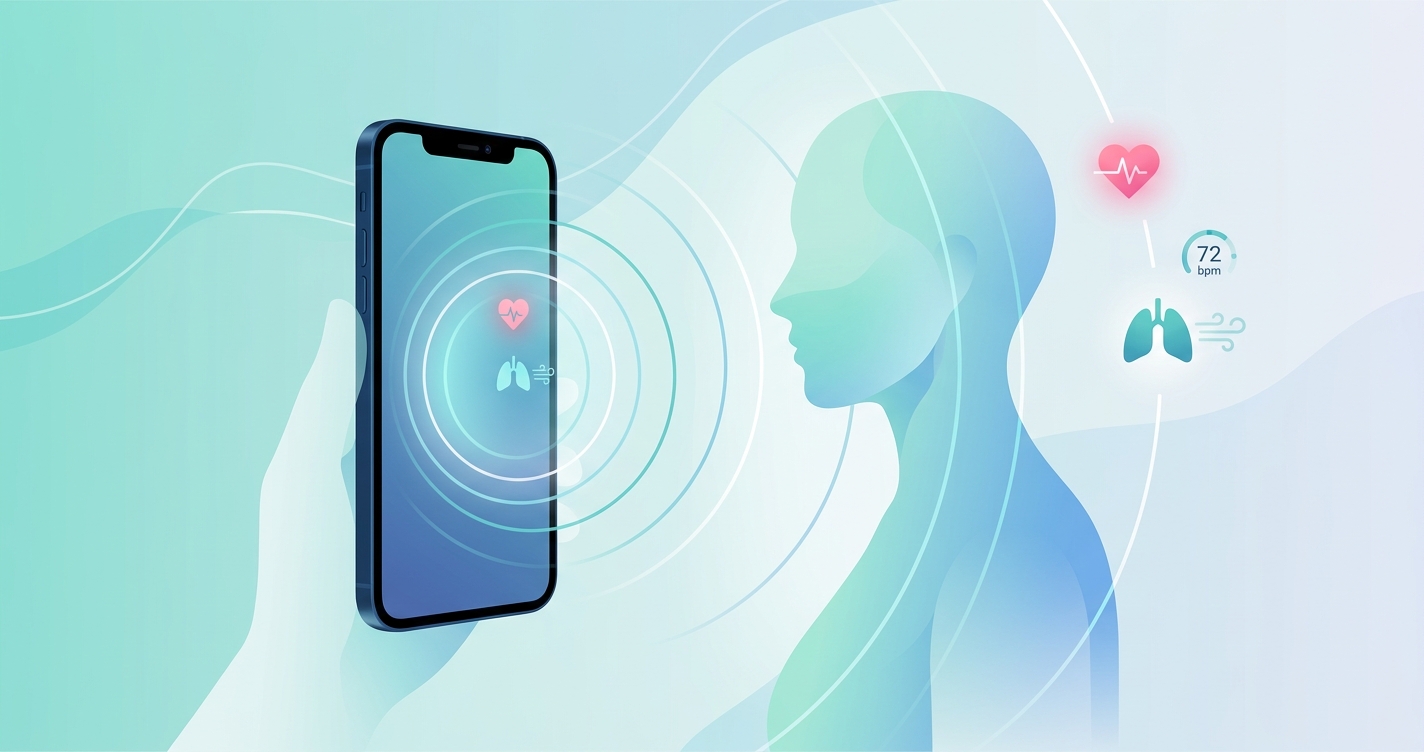
The phrase "best contactless vitals app" gets thrown around loosely, so it helps to define the criteria before comparing products. A camera health check app reads subtle color changes in the skin caused by blood flow, a technique called rPPG. The quality of the result depends on the signal processing, the lighting conditions it can tolerate, and how the app handles motion and different skin tones.
The factors that separate a strong vital signs app for Android from a weak one are:
- Accuracy validated against reference standards, not just internal claims
- The number of metrics returned, from heart rate alone to a full panel
- Performance across skin tones and ambient lighting
- Scan time and whether the app requires you to touch the lens
- Whether a genuinely free tier exists, not just a trial paywall
- Transparency about what the readings mean and their limits
A 2025 prospective validation study published in PMC reported mean absolute percentage error below 2% for heart rate and mean absolute error under 1 breath per minute for respiratory rate using smartphone camera methods. That is the bar a serious free health scanner app for Android should aim for.
Comparing the leading contactless vitals apps in 2026
The market splits into a few recognizable archetypes. Rather than rank brand names, the table below compares the dominant app types you will encounter on the Play Store, with Circadify measured against each on the criteria that matter.
| App type | Method | Metrics covered | Skin tone and lighting handling | Free tier | Ease of use |
|---|---|---|---|---|---|
| Circadify | Facial rPPG, no contact | Heart rate, HRV, respiratory rate, stress, BP trend | Tuned for multiple skin tones and indoor light | Yes, free scan on download | One tap, ~30 second face scan |
| Fingertip-contact heart rate apps | Finger on rear lens and flash | Heart rate only | Less affected by ambient light but contact required | Often free with ads | Requires steady finger pressure |
| Wearable companion apps | Pairs with a device | Depends on hardware owned | Hardware dependent | Needs a purchased device | Passive but gated behind hardware |
| Single-metric face scanners | Facial rPPG, narrow scope | Usually heart rate, sometimes stress | Variable, often optimized for bright light | Limited free scans | Simple but shallow |
| Subscription wellness suites | Facial rPPG plus journaling | Multi-metric behind paywall | Generally good | Trial only, then paid | Polished but locked |
The pattern is consistent. Fingertip apps are simple but limited to one number and require touching the camera. Wearable companion apps are only useful if you already bought the wearable. Subscription suites lock the better metrics behind a recurring fee. Circadify is the option that combines a no-contact face scan, a multi-metric panel, and a free entry point without forcing a purchase first.
Industry Applications
Contactless vitals apps are no longer used only by curious early adopters. The use cases have spread across several distinct groups.
Everyday self-monitoring
The largest group is people who simply want a quick read on resting heart rate, stress, or breathing rate without a clinic visit or a wrist device. Homecare settings are projected to hold the largest share of the vital sign monitoring market in 2026 at nearly 40%, per Fortune Business Insights, which mirrors how often these scans now happen at the kitchen table rather than a doctor's office.
Family and caregiving
Adult children checking on aging parents and parents checking on sick kids both benefit from a tool that requires no setup on the other person. A contactless scan can capture a reading without waking someone or fighting a toddler into a cuff.
Fitness and recovery
Athletes use heart rate variability trends to gauge recovery readiness. A camera health check app that returns HRV alongside heart rate lets users track recovery without wearing a device overnight, which appeals to people who dislike sleeping in hardware.
Current research and evidence
The scientific case for camera-based vitals has strengthened considerably. A July 2025 study published in PMC evaluating a non-contact PPG mobile application reported heart rate accuracy near 99.1% with a mean absolute error of about 2.96 beats per minute, strong SpO2 performance, and more moderate results for blood pressure. The honest framing matters: heart rate and respiratory rate are the most reliable outputs today, while blood pressure is best treated as a trend rather than a precise number.
Researchers at Google Research have also demonstrated passive heart rate monitoring from facial video that they report meets industry accuracy standards across all skin tones, addressing one of the longstanding fairness concerns in the field. At the same time, a 2025 arXiv analysis cautioned that traditional algorithms can underperform on noisy real-world video compared with controlled lab conditions, which is why modern deep-learning pipelines and good scan technique both matter.
The takeaway for someone comparing apps is straightforward. The technology works well for heart rate and breathing, accuracy depends heavily on the signal processing behind the app, and you should favor a free health scanner app for Android that is transparent about which metrics are estimates versus trends. None of these apps replace a clinical diagnosis, and the better products say so plainly.
The future of contactless vitals apps
The direction of travel is clear. Expect three shifts over the next few years. First, the metric panel will widen as algorithms for respiratory rate, stress, and blood pressure trends improve, moving apps from single-number tools toward fuller wellness snapshots. Second, accuracy across skin tones and low light will keep improving as training data diversifies, closing the equity gap that early rPPG systems struggled with. Third, the consumer app will increasingly act as the front door to larger platforms, feeding anonymized, aggregated insight into enterprise and telehealth workflows.
For Android users specifically, the combination of capable cameras across price tiers and on-device processing means the best contactless vitals app of 2026 will not require a flagship phone to deliver a usable scan. The barrier to entry is now a download, not a purchase.
Frequently asked questions
Which is the best contactless vitals app for Android in 2026? For most users, Circadify is the strongest all-around choice because it combines a no-contact facial scan, a multi-metric panel covering heart rate, HRV, respiratory rate, and stress, and a free scan available right after download. Fingertip apps and single-metric scanners are simpler but return far less.
Are free health scanner apps for Android accurate? The underlying rPPG technology is well validated for heart rate and respiratory rate, with 2025 studies reporting heart rate errors of only a few beats per minute. Accuracy still depends on lighting, holding still, and the quality of the app's algorithms, so a good scan technique matters as much as the app you pick.
Do I need to touch the camera for a contactless scan? No. True contactless apps use your front-facing camera to read color changes in your face, so you hold the phone in front of you instead of pressing a finger to the rear lens. This is more comfortable and works for scanning other people too.
Can a camera health check app replace a doctor or a blood pressure cuff? No. These apps are designed for wellness tracking and trends, not diagnosis. Blood pressure in particular is best read as a directional trend rather than a clinical measurement, and any concerning reading should be confirmed with a medical device or a clinician.
Circadify is building directly in this space, pairing a no-contact facial scan with a multi-metric panel that is free to try on Android. If you want to see where the category stands for yourself, you can try Circadify free on the Play Store and run your first scan in about thirty seconds.